Best Files and Rasps for Shaping Wood
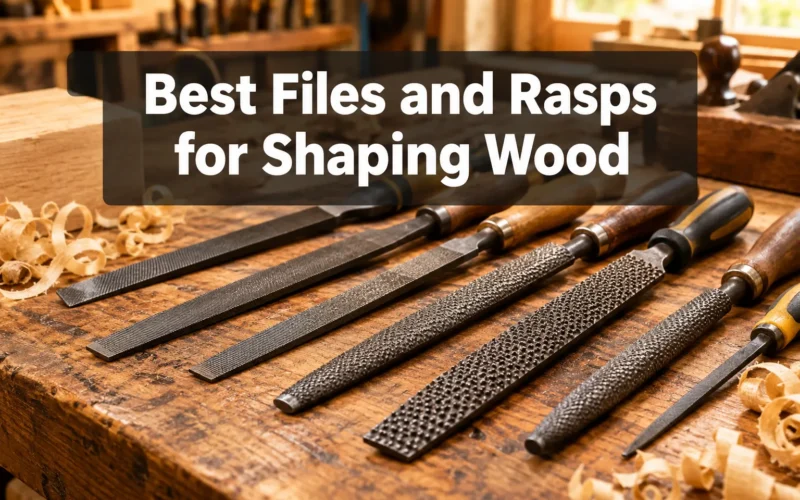
A woodworker who skips files and rasps is like a sculptor who only owns a sledgehammer. Power tools remove material fast, but they can’t follow a curve, refine a contour, or sneak into a tight concave surface. That’s exactly where the best files and rasps for shaping wood earn their place on the bench, and for beginners especially, these hand tools teach you to feel the wood in a way no sander or router ever will.
Whether you’re shaping a chair leg, rounding a handle, or cleaning up a joint, choosing the right rasp or file makes the difference between frustration and flow. This guide covers everything you need to know: what these tools actually are, which ones to buy first, how much to spend, and how to keep them cutting clean.
Key Takeaways

- Rasps have individual pointed teeth and remove wood quickly; files have parallel ridges and leave a smoother surface.
- For rough shaping, choose a coarse rasp (bastard or #1 cut); for refining and smoothing, use a finer rasp or a wood file.
- Cabinet rasps work best on flat and slightly curved surfaces; half-round rasps handle both convex and concave curves.
- Nicholson and Bahco (Grobet) are the two most recommended brands for beginners and hobbyists in 2026.
- Quality hand-stitched rasps from Auriou or Liogier cost more but cut more precisely than machine-cut options.
- Rasps clog because of resin buildup or working green/wet wood, a file card brush clears the teeth in seconds.
- You can use metal files on wood, but purpose-made wood rasps and files cut far more efficiently.
- A solid beginner rasp kit (two or three tools) can be assembled for under $60 without sacrificing quality.
Find this useful? Add us as a preferred source on Google and more of what we publish will show up in your results.
What’s the Difference Between a File and a Rasp for Woodworking
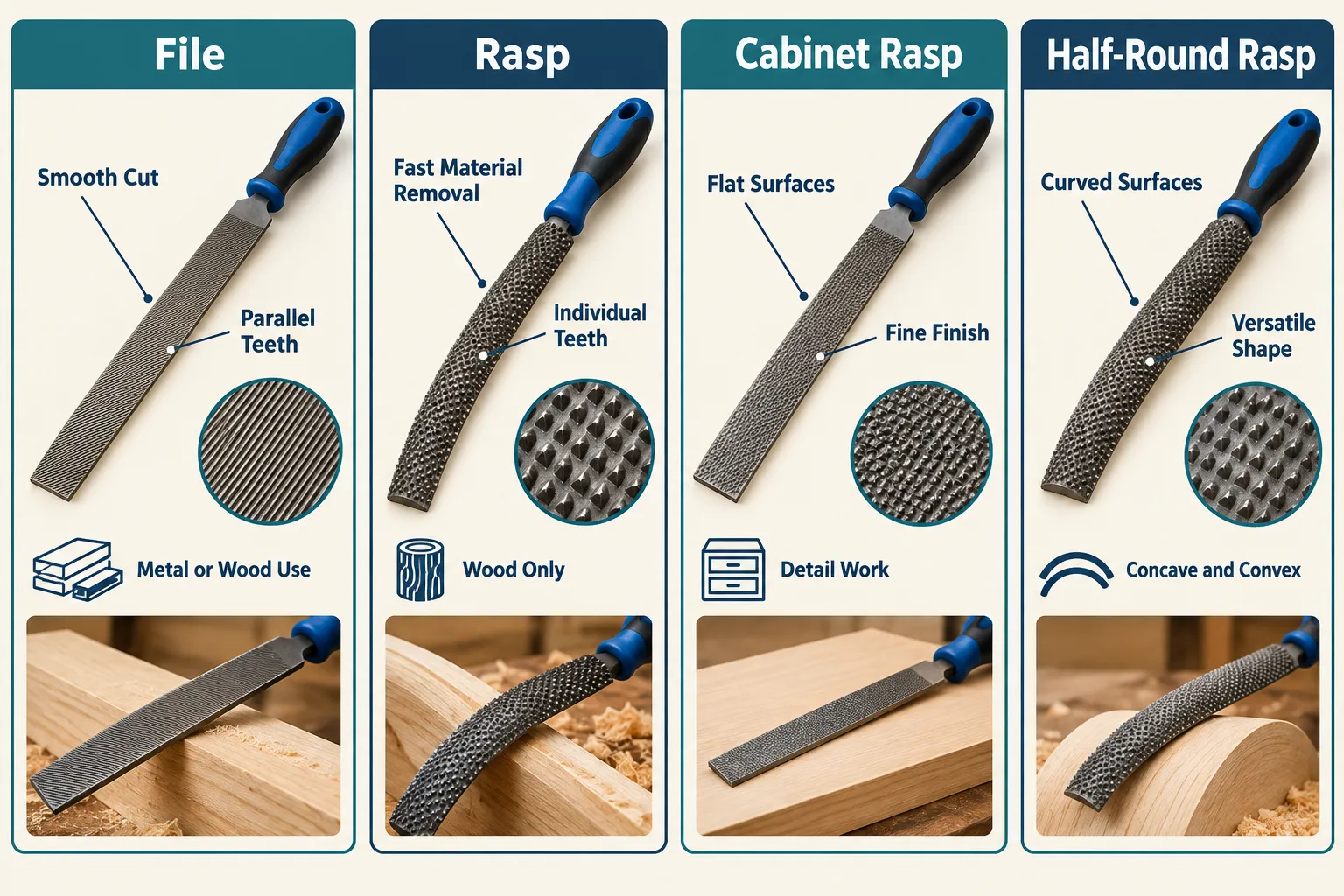
A file has rows of parallel, connected ridges cut into the steel surface, producing a smoother cut that’s closer to sanding. A rasp has individual, disconnected raised teeth that tear through wood fiber aggressively, making it the right tool for fast material removal and shaping. Think of a file as a refiner and a rasp as a shaper.
Both tools come in similar shapes, flat, half-round, round (rat-tail), and triangular, but they serve different stages of the same job. You typically rasp first to get close to your final shape, then follow with a file to smooth the surface before finishing with sandpaper.
Key distinctions at a glance:
- Teeth pattern: Rasps have individual points; files have continuous ridges
- Aggressiveness: Rasps remove material faster; files cut finer
- Surface result: Files leave a smoother surface than rasps
- Best use: Rasps for shaping; files for refining and smoothing
- Wood suitability: Both work on wood, but rasps are designed specifically for it
How to Choose the Right File Grit for Wood Carving
Rasp and file coarseness is described by “cut”, bastard cut (coarsest), second cut (medium), and smooth cut (finest), rather than grit numbers like sandpaper. For wood carving and shaping, match the cut to the stage of work you’re doing.
- Bastard cut / #1 cut (coarsest): Use this for rough shaping when you need to remove significant material quickly. Good for getting a blank close to final shape.
- Second cut / #2 cut (medium): The workhorse cut for most shaping tasks. Removes material at a reasonable pace while leaving a surface that doesn’t need much cleanup.
- Smooth cut / #3 cut (fine): Use this for refining contours and preparing the surface for sanding. Leaves a relatively smooth finish on softwoods and hardwoods alike.
For wood carving specifically, a medium-cut half-round rasp handles the majority of tasks. Add a fine-cut file for detail work and you have a capable two-tool setup. If you’re working with harder species like oak or maple (see our guide on oak vs. maple hardwood for a full comparison), a coarser rasp saves significant time on initial shaping.
A common beginner mistake is starting too fine. Always begin with the coarsest tool that’s appropriate for the job, you can always refine, but you can’t put material back.
Best Rasps for Shaping Wood by Hand
The best rasps for shaping wood by hand combine sharp, well-spaced teeth, a comfortable handle, and a profile suited to the surfaces you’re working. Here are the top picks by category:
Best overall for beginners: Nicholson #49 Half-Round Rasp
Nicholson has been manufacturing files and rasps for over 150 years. The #49 is machine-cut, affordable, and available at most hardware stores. It’s not as refined as hand-stitched options, but it cuts reliably and handles the majority of shaping tasks a beginner will encounter.
Best upgrade pick: Bahco (Grobet) Half-Round Rasp
Bahco rasps use a milled tooth pattern that’s more consistent than typical machine-cut tools. They cut cleaner, clog less, and last longer. For hobbyists ready to invest a little more, Bahco is the sweet spot between budget and professional quality.
Best premium option: Auriou or Liogier Hand-Stitched Rasps
Hand-stitched rasps from French makers like Auriou or Liogier have individually punched teeth that are slightly randomized in position. This reduces chatter and leaves a remarkably smooth surface for a rasp. They’re the choice of professional woodcarvers and furniture makers, and the price reflects that.
Best for curved work: Shinto Saw Rasp
The Shinto is a Japanese-style rasp with a double-sided blade (coarse and fine) made from stacked saw blades. It’s aggressive, easy to control, and surprisingly good at following curves. Many beginners find it more intuitive than traditional rasps.
For a broader look at the hand tools worth building your kit around, the beginner woodworking tools and equipment guide is a good place to start.
Nicholson vs Bahco Rasps: Which Is Better
For most beginners, Bahco rasps outperform Nicholson in cut quality and longevity, but Nicholson tools are easier to find locally and cost less upfront. The right choice depends on your budget and how often you plan to use them.
Nicholson rasps are machine-cut with a consistent but somewhat coarse tooth pattern. They work well for general shaping and are widely available at hardware stores and home centers. If you’re just starting out and aren’t sure how much you’ll use a rasp, Nicholson is a low-risk first purchase.
Bahco rasps use a more refined manufacturing process that produces sharper, more consistent teeth. They cut smoother, require less pressure, and stay sharp longer under regular use. For anyone who plans to use rasps regularly, even as a hobbyist, the extra cost pays off quickly.
| Feature | Nicholson | Bahco |
|---|---|---|
| Tooth Type | Machine-cut | Milled (refined) |
| Cut Quality | Good | Very Good |
| Availability | Hardware stores | Online, specialty stores |
| Longevity | Moderate | Good |
| Best For | Beginners, occasional use | Regular hobbyist use |
Rasp vs Sandpaper for Smoothing Wood
Rasps and sandpaper are not interchangeable, they serve different purposes. A rasp removes material and shapes contours; sandpaper refines a surface and prepares it for finish. For smoothing wood, sandpaper wins. For shaping wood, a rasp wins.
That said, on curved or irregular surfaces, a fine-cut rasp or file can get you closer to final shape than sandpaper alone, especially in concave areas where sandpaper tends to bridge across the curve rather than follow it. A typical workflow looks like this:
- Coarse rasp, rough shape and material removal
- Medium rasp or file, refine the shape
- Fine file, smooth the surface
- Sandpaper (80-120 grit), remove file marks
- Fine sandpaper (180-220 grit), final surface prep
Using rasps before sandpaper saves time and preserves the shape you’ve worked to achieve. Jumping straight to sandpaper on a freshly shaped piece often rounds over edges and loses definition.
Best Files for Detail Work on Wood
For fine detail work on wood, a needle file set or a riffler rasp gives you the precision to work in tight spaces, carved recesses, and small profiles. These are the tools that separate a rough carving from a refined one.
Needle files are small, fine-cut files (typically 6 inches or less) that come in sets with multiple profiles: flat, round, half-round, triangular, and square. They’re ideal for cleaning up carved details, fitting joints, and smoothing small curved surfaces.
Riffler rasps are double-ended tools with differently shaped working ends, one might be curved, the other angled. They’re designed specifically for sculpting and carving detail into wood. Professional carvers use them constantly; hobbyists find them useful for any project with organic or curved forms.
For detail work, tooth count matters more than cut designation. Look for rifflers labeled #9 or #10 cut (very fine) for the smoothest results on detail carving.
Cabinet Rasps vs Half-Round Rasps for Wood
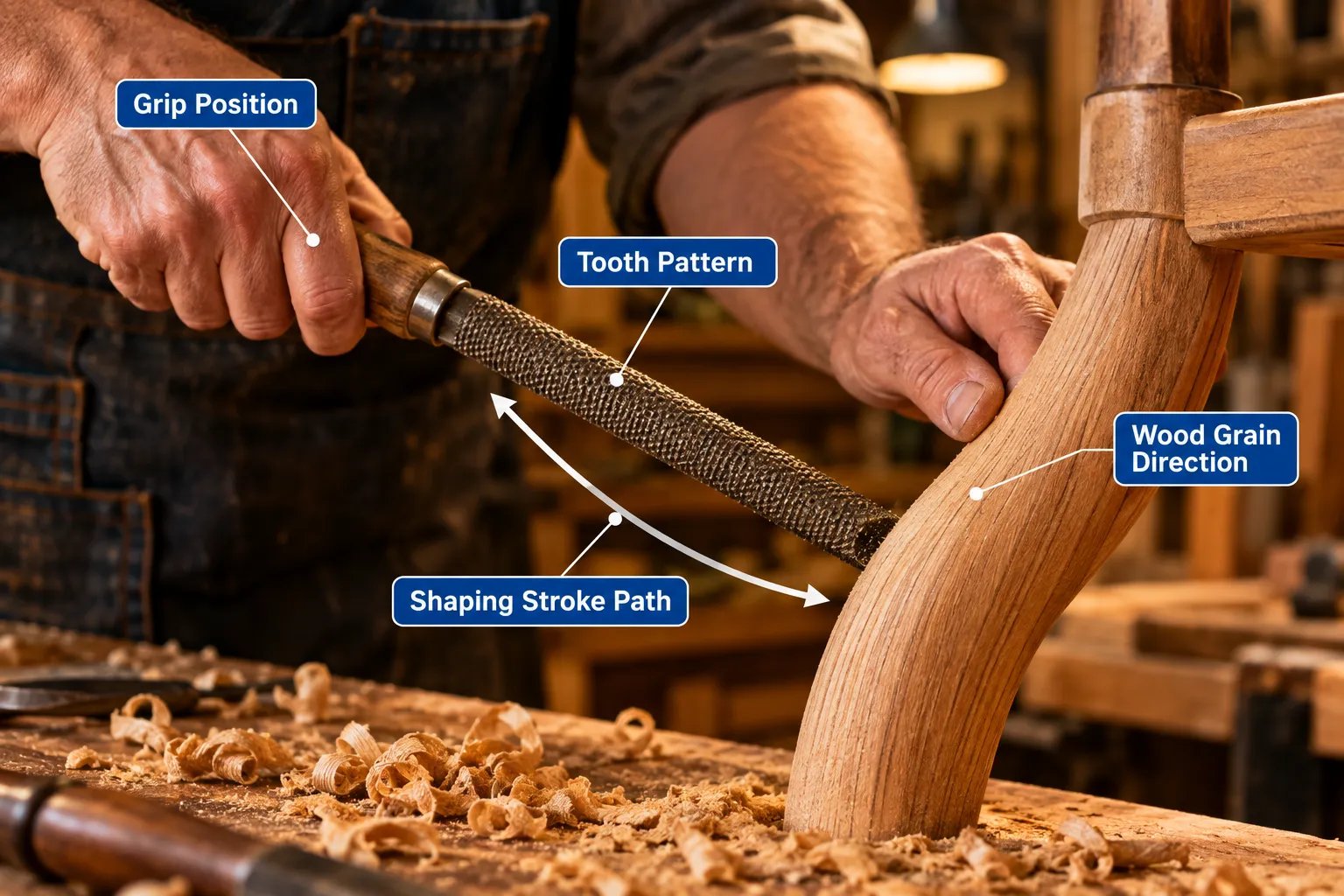
Cabinet rasps are flat on both sides and designed for flat or gently curved surfaces. Half-round rasps have one flat face and one curved face, making them the more versatile option for most woodworkers. If you can only buy one rasp, buy the half-round.
- Cabinet rasp: Flat profile, both faces flat. Best for flat surfaces, chamfers, and slight curves. Less useful on tight concave curves.
- Half-round rasp: One flat face, one curved face. The flat side handles flat surfaces; the curved side follows concave profiles. Works on chair seats, bowl rims, curved furniture parts, and more.
- Round rasp (rat-tail): Fully round profile. Specifically for enlarging holes, working inside tight curves, and shaping cylindrical recesses.
For beginners, a 10-inch half-round rasp in a medium cut covers the widest range of tasks and is the single most recommended starting tool in the best files and rasps for shaping wood category.
Best Rasp for Shaping Curved Wood Pieces
The best rasp for shaping curved wood is a half-round rasp for most curves, and a round (rat-tail) rasp for tight inside curves. The Bahco half-round in medium cut handles the majority of curved shaping tasks that hobbyists encounter.
For tighter, more complex curves, like the inside of a carved bowl or a chair seat, a riffler rasp or the Shinto saw rasp gives you more control. The Shinto’s flexible blade follows compound curves naturally, which makes it a favorite for sculptural and organic woodworking.
When shaping curves, always work with the grain where possible. Moving the rasp across the grain tears fibers and leaves a rougher surface that takes more cleanup. On curved pieces where grain direction changes, use lighter strokes and check your surface frequently. For a deeper understanding of how wood species affect your shaping work, the best hardwoods for beginners to work with covers which species respond best to hand tool work.
Why Is My Rasp Clogging When Filing Wood
A rasp clogs when wood fibers, resin, or dust pack into the spaces between the teeth, reducing cutting efficiency. This is called “pinning” and it’s one of the most common frustrations beginners encounter. The fix is simple: use a file card (a stiff brush with wire bristles) to scrub across the teeth every few minutes.
Common causes of rasp clogging:
- Working with resinous wood species (pine, cedar, cherry)
- Using a rasp on wet or green wood
- Applying too much downward pressure, which packs debris into the teeth
- Letting the rasp go too long between cleanings
Prevention tips:
- Rub chalk across the rasp teeth before use, it fills the spaces and makes cleaning easier
- Use lighter, consistent strokes rather than heavy grinding pressure
- Keep a file card on the bench and use it regularly
- For very resinous wood, a quick wipe with mineral spirits clears stubborn buildup
Can You Use Metal Files on Wood
Yes, you can use metal files on wood, but they aren’t designed for it and they won’t perform as well as purpose-made wood rasps or files. Metal files have finer, closer-spaced teeth that clog quickly on wood and cut slowly compared to rasps.
That said, a smooth-cut metal file works reasonably well for final smoothing on hardwood, especially when you need a very flat, refined surface. Some woodworkers keep a few metal files in their shop specifically for this purpose.
The practical rule: use rasps and wood files for shaping wood. Reserve metal files for metalwork. If you’re building out your hand tool kit, the essential equipment used in woodworking guide covers the full range of tools worth prioritizing.
How Much Do Quality Wood Rasps Cost
A solid beginner rasp kit costs between $30 and $75 for two or three tools. Mid-range hobbyist rasps (Bahco, Shinto) run $25 to $50 each. Premium hand-stitched rasps from Auriou or Liogier typically start around $80 to $120 per tool.
Budget breakdown by tier:
- Entry level (Nicholson): $10,$20 per rasp. Good for occasional use and getting started.
- Mid-range (Bahco, Shinto): $25,$50 per rasp. Best value for regular hobbyist use.
- Premium (Auriou, Liogier): $80,$120+ per rasp. Worth it for serious woodcarvers and furniture makers.
- Needle file sets: $15,$40 for a full set of profiles.
For most beginners, a $30,$50 investment in one good half-round rasp and a basic file is all that’s needed to get started. You can always add specialized tools as your projects demand them. For a broader picture of what starting woodworking costs, the real cost breakdown of starting woodworking is worth reading before you shop.
How to Clean and Maintain Wood Rasps
Clean rasps cut better, last longer, and are safer to use. The basic maintenance routine takes less than two minutes and should happen during every session, not just at the end.
Cleaning steps:
- Brush the rasp face with a file card, moving across the teeth (not along them)
- For stubborn resin buildup, apply a small amount of mineral spirits and scrub with the file card
- Dry the rasp thoroughly before storing, moisture causes rust
- Apply a very light coat of camellia oil or paste wax to prevent corrosion if storing long-term
Storage tips:
- Never store rasps loose in a drawer where they contact other metal tools, this dulls the teeth
- Hang them on a tool rack or store them in individual sleeves or a roll
- Keep them away from moisture and humidity
Rasps cannot be resharpened economically once the teeth wear down. Treat them as a consumable with a long lifespan, a well-maintained rasp used by a hobbyist can last many years before needing replacement.
Best Rasps for Beginners Learning Woodcarving
For beginners learning woodcarving, the best starting combination is a 10-inch half-round rasp in medium cut and a Shinto saw rasp. These two tools cover rough shaping, curved surfaces, and give beginners a feel for how rasps behave on different wood types.
Recommended beginner starter kit:
- Nicholson #49 Half-Round Rasp, affordable, widely available, good all-around performer
- Shinto Saw Rasp, double-sided (coarse/fine), intuitive to use, excellent for curves
- Bahco Needle File Set, for detail work and refining carved surfaces
- File Card, essential for keeping teeth clean
This kit covers the full range of tasks most beginners encounter and costs well under $80 total. As your skills develop and your projects grow more complex, you can add cabinet rasps, rifflers, and eventually hand-stitched options. For project ideas to practice your new skills, the step-by-step woodworking projects for beginners guide has practical starting points.
FAQ
What’s the best single rasp to buy as a beginner?
A 10-inch half-round rasp in medium cut is the most versatile starting point. It handles flat surfaces, convex curves, and concave profiles. The Nicholson #49 or Bahco equivalent are both solid choices.
Do I need both a rasp and a file, or will one do?
For shaping and finishing, you ideally want both. Use the rasp to shape and the file to refine. If you can only buy one, start with a medium-cut rasp, it handles more tasks than a file alone.
How do I know which direction to stroke the rasp?
Move the rasp in the direction that follows the wood grain where possible. On curves where grain direction changes, use lighter diagonal strokes and check your surface frequently to avoid tear-out.
Can I sharpen a dull rasp?
No, rasps cannot be resharpened practically. When the teeth wear smooth, the tool needs to be replaced. This is why proper cleaning and storage extend tool life significantly.
What’s the difference between a hand-stitched and machine-cut rasp?
Hand-stitched rasps have individually punched teeth with slight random variation in position, which reduces chatter and leaves a smoother surface. Machine-cut rasps have uniform, consistent teeth that are less expensive to produce but cut slightly rougher.
Is a Shinto rasp good for beginners?
Yes. The Shinto saw rasp is one of the most beginner-friendly rasps available. Its double-sided design (coarse and fine), comfortable grip, and ability to follow curves make it an excellent first tool.
How often should I clean my rasp during use?
Every 5 to 10 minutes of active use, or whenever you notice the cut becoming sluggish. On resinous woods like pine, clean more frequently.
What wood species are hardest to rasp?
Very hard, dense species like hickory, hard maple, and ebony require more effort and dull teeth faster. For beginners, softer hardwoods like cherry, walnut, and poplar are easier to work and more forgiving. See the best hardwoods for beginners for a full rundown.
Can I use a rasp on plywood or MDF?
Rasps work on plywood edges but the alternating grain layers can cause tear-out. On MDF, rasps cut well but the abrasive material dulls teeth faster than solid wood. Use older rasps for these materials.
What handle is best for a rasp?
A comfortable, secure grip matters more than material. Many rasps come with wooden handles; others accept interchangeable handles. The handle should feel balanced and allow a firm grip without fatigue during extended use.
Conclusion
The best files and rasps for shaping wood don’t need to be expensive to be effective, they need to match the work you’re doing. Start with a medium-cut half-round rasp and a basic file, learn to keep them clean, and you’ll be surprised how much shaping and refining you can accomplish with just two tools.
As your projects grow more ambitious, curved chair seats, carved details, sculpted handles, your rasp collection will naturally grow with them. But the fundamentals don’t change: coarse to fine, rasp before file, file before sandpaper, and always work with the grain.
Actionable next steps:
- Buy one medium-cut half-round rasp (Nicholson or Bahco) and a file card
- Practice on scrap wood before working on a project piece
- Try shaping a simple curved form, a rounded edge, a chamfer, a small convex surface
- Add a Shinto saw rasp when you’re ready for more curved work
- Explore the various tools used for woodworking beginner’s guide to round out your hand tool kit
Recommended Tools and Resources
- Nicholson #49 Half-Round Rasp, the most accessible entry-level rasp for beginners, available at most hardware stores
- Bahco Half-Round Rasp (medium cut), the best mid-range upgrade, noticeably sharper and longer-lasting than budget options
- Shinto Saw Rasp, double-sided, intuitive, and excellent for curved work; a genuine beginner favorite
- Grobet Needle File Set, a complete set of profiles for detail and finishing work
- File Card / File Brush, non-negotiable for keeping your rasps cutting clean; any hardware store brand works fine
- Auriou or Liogier Hand-Stitched Rasps, for when you’re ready to invest in tools that will last a lifetime
Every skilled woodworker started with a handful of basic tools and the willingness to practice. A good rasp in your hand and a piece of wood on the bench is exactly where that journey begins.