Best Woodworking Mallets 2026: Top Buyer’s Guide for Beginners & Pros
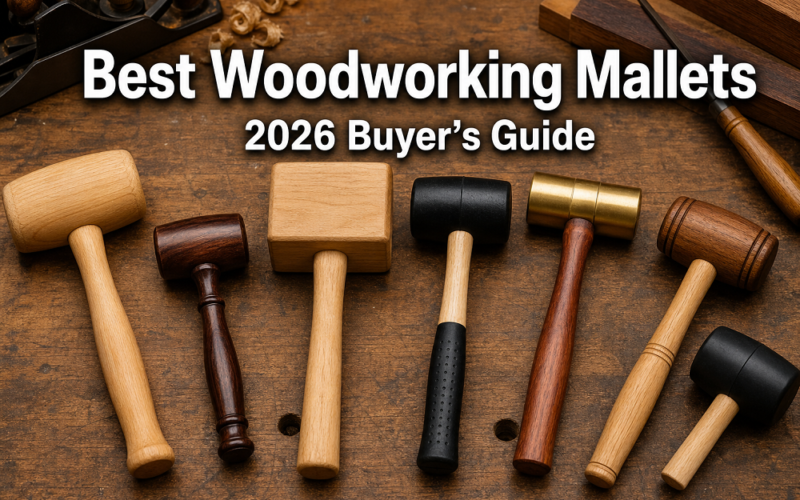
The best woodworking mallet for most beginners is a traditional wood mallet weighing between 16 and 24 ounces, made from beech or lignum vitae. It handles chisel work, mortising, and fine joinery without damaging tool handles. Add a rubber mallet once you start doing glue-ups and assembly. A brass or metal mallet is a specialty purchase for later.
Find this useful? Add us as a preferred source on Google and more of what we publish will show up in your results. A woodworking mallet is a striking tool with a large, non-metal head designed to deliver controlled force without damaging wood surfaces or tool handles. A hammer, by contrast, has a hardened steel head built for driving nails and metal fasteners, not for striking chisels or assembling wood joints.
The difference comes down to physics and material sensitivity. A hammer concentrates force into a small, hard surface area. That works perfectly for nails. But when you’re striking a chisel handle, that same concentration of force can split the wood or crack a plastic ferrule over time. A mallet spreads impact across a wider face, and the head material (wood, rubber, or brass) absorbs some of the shock before it reaches the tool.
There’s also a control factor. The wider face of a mallet makes it easier to strike a chisel accurately, especially when you’re working at an angle or in a tight corner. Hammers are built for a different job entirely.
Common mistake: Many beginners start with a hammer because it’s already in the toolbox. This works for rough work, but it will shorten the life of your chisels and give you less feedback on your cuts. A basic wood mallet costs less than most chisels. It’s worth buying early.
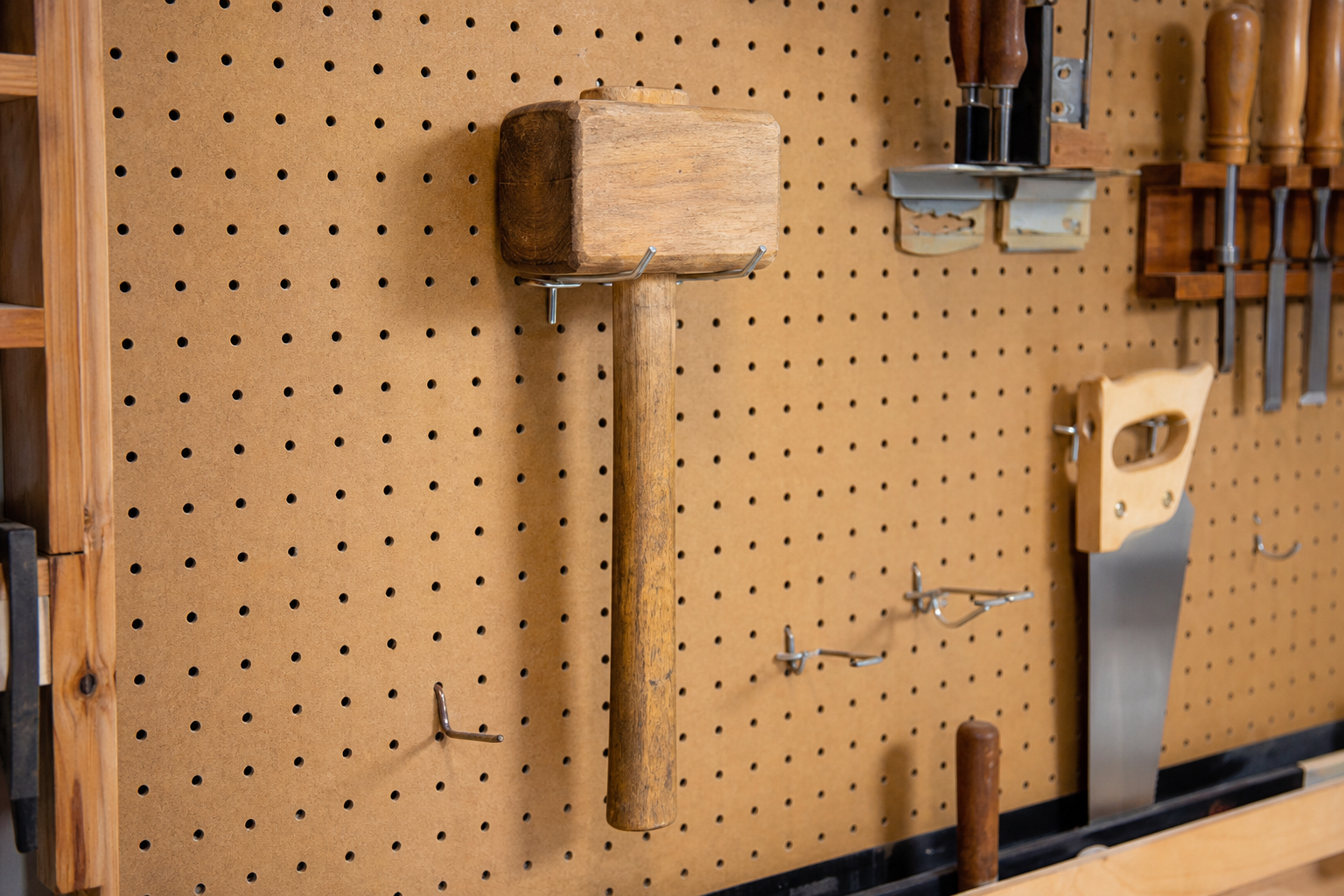
A traditional wood mallet is the best tool for striking chisels during hand-cut joinery. The wooden head absorbs impact with a slight give, which protects chisel handles from the repeated splitting stress that harder materials cause. For paring cuts, chopping mortises, and any task where feel matters as much as force, a wood mallet is the correct choice.
Most traditional carpenter’s mallets are made from dense hardwoods. Beech is the most common and widely available. Lignum vitae, one of the densest naturally occurring woods, is considered by many experienced woodworkers to be the gold standard for mallet heads because of its self-lubricating properties and extreme durability. As The English Woodworker notes, the choice of head wood significantly affects how the mallet feels in use and how long it lasts under regular shop conditions.
Other hardwoods used for mallet heads include:
The handle is typically made from a softer, more flexible wood like ash or hickory. That flex absorbs vibration and reduces hand fatigue during long sessions. According to The Plywood’s guide to wood mallets, the handle grain orientation is one of the most overlooked factors in mallet quality. Grain running parallel to the handle length resists splitting far better than cross-grain construction.
Choose a wood mallet if: You’re doing any chisel-based joinery, including mortise and tenon work, dovetails, or general paring cuts. It’s the right tool for woodworking joinery and techniques that rely on precise, controlled force.
A rubber mallet is the correct tool for assembly work where you need to apply force without denting or bruising finished wood. Use it for tapping joints together during glue-up, seating drawer fronts, and persuading a slightly tight tenon into its mortise.
The soft rubber face won’t leave marks on finished surfaces the way a wood or metal mallet can. That matters enormously on glue-up day, when a stray strike on a visible surface can mean hours of repair work. Rubber mallets are also useful for adjusting workpieces on the bench without scratching them.
What rubber mallets are not good for: heavy chisel chopping. The face gives too much on impact, which reduces force transfer and makes accurate striking harder. For chisel work, stick with wood.
A practical note: Keep your rubber mallet dedicated to assembly and glue-up tasks. If you use it for everything, the face picks up glue, finish residue, and grit that can transfer to your workpiece at the worst possible moment.
Rubber mallet options generally fall into two categories: standard rubber (firmer, more force transfer) and dead-blow mallets (filled with shot or sand to eliminate rebound). Dead-blow mallets are particularly useful when you need to seat a joint firmly without the mallet bouncing back and disturbing the piece.
A brass mallet delivers more force per swing than a wood or rubber mallet because of its density. That makes it useful for tasks that need extra persuasion: driving a stubborn joint together, striking a chisel through dense hardwood where a lighter mallet doesn’t transfer enough energy, or working with carving gouges on very hard material.
Brass is the preferred metal for woodworking mallets (as opposed to steel) because it’s dense enough to deliver serious force but softer than steel, which means it’s less likely to damage the struck surface or tool handle on an off-center hit. As Popular Woodworking’s shop mallet selection guide points out, the choice between mallet materials often comes down to the specific demands of the task rather than a single “best” option.
Choose a brass mallet if: You regularly work with very dense hardwoods and find your wood mallet isn’t transferring enough force, or if you do production-level joinery where speed and power matter more than the gentle feedback of a wood mallet.
Avoid brass mallets for: Everyday chisel work, especially on tools with wooden handles. The density that makes brass effective also makes it unforgiving on handles if your strike is slightly off.
For carving, you want a lighter, rounder mallet. For chiseling and joinery, you want a heavier, rectangular or cylindrical mallet with a flat face.
Carving mallets are typically round-headed and weigh between 12 and 20 ounces. The round shape means you can strike a gouge from any angle without repositioning your grip, which matters when you’re working in multiple directions on a sculpture or relief carving. According to FarmstandApp’s guide to wood carving mallets, the most popular carving mallets for beginners weigh between 14 and 18 ounces and are made from lignum vitae or other dense hardwoods.
Chiseling mallets for joinery work are typically rectangular or octagonal and heavier, in the 18 to 32 ounce range. The flat face gives you a consistent strike on the chisel handle, and the extra weight does more work per swing when you’re chopping mortises or driving through hardwood grain.
Practical breakdown:
Mallet size (weight) should match the scale of the work. A mallet that’s too light makes you work harder and leads to inaccurate, repetitive strikes. One that’s too heavy causes fatigue and reduces control on fine work.
Here’s a practical sizing guide:
If you’re just starting out and can only buy one mallet, a 20-ounce wood mallet in beech covers the widest range of beginner tasks. It’s heavy enough for mortise work but light enough for controlled paring cuts.
Buy the wood mallet first. It covers the most critical hand-tool task (chisel work) and is the tool you’ll reach for most often when doing any kind of joinery. The rubber mallet is the second purchase, needed once you start doing regular glue-ups and assembly.
The key difference is what each mallet is optimized for:
As Home Tools Guides’ roundup of the best mallets for woodworking points out, most experienced woodworkers keep both types on the bench and reach for each instinctively based on the task. The two tools don’t compete with each other. They solve different problems.
For beginners, a budget of $25 to $50 gets you a functional, durable wood mallet that will last for years. Spending $60 to $120 gets you a premium mallet in lignum vitae or a quality hardwood with better balance and finish. Beyond $120, you’re largely paying for craftsmanship, aesthetics, and brand prestige.
Here’s a rough breakdown by price tier:
Are expensive mallets worth it? For beginners, no. A $35 beech mallet performs the same fundamental task as a $150 boutique mallet. The differences in feel and balance become meaningful once you’ve developed enough sensitivity to notice them. Start with a mid-range option and upgrade when you have a clear reason to.
The best mallet for beginners is a beech wood mallet weighing 18 to 22 ounces, priced between $25 and $50. It handles the full range of entry-level hand-tool tasks without being too heavy to control or too light to be effective.
If you’re building your first beginner woodworking toolkit, here’s the priority order:
What to look for when buying your first wood mallet:
For a broader look at the tools used in woodworking and how a mallet fits into a complete hand-tool setup, it helps to see the full picture before buying.
You can, but you shouldn’t, especially for chisel work. A hammer’s hardened steel face concentrates force into a small area and delivers it with no give. That combination damages chisel handles over time, reduces striking accuracy, and gives you less feedback on your cuts.
The specific problems with using a hammer for chisel work:
For rough work, like driving a large chisel through softwood for a quick cut, a hammer won’t cause immediate damage. But for any regular chisel work, the investment in a basic wood mallet is worth it. A decent mallet costs less than replacing a cracked chisel handle.
One exception: A joiner’s mallet (a very heavy wood mallet) can substitute for a hammer in some timber framing applications. But that’s a specialized tool, not a beginner concern.
If your mallet is damaging chisel handles, the head material is almost certainly the problem. A metal or very hard synthetic mallet head delivers force without the absorption that protects tool handles. Switch to a wood mallet.
Here’s how to diagnose the issue:
If you’ve already switched to a wood mallet and are still seeing handle damage, check your technique. Striking at an angle rather than square to the handle top concentrates force unevenly and causes premature wear regardless of mallet material.
Handle cracks in wooden mallets are caused by three main factors: wood that’s too dry, poor grain orientation in the handle, or repeated off-center strikes. The fix depends on the cause.
If the wood is too dry: Store your mallet away from direct heat sources (radiators, sunny windows, near a wood stove). Extreme dryness causes wood to shrink and crack. Applying a light coat of boiled linseed oil or danish oil to the handle once or twice a year keeps the wood conditioned and reduces cracking risk.
If the grain orientation is wrong: This is a manufacturing issue. Handles with cross-grain construction (grain running perpendicular to the handle length) are inherently weaker and prone to splitting under repeated impact. If your mallet has this problem, it’s worth replacing the handle or buying a better-made mallet. Look for handles where the grain runs parallel to the length of the handle.
For minor surface cracks: Clean the crack, apply wood glue, clamp lightly, and allow to dry fully before use. This works for superficial cracks that haven’t compromised the handle’s structural integrity.
For a cracked head: A mallet head that has cracked through the striking face needs to be replaced. Continued use risks the head splitting on impact, which is a safety hazard.
Yes, mallet weight has a direct effect on carving quality and fatigue. For carving, lighter is generally better for detail work, and heavier is better for roughing out.
The reasoning is straightforward. In carving, you’re making many small, directional strikes in rapid succession, often changing angle with each cut. A lighter mallet (12 to 16 oz) lets you do this with less wrist fatigue and more precision. A heavier mallet (20 oz and above) makes sense when you’re removing large amounts of material in the early stages of a carving project.
According to Carving Is Fun’s guide to carving mallets, most beginner carvers benefit from starting with a round-headed mallet in the 14 to 16 ounce range. The round head allows strikes from any angle without repositioning, which is essential for three-dimensional carving work.
For flat relief carving, where you’re working primarily in one plane, a slightly heavier rectangular mallet (16 to 20 oz) can work well. The flat face gives more consistent contact with the gouge handle.
Practical rule: If your wrist or forearm is tired after 20 to 30 minutes of carving, your mallet is probably too heavy for the work you’re doing. Drop down in weight and see if your endurance and control improve.
Several brands consistently produce quality mallets across different price points. Here are the most respected names in the category:
For beginners and mid-range buyers:
For serious hobbyists and professionals:
Where to buy:
For a broader look at woodworking tools and equipment across all categories, it’s worth reviewing what else you’ll need alongside your mallet before placing an order.
What mallet should I use for chisels? Can I use a hammer instead of a mallet for woodworking? Do I really need more than one mallet? What’s the best mallet weight for a beginner? Is a brass mallet worth buying as a beginner? Why does my mallet keep bouncing off the chisel? How do I care for a wooden mallet? What’s the difference between a dead-blow mallet and a regular rubber mallet? Can I make my own wooden mallet? What wood is best for a homemade mallet head? Does mallet shape matter? How long should a good wooden mallet last? A mallet is one of those tools that seems almost too simple to think carefully about. Then you use the wrong one on a good chisel and reconsider. The best woodworking mallets match the task: wood for chisel work and joinery, rubber for assembly, brass for the occasional heavy-duty situation.
For beginners, the path is clear. Buy a solid beech wood mallet in the 18 to 22 ounce range. Use it for everything chisel-related. Add a rubber mallet once you’re doing regular glue-ups. Don’t overthink the brass mallet until you genuinely need one.
The mallet you reach for most often will be the one that fits your hand, matches your work, and doesn’t fight you. That’s usually a well-balanced wood mallet that cost less than $50. Everything else is refinement.
If you’re still building out your hand-tool kit, take a look at the full guide to various tools used for woodworking to see how a mallet fits alongside chisels, saws, and planes in a complete beginner setup. And if you’re ready to put your new tools to work, the woodworking joinery and techniques section covers the hand-cut joints where your mallet will get the most use.
Recommended mallets by category:
Further reading:
Key Takeaways

What Is a Woodworking Mallet and How Is It Different from a Hammer?
Wood Mallets: The Right Choice for Chisel Work and Fine Joinery
Rubber Mallets: When You Need Force Without Marring the Surface
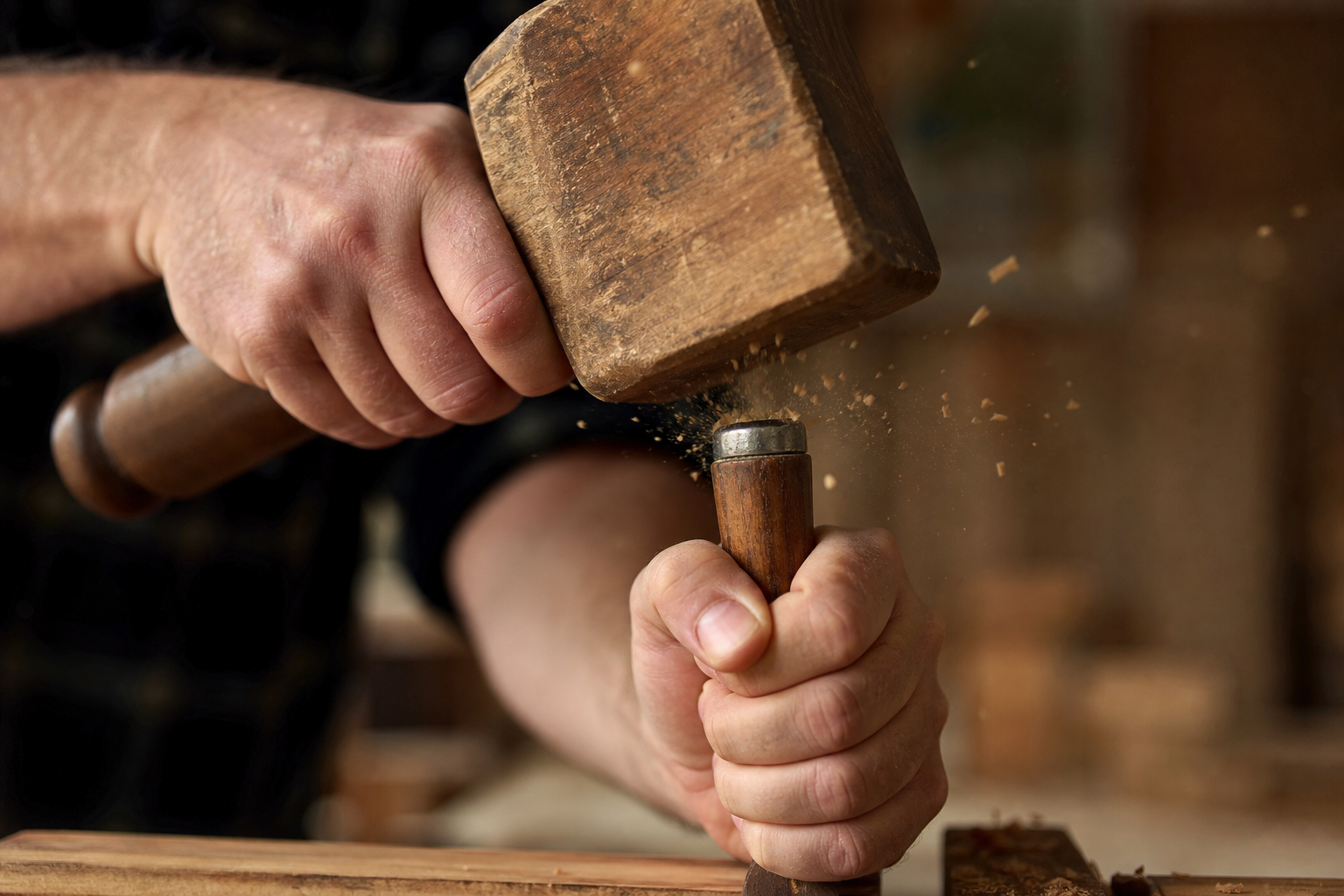
Brass and Metal Mallets: Specialty Tools for High-Force Tasks
Best Woodworking Mallets for Carving vs. Chiseling
What Size Mallet Do I Need for Different Projects?
Wooden Mallet vs. Rubber Mallet: Which One Should You Buy First?
Feature
Wood Mallet
Rubber Mallet
Best use
Chisel work, mortising, joinery
Assembly, glue-up, seating joints
Surface safety
Can mark finished wood
Won’t mar finished surfaces
Force transfer
Good, with slight give
Moderate (too much give for chisels)
Feedback/feel
Excellent
Limited
Typical weight range
16 to 32 oz
16 to 32 oz
Price range
$25 to $120+
$10 to $40
How Much Should I Spend on a Quality Woodworking Mallet?
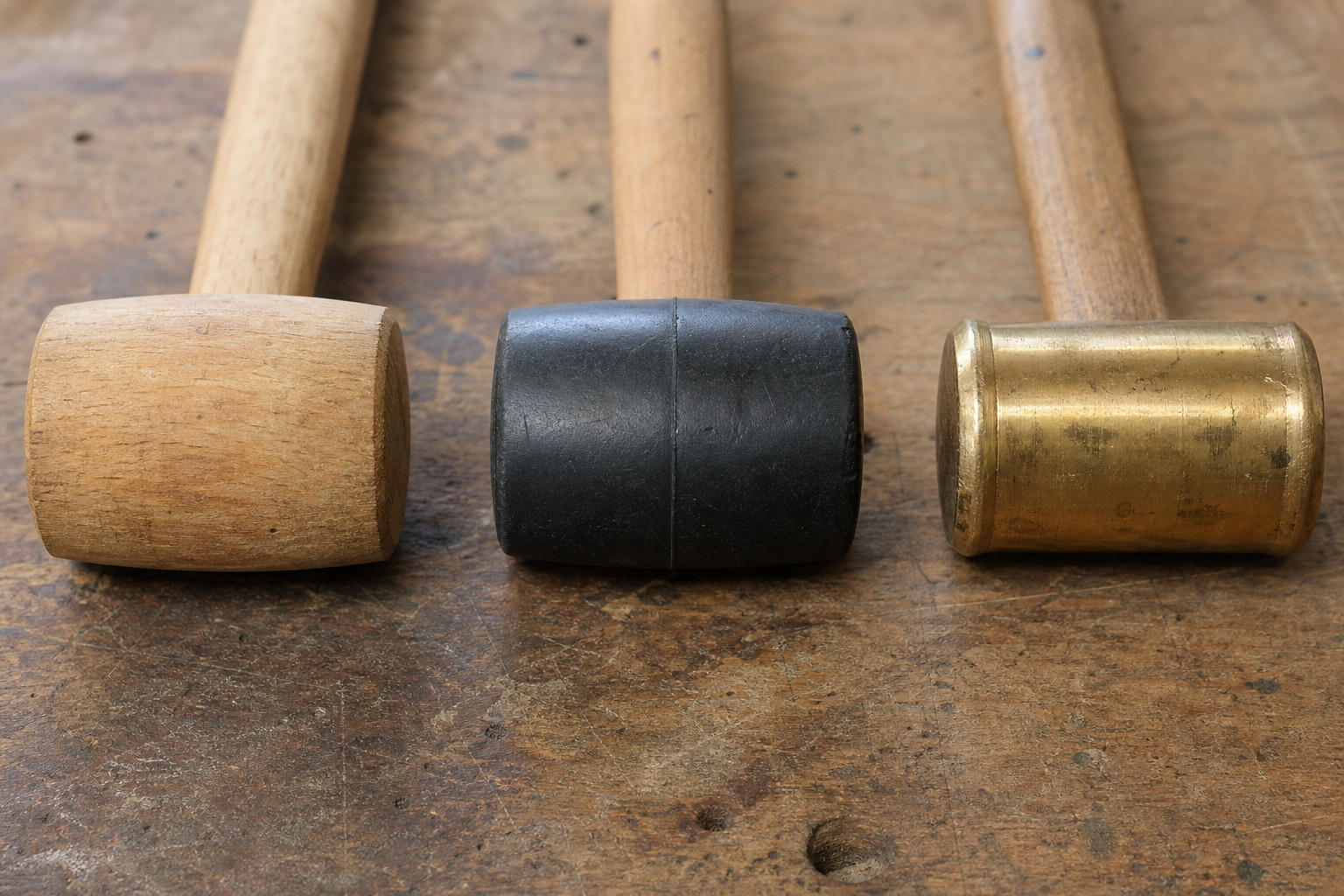
Best Mallet for Beginners: What to Buy and Why
Can I Use a Regular Hammer Instead of a Woodworking Mallet?
Mallet Head Too Hard and Damaging Your Chisels: What to Do
Wooden Mallet Handle Keeps Cracking: How to Fix It
Mallet Weight and Carving: Does It Actually Matter?
Best Mallet Brands and Where to Buy Woodworking Mallets
Frequently Asked Questions
A wood mallet is the correct choice for striking chisels. The wooden head absorbs impact and protects the chisel handle from the splitting stress that harder materials cause. Beech is the most common and widely available option. Lignum vitae is better but costs more.
Not for chisel work. A hammer’s hard steel face concentrates force without absorption, which damages chisel handles over time and reduces striking accuracy. For rough work in softwood, a hammer won’t cause immediate harm, but it’s not a substitute for regular use.
Most woodworkers end up with at least two: a wood mallet for chisel work and a rubber mallet for assembly and glue-up. Each is optimized for a different task. One mallet can cover both, but not well.
An 18 to 22 ounce wood mallet covers the widest range of beginner tasks. It’s heavy enough for mortise chopping but light enough for controlled paring cuts. If you’re focused on carving, start lighter, around 14 to 16 ounces.
No. A brass mallet is a specialty tool for high-force tasks. Start with a wood mallet and add brass only when you’ve identified a specific recurring need that your wood mallet can’t meet.
Rebound is usually caused by a mallet that’s too light for the task, or a head material (like hard rubber or metal) that doesn’t absorb enough energy on impact. Try a heavier wood mallet and make sure you’re striking squarely.
Keep it away from heat sources that dry out the wood. Apply a light coat of boiled linseed oil or danish oil once or twice a year. Store it flat or hanging, not resting on the head, to prevent the handle from loosening over time.
A dead-blow mallet has a hollow head filled with shot or sand. This eliminates rebound on impact, which is useful for seating joints firmly without disturbing the workpiece. A regular rubber mallet rebounds slightly. Both work for assembly; dead-blow gives more control.
Yes, and it’s a classic beginner project. A simple rectangular mallet requires only a piece of dense hardwood for the head, a handle blank, and basic hand tools. It’s a good early project for anyone learning beginner woodworking projects and a practical way to practice mortise and tenon joinery.
Beech, hard maple, osage orange, or any dense, close-grained hardwood. Avoid softwoods for the head. They compress and deform too quickly under repeated impact.
Yes. Round-headed mallets are best for carving because they allow strikes from any angle. Rectangular and octagonal heads are better for chisel work because the flat face gives consistent contact with the chisel handle. Cylindrical mallets split the difference and work reasonably well for both.
A well-made wood mallet, properly cared for, can last decades. Many woodworkers use the same mallet for 20 to 30 years. The head occasionally needs re-conditioning with oil, and handles can be replaced if they crack. The tool itself is not a consumable.
Conclusion
Products, Tools, and Resources
References