Best Roofing for Studio Sheds with Skylights
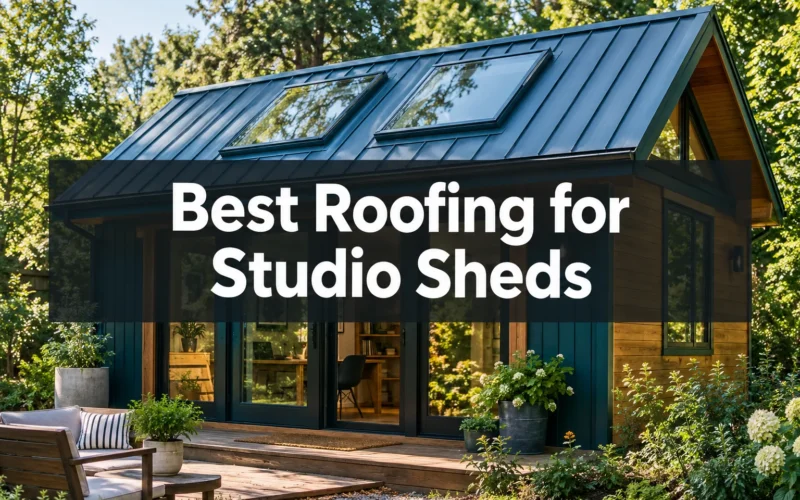
A poorly chosen roof material can turn a beautiful skylight into a leak waiting to happen. That single decision, roofing material, determines whether your studio shed stays dry, well-lit, and comfortable for decades, or becomes a seasonal maintenance headache. Choosing the best roofing for studio sheds with skylights means balancing waterproofing performance, compatibility with skylight flashing, insulation value, and long-term durability.
Key Takeaways
- Standing-seam metal roofing is the top overall choice for studio sheds with skylights because its raised seams and clean flashing integration make watertight skylight installation straightforward.

- Asphalt shingles work well on pitched roofs and are the most budget-friendly option, but require careful step flashing and counter-flashing around every skylight.
- EPDM rubber membrane is the best choice for flat or low-slope roofs with skylights, as it creates a continuous waterproof surface.
- Polycarbonate roofing panels can function as a full-length “skylight roof,” but they offer less insulation than solid roofing materials.
- A roof pitch between 3:12 and 6:12 is the sweet spot for skylights in studio sheds, steep enough to shed water, shallow enough for comfortable skylight sizing.
- Skylight leaks almost always come from failed flashing, not the skylight itself. Proper flashing installation is non-negotiable.
- Insulated roofing panels (SIPs or foam-backed metal) dramatically reduce heat gain through skylights in warmer climates.
- Polycarbonate skylights cost less and resist impact better than glass; glass skylights offer better clarity and scratch resistance.
- Budget roughly $800,$2,500 for a complete shed roof with one or two skylights, depending on material and shed size.
- Maintenance checks twice a year, spring and fall, keep skylight seals and flashing in good condition.
Find this useful? Add us as a preferred source on Google and more of what we publish will show up in your results.
What Is the Best Roofing Material for a Shed with Skylights
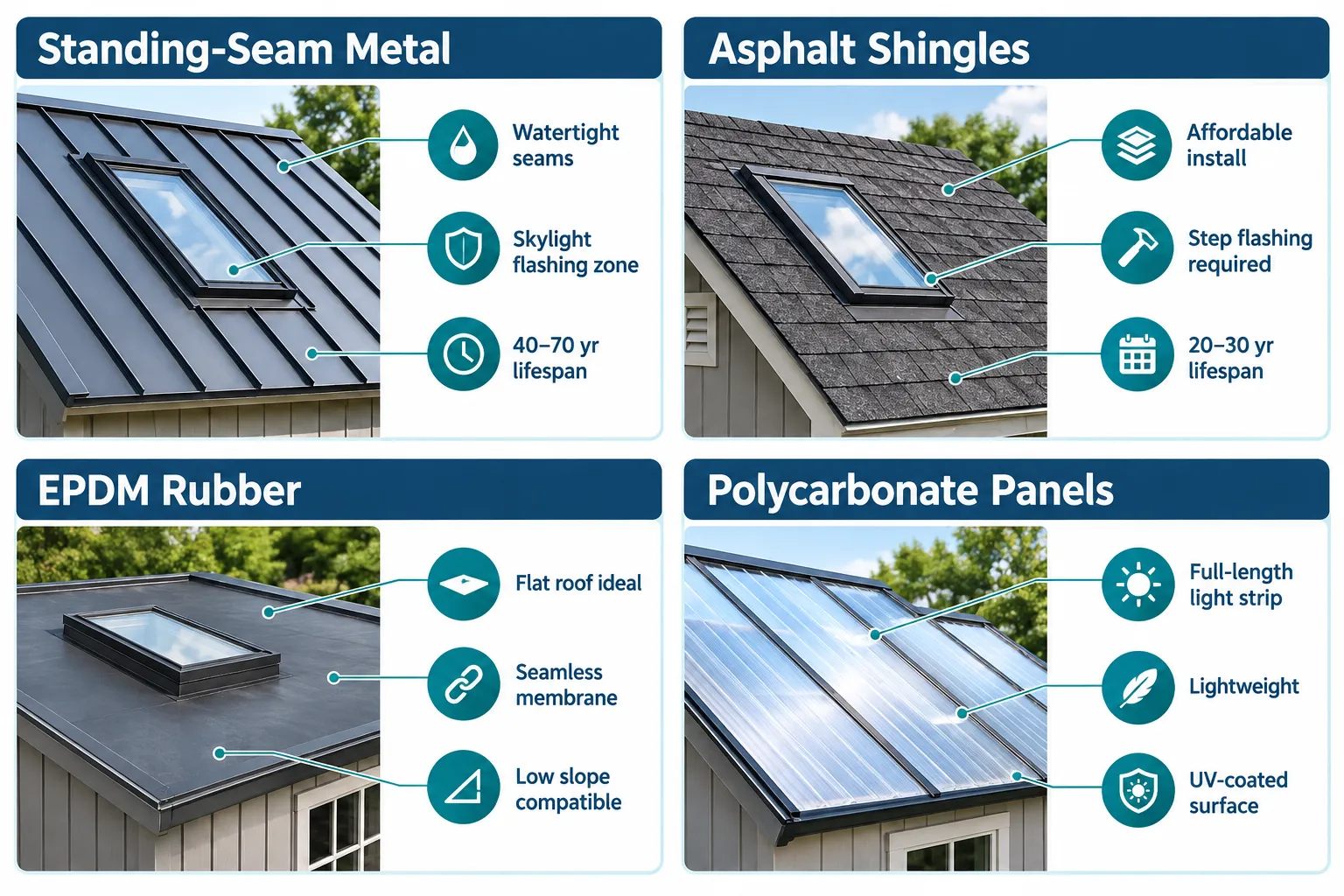
Standing-seam metal roofing is the best overall roofing material for a studio shed with skylights. Its concealed fasteners and raised seams create natural channels that direct water away from skylight penetrations, and the clean metal surface makes custom flashing collars easy to fabricate and seal. For budget-conscious builders, architectural asphalt shingles on a properly pitched roof are a reliable second choice.
Here is how the main options compare at a glance:
| Roofing Material | Best For | Skylight Compatibility | Est. Lifespan |
|---|---|---|---|
| Standing-seam metal | All climates, pitched roofs | Excellent | 40-70 years |
| Asphalt shingles | Budget builds, pitched roofs | Good (with proper flashing) | 20-30 years |
| EPDM rubber membrane | Flat or low-slope roofs | Excellent | 25-50 years |
| Polycarbonate panels | Maximum natural light | Built-in (panel IS the skylight) | 15-25 years |
| TPO / PVC membrane | Flat roofs, hot climates | Very good | 20-30 years |
Decision rule: Choose standing-seam metal if durability and low maintenance are priorities. Choose asphalt shingles if you’re working with a tight budget and a standard gable pitch. Choose EPDM if your shed has a flat or near-flat roof.
For more on how roof shape affects your material choice, see this guide on gable vs. gambrel roof sheds and this overview of the best shed roof styles.
How Do Skylights Affect Roof Durability and Lifespan
Every skylight creates a penetration in the roof plane, and penetrations are where roofs age fastest. Skylights do not inherently shorten a roof’s lifespan, but poor flashing around them absolutely will. When installed correctly with quality flashing, a skylight adds minimal stress to the surrounding roofing material.
The main durability concerns are:
- Thermal expansion: Skylights and roofing materials expand and contract at different rates. Metal roofing handles this better than asphalt shingles because it flexes without cracking.
- UV degradation at seals: Silicone and butyl sealants around skylight frames degrade over time. Plan to inspect and re-seal every 5-7 years.
- Ice damming (cold climates): Skylights can create warm spots on a cold roof, accelerating ice dam formation. Proper insulation beneath the roof deck reduces this risk significantly.
- Condensation: In humid workshop environments, temperature differences between the skylight glass and the interior air cause condensation. A condensation gutter or thermally broken skylight frame prevents water from dripping onto your workbench.
Common mistake: Builders often caulk directly over shingles around a skylight instead of installing proper step flashing and counter-flashing. Caulk alone fails within a few seasons. Flashing done right lasts decades.
Metal vs. Asphalt Shingles for Studio Shed Roofing
Metal roofing outperforms asphalt shingles for studio sheds with skylights in almost every category except upfront cost. Asphalt shingles cost roughly 30-50% less to install, which makes them attractive for smaller builds, but they require more careful skylight flashing work and more frequent maintenance.
Metal roofing advantages for skylight compatibility:
- Raised seams naturally divert water around skylight curbs
- Custom aluminum or copper flashing collars bond cleanly to metal surfaces
- No granule loss or shingle cracking around the skylight frame over time
- Better performance in high-wind and high-snow-load areas
Asphalt shingle advantages:
- Lower material and labor cost
- Widely available and easy to source locally
- Straightforward to repair if a section near the skylight is damaged
- Works well on standard 4:12 to 6:12 pitches common in shed construction
Choose metal if your studio shed is a long-term investment, you live in a climate with heavy rain or snow, or you want minimal maintenance. Choose asphalt shingles if you’re building a smaller hobby shed on a limited budget and you’re comfortable doing periodic flashing inspections.
If you’re planning a full studio build, the soundproof music studio shed guide covers structural considerations that also apply to roofing decisions.
How Much Does It Cost to Install a Roof with Skylights on a Shed
For a typical 10×12 to 12×16 studio shed, expect to spend between $800 and $2,500 for a complete roof with one or two skylights installed. That range covers materials and basic installation labor. Costs vary based on roofing material, skylight type, and your local labor market.
Rough cost breakdown by material (estimates for a 150-200 sq ft roof):
- Asphalt shingles + one skylight: $800,$1,200
- Standing-seam metal + one skylight: $1,400,$2,200
- EPDM membrane + one curb-mounted skylight: $900,$1,600
- Polycarbonate panel roof (full translucent section): $600,$1,400
Skylights themselves range from about $150 for a basic fixed polycarbonate unit to $600+ for a tempered glass, venting model with a built-in flashing kit. Professional installation of a single skylight typically adds $200,$500 to the total.
For a broader look at shed construction budgets, the cost to build a small shed guide breaks down material and labor costs in more detail.
Can You Put Skylights in Any Type of Shed Roof
Not every roof style is equally suited to skylights. Pitched roofs, gable, shed (lean-to), and barn styles, are the most practical for skylight installation. Flat roofs can accommodate skylights, but they require curb-mounted units and a waterproof membrane that extends well past the skylight frame.
- Gable roofs: Ideal. Standard pitch, easy flashing, wide skylight placement options.
- Lean-to (shed) roofs: Work well, especially for north-facing studio sheds where a south-facing skylight captures consistent indirect light.
- Gambrel/barn roofs: The lower slope section can be tricky; place skylights on the upper slope for best results.
- Flat roofs: Possible but require curb-mounted skylights (minimum 4-inch curb height) and a continuous waterproof membrane.
- Curved or arched roofs: Skylights are difficult to flash properly and are generally not recommended for DIY builds.
Edge case: Very steep roofs (above 8:12 pitch) make skylight installation physically harder and may require specialized steep-slope flashing kits.
What Roofing Material Works Best with Skylights for Natural Light
For maximum natural light transmission, polycarbonate roofing panels are the most effective option because they can span large sections of the roof as a continuous translucent surface. If you want a conventional solid roof with discrete skylights, standing-seam metal provides the cleanest integration and allows you to size and position skylights precisely.
Tips for optimizing natural light through your roof choice:
- Orientation matters more than material. A south-facing skylight on a 4:12 pitch delivers the most consistent daylight in the northern hemisphere.
- White or light-colored metal roofing reflects heat and reduces glare from skylights in sunny climates.
- Diffused polycarbonate panels (opal or bronze tint) soften harsh direct sunlight, which is ideal for an art or woodworking studio.
- Clear glass skylights deliver the most accurate color rendering, important if you’re doing finish work or painting.
How to Prevent Leaks Around Skylights in Shed Roofs
The best roofing for studio sheds with skylights is only as good as the flashing around each skylight. Leaks almost never come from the skylight unit itself, they come from failed or missing flashing at the perimeter.
Step-by-step leak prevention:
- Install a self-adhering waterproof underlayment (such as ice-and-water shield) at least 12 inches around the entire skylight opening before setting the unit.
- Use a manufacturer-supplied integrated flashing kit when available. These are pre-formed to fit the skylight frame exactly.
- Install step flashing on the sides of the skylight, weaving each piece between shingles (for asphalt) or under seam caps (for metal).
- Apply counter-flashing or a saddle flashing piece at the uphill (head) side to divert water around the skylight.
- Seal all flashing overlaps with roofing-grade butyl tape, not standard silicone caulk.
- Never rely on caulk alone as the primary waterproofing layer.

Common mistake: Skipping the uphill saddle flashing. Water that pools against the uphill side of a skylight frame is the number one cause of chronic leaks in shed roofs.
Best Insulated Roofing for Studio Sheds with Skylights
Insulated metal panels (also called structural insulated panels or SIPs roofing) are the best choice when thermal performance is a priority. They combine a rigid foam core with metal skins, delivering R-values of R-25 to R-38 in a single panel, which dramatically reduces heat gain through both the roof and the skylight zone.
For builders using conventional roofing materials, the insulation strategy matters just as much as the roofing material itself:
- Rigid foam above the deck: Install 1.5-2 inches of polyiso foam board above the roof sheathing before laying metal or asphalt. This eliminates thermal bridging through the rafters.
- Spray foam at skylight curbs: Seal the gap between the skylight curb and the rough opening with closed-cell spray foam to prevent cold air infiltration.
- Ventilated roof assembly: For asphalt shingle roofs, maintain a 1.5-inch ventilation channel between insulation and the underside of the sheathing to prevent moisture buildup.
The workshop shed insulation guide covers R-value recommendations and insulation material options in full detail, worth reading before finalizing your roof assembly.
Polycarbonate vs. Glass Skylights for Shed Roofs
Polycarbonate skylights are lighter, less expensive, and more impact-resistant than glass. Glass skylights offer better optical clarity, higher scratch resistance, and a more premium appearance. For most hobby studio sheds, polycarbonate is the practical choice; glass makes sense when color accuracy or aesthetics are a top priority.
| Feature | Polycarbonate | Glass |
|---|---|---|
| Weight | Light (1-2 lbs/sq ft) | Heavy (3-5 lbs/sq ft) |
| Impact resistance | Excellent | Moderate (tempered) |
| Clarity | Good (slight tint) | Excellent |
| UV protection | Requires UV coating | Built into glass |
| Cost | Lower | Higher |
| Scratch resistance | Lower | Higher |
| Lifespan | 15-25 years | 25-40+ years |
Choose polycarbonate if you’re building a hobby shed on a budget, live in a hail-prone area, or need a lightweight option for a smaller roof structure. Choose glass if you’re doing finish woodworking, artwork, or any task where true color rendering under natural light matters.
What Angle Should a Studio Shed Roof Be for Skylights
A roof pitch between 3:12 and 6:12 (14 to 27 degrees) is the recommended range for studio sheds with skylights. This range provides enough slope to shed rainwater effectively while keeping the skylight at an angle that maximizes daylight capture and minimizes glare.
- Below 3:12: Water drains slowly, increasing leak risk around skylight frames. Requires a flat-roof skylight system with a raised curb.
- 3:12 to 4:12: Works well for lean-to and shed-style roofs. Good for north-facing studios that need diffused light.
- 4:12 to 6:12: The sweet spot. Standard gable roofs in this range accommodate almost any skylight product with a standard flashing kit.
- Above 6:12: Skylights still work but require steep-slope flashing kits and are more difficult to install safely.
For a deeper look at how pitch affects your overall shed design, the comparison of lean-to, gable, and barn roof styles is a useful starting point.
Is a Flat or Pitched Roof Better for Skylights in Sheds
A pitched roof is generally better for skylights in studio sheds because it naturally drains water away from skylight penetrations and supports a wider range of skylight products. Flat roofs can work, but they demand more careful waterproofing and higher-profile curb-mounted skylights to prevent ponding water from seeping under the frame.
Pitched roof benefits for skylights:
- Water runs off quickly, reducing pressure on flashing seals
- Wider product selection (deck-mounted and curb-mounted units both work)
- Easier DIY installation for beginners
Flat roof benefits:
- Skylights face directly upward, maximizing light on overcast days
- Easier to walk on during installation and maintenance
- Works well for contemporary studio shed designs
Bottom line: If you’re starting from scratch, design a pitched roof. If your shed already has a flat roof, use a quality EPDM or TPO membrane and invest in a proper curb-mounted skylight with a manufacturer-supplied flashing kit.
If you’re still in the planning stage, the best shed plans for beginners and the guide to comparing she-shed, studio shed, and office shed designs can help you settle on the right structure before committing to a roofing system.
How Often Do You Need to Maintain a Shed Roof with Skylights
Twice-yearly inspections, once in spring and once in fall, are the minimum for a shed roof with skylights. Most maintenance tasks are simple visual checks and minor seal touch-ups that take less than an hour.
Spring checklist:
- Inspect flashing at all skylight perimeters for lifting, cracking, or separation
- Check sealant beads for gaps or hardening
- Clear any debris (leaves, twigs) from around skylight frames
- Look for water stains on the interior ceiling near the skylight
Fall checklist:
- Re-inspect flashing before winter weather arrives
- Apply fresh butyl tape or roofing sealant to any suspect areas
- Check that condensation drainage channels are clear
- For polycarbonate skylights, clean the surface with a mild soap solution (avoid abrasive cleaners)
Longer-term maintenance:
- Reseal all skylight flashing every 5-7 years regardless of visible condition
- Replace polycarbonate panels when yellowing or hazing reduces light transmission noticeably
- Inspect metal roofing for rust at cut edges every 10 years
FAQ
What is the single most leak-prone spot on a shed roof with a skylight?
The uphill (head) side of the skylight frame, where water can pool if the saddle or head flashing is missing or improperly installed. Always install a diverter or saddle flashing at this location.
Can I install a skylight myself on a shed roof?
Yes, for a standard pitched roof with asphalt shingles or metal panels. Most manufacturer skylight kits include step-by-step flashing instructions. Flat-roof installations are more technically demanding and may benefit from professional help.
Does a skylight make a studio shed hotter in summer?
It can, especially with clear glass facing south or west. Mitigate heat gain by choosing a low-e coated glass skylight, a bronze-tinted polycarbonate panel, or by adding a cellular shade inside the shed.
How big should a skylight be for a studio shed?
A general guideline is that skylights should cover no more than 5-15% of the floor area of the room. For a 12×16 shed (192 sq ft), one or two skylights totaling 10-28 square feet of glazing provides good natural light without excessive heat gain.
Is metal roofing loud in rain?
On a shed with a solid roof deck and insulation, metal roofing is only slightly louder than asphalt shingles during heavy rain. Without insulation, it can be noticeably noisy. Adding rigid foam insulation beneath the metal panels significantly reduces sound transmission.
What type of skylight is easiest to install on a shed roof?
A fixed, deck-mounted skylight with an integrated flashing kit is the easiest for DIY installation on a standard pitched roof. Avoid curb-built or custom-framed skylights for a first project.
Do I need a building permit to add a skylight to a shed?
Permit requirements vary by location. In many jurisdictions, adding a skylight to an existing accessory structure (shed) requires at least a minor permit. Check with your local building department before cutting into the roof.
Can polycarbonate roofing panels replace traditional skylights entirely?
Yes. A section of twin-wall or multiwall polycarbonate roofing panels can replace a traditional skylight entirely, providing diffused natural light across a wider area. This approach works especially well for workshop and studio sheds where even, glare-free light is preferred.
What is the best underlayment to use under metal roofing near skylights?
Self-adhering ice-and-water shield (modified bitumen membrane) is the best underlayment in the skylight zone. It bonds directly to the deck and creates a secondary waterproof barrier if flashing ever fails.
How do I stop condensation dripping from my shed skylight?
Use a thermally broken skylight frame (one with a plastic or foam thermal break between the inner and outer frame), ensure the shed interior is adequately ventilated, and seal the skylight curb with closed-cell spray foam to eliminate cold air infiltration.
Conclusion
Choosing the best roofing for studio sheds with skylights comes down to three things: the right material for your roof pitch, properly installed flashing at every skylight penetration, and a basic maintenance routine to catch small problems before they become expensive ones.
For most hobby woodworkers and studio builders, standing-seam metal roofing paired with a fixed glass or polycarbonate skylight on a 4:12 to 6:12 pitched roof is the most reliable long-term combination. If budget is the primary constraint, architectural asphalt shingles with a quality integrated flashing kit deliver solid performance at a lower upfront cost.
Actionable next steps:
- Decide on your roof pitch first, it determines which skylight products and flashing systems are compatible.
- Select your roofing material based on climate, budget, and how long you plan to use the shed.
- Source a skylight with a manufacturer-supplied flashing kit that matches your roofing material.
- Install self-adhering waterproof underlayment in the skylight zone before setting the unit.
- Schedule a quick inspection every spring and fall to keep flashing and seals in good condition.
A well-built studio shed roof with properly integrated skylights will reward you with years of bright, comfortable working space, and that’s exactly the kind of build worth doing right.
Products, Tools, and Resources
Recommended products for this build:
- Velux fixed skylight with integrated flashing kit, one of the most widely available and DIY-friendly skylight systems, compatible with both asphalt shingle and metal roofing.
- Grace Ice and Water Shield, a self-adhering bitumen underlayment that is the industry standard for waterproofing around skylight penetrations.
- Twin-wall polycarbonate roofing panels (8mm or 10mm thickness), a practical alternative to discrete skylights for sheds where broad, diffused natural light is the goal.
- Butyl tape (roofing grade), use this instead of silicone caulk for sealing flashing overlaps. It stays flexible through temperature cycles without cracking.
- Rigid polyiso foam board (1.5-2 inch), install above the roof deck for meaningful thermal performance improvement without a full SIPs system.
Further reading on Woodworking Guru:
- How to wire a workshop shed for power tools safely, the logical next step after the roof is sorted.
- DIY shed building cost comparison: hire help vs. go solo, helps you decide how much of the roofing work to take on yourself.
- Workshop shed insulation guide, pairs directly with this article for a complete thermal envelope strategy.