The Complete Minimum Tool List For A First-Time Woodworker
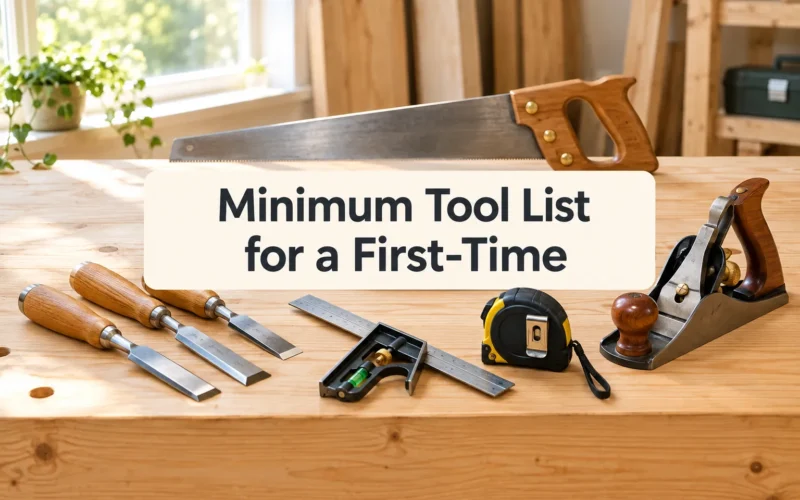
Most beginners buy twice as many tools as they ever use in their first year. A tape measure, a sharp hand saw, one good clamp, a chisel, and a drill will let a new woodworker build real furniture long before a table saw ever enters the garage. The real skill in putting together a minimum tool list for a first-time woodworker isn’t collecting gear, it’s knowing which eight or nine tools do 90 percent of the work on a typical first project.
This guide breaks down exactly what belongs in that starter list, what to skip, how much to budget, and where most new woodworkers end up wasting money. It also answers the questions beginners search for most: hand tools versus power tools, table saws versus miter saws, and which purchases people regret not making sooner.
Find this useful? Add us as a preferred source on Google and more of what we publish will show up in your results.
Key Takeaways
- A workable minimum tool list for a first-time woodworker includes a tape measure, combination square, hand saw or circular saw, chisel set, clamps, hammer or mallet, cordless drill, and sandpaper or a sander, roughly eight to ten items total.
- You can build genuinely nice small projects with hand tools alone; power tools speed things up but aren’t required to start.

- A table saw and miter saw are useful upgrades, not starter requirements, most first projects (shelves, boxes, small furniture) don’t need either.
- Expect to spend somewhere between $150 and $400 on a basic starter set, depending on whether you buy new, secondhand, or as a bundled kit.
- Clamps, a sharp chisel set, and an accurate square are the tools beginners most often wish they’d bought first instead of last.
- Avoid buying a full table saw, jointer, or planer before finishing at least two or three real projects, that money is better spent on quality hand tools and clamps.
- Big box stores, specialty woodworking retailers, and used-tool marketplaces are the three most common places beginners buy their first gear.
What Tools Do You Actually Need to Start Woodworking
A first-time woodworker needs a way to measure, mark, cut, join, and smooth wood, and that’s it at the most basic level. Everything else is a refinement on those five functions. The core minimum tool list for a first-time woodworker covers each function with one tool, not three.
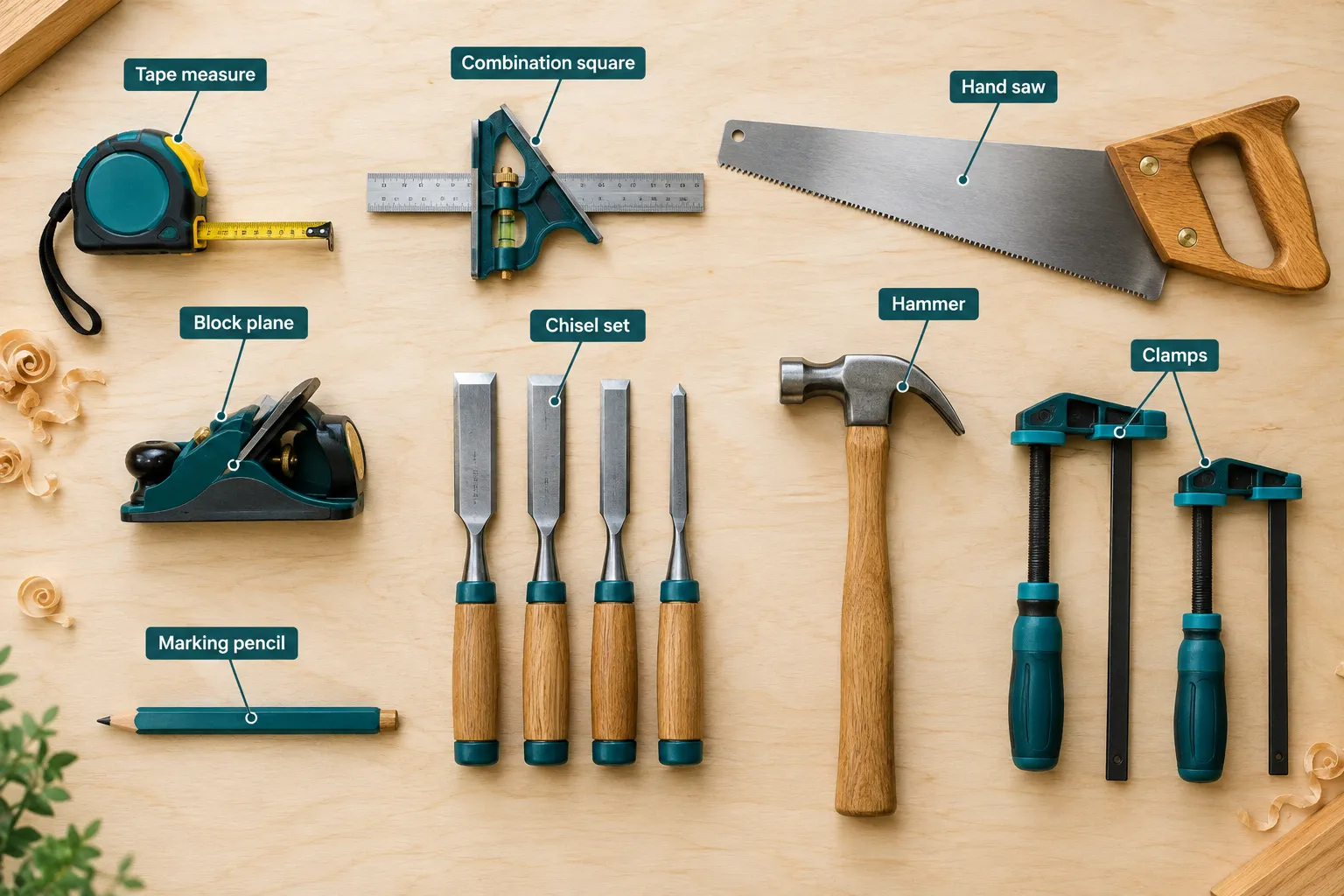
Here’s the realistic starter list, organized by function:
| Function | Tool | Why it’s on the list |
|---|---|---|
| Measuring | Tape measure, combination square | Accuracy drives every joint and cut that follows |
| Marking | Pencil, marking knife | Visible, precise lines prevent wasted material |
| Cutting | Hand saw or cordless circular saw | Breaks lumber down to rough size |
| Joining | Chisel set, cordless drill/driver | Cuts joints, drives screws, drills pilot holes |
| Clamping | Two to four bar or F-clamps | Holds glue-ups and workpieces steady while cutting |
| Smoothing | Sandpaper (80 to 220 grit) or orbital sander | Removes mill marks and prepares surfaces for finish |
| Striking | Hammer or wooden mallet | Sets nails, drives chisels, assembles joints |
That’s seven categories and roughly eight physical tools. Anyone who owns all seven can build a bookshelf, a step stool, a simple side table, or a storage box from start to finish. For a closer look at how these items work together on an actual build, the beginner woodworing tools and equipment guide walks through each one in more depth.
Essential vs. Nice-to-Have: What’s the Real Difference
Essential tools are the ones a specific project cannot be completed without. Nice-to-have tools make the work faster, cleaner, or more precise, but a beginner can finish a build without them. Confusing the two is the single biggest reason new woodworkers overspend before their first project is even cut.
A simple test separates the two categories: if skipping the tool means the project cannot physically be finished, it’s essential. If skipping it just means more time or slightly rougher results, it’s nice-to-have.
- Essential: tape measure, square, saw, drill, clamps, chisel, sandpaper
- Nice-to-have: router, table saw, jointer, planer, dovetail jig, random orbit sander (versus hand sanding)
Tools that work equally well on small projects and larger builds, a cordless drill, a quality combination square, bar clamps, and a sharp hand plane, deserve priority in that essential column because they scale. A drill used to build a jewelry box is the same drill used to assemble a workbench or a shed frame; it never becomes obsolete as projects grow. That versatility is why the best beginner woodworking tool kits for small projects and furniture tend to center on these exact multi-use items rather than single-purpose gadgets.
Best Beginner Woodworking Tools Under $100
Several genuinely useful tools cost less than $100 individually, and a full starter kit of non-power tools can often be assembled for under $150 total. This is the fastest, cheapest entry point for anyone testing whether woodworking is a hobby worth sticking with.
Under $100, look for:
- A quality combination square ($15 to $30)
- A sharp panel or crosscut hand saw ($25 to $50)
- A basic four-piece chisel set ($20 to $40)
- A pair of bar clamps ($15 to $25 each)
- A tape measure and marking tools ($10 to $20 combined)
- A rubber mallet or claw hammer ($15 to $25)
Skipping brand-name premiums in favor of mid-tier hardware store options is a reasonable call here. Choose budget tools if the goal is finishing a first project within a month; choose one or two premium items (usually the chisel set or hand plane) if the plan is to keep woodworking long-term, since edge-holding steel pays for itself in less frequent sharpening.
Can You Woodwork With Just Basic Hand Tools
Yes. Hand tools alone are enough to build small furniture, boxes, cutting boards, and shelving, people built entire houses with hand tools for centuries before electricity reached a workshop. The tradeoff is time: hand-tool joinery and stock preparation simply take longer than running the same board through a power planer or table saw.
Choose an all-hand-tool approach if:
- Garage or apartment space is limited and power tool noise or dust isn’t practical
- The budget is under $200 for the first six months
- The goal is learning joinery fundamentals (hand-cut dovetails, mortise-and-tenon) rather than production speed
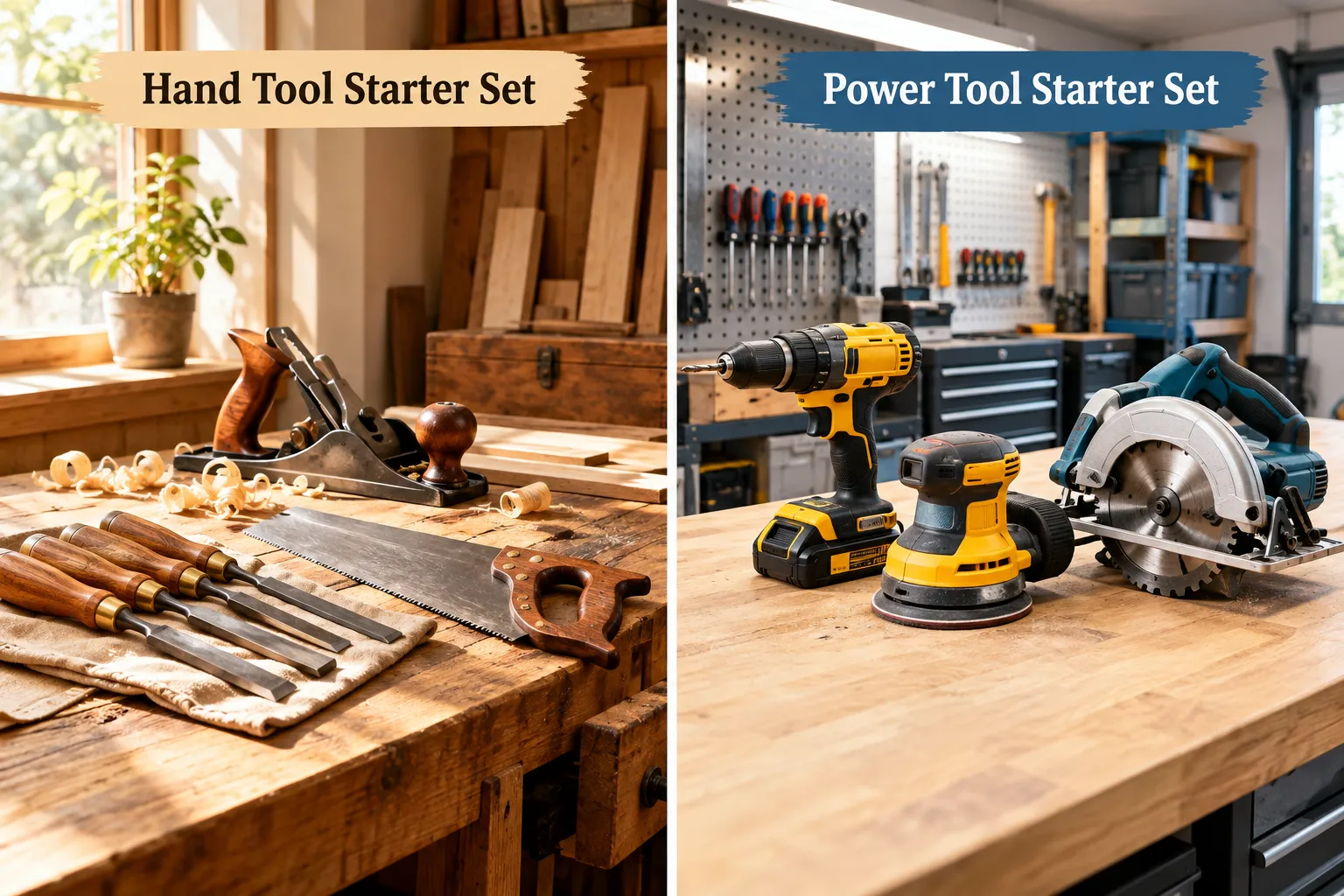
A hand-tool-only kit typically includes a backsaw, chisels, a block plane, a marking gauge, and clamps. The beginner hand tool woodworking kit guide breaks down exactly what to buy and what it costs to go this route from day one, and the best hand planes for beginners covers the one power-free tool most new hand-tool woodworkers underestimate.
Hand Tools or Power Tools First: Making the Right Call
Neither approach is objectively “correct”, the right starting point depends on available space, budget, and patience for slower work. Most practical beginner setups end up blending both: hand tools for precision and joinery, power tools for rough stock removal and repetitive cuts.
A reasonable rule of thumb: buy a cordless drill first, no matter which path is chosen, because drilling pilot holes and driving screws by hand on every project gets old fast. After the drill, decide based on this:
- Start with hand tools if quiet, low-dust work in a small space matters more than speed
- Add a circular saw and orbital sander early if the plan is larger builds (furniture, sheds, built-ins) where hours of hand-sawing become a real barrier
Do You Need a Table Saw or Miter Saw to Start Woodworking
No. A table saw or miter saw is not required for a first project, and most beginners finish several builds before ever needing one. A sharp hand saw, a circular saw with a straightedge guide, or even a basic jigsaw can handle the cutting needs of shelves, boxes, and small furniture.
Consider adding a miter saw once projects regularly involve repeated angled or crosscuts, picture frames, trim work, or furniture with mitered corners. Consider a table saw once rip cuts (cutting boards lengthwise) become frequent, since that’s the one cut hand tools and circular saws handle least comfortably. Until then, that few hundred dollars is better spent on clamps, sharp chisels, and quality measuring tools. For a broader view of when stationary machinery actually earns its spot in a shop, see essential woodworking machinery for efficient woodwork.
How Much Should You Spend on Your First Tools, and What’s the Cheapest Way to Start
A workable starter budget runs between $150 and $400, depending on whether tools are bought new, used, or as part of a bundled kit. The cheapest route combines secondhand hand tools with one or two new power essentials, since used hand saws, planes, and clamps hold their quality for decades when maintained.
The cheapest realistic path to get started:
- Buy a cordless drill/driver new (reliability matters here)
- Buy chisels, a hand saw, clamps, and a square secondhand from estate sales, marketplace listings, or flea markets
- Borrow or rent anything specialized (a planer, a router) for a single project before buying
- Start with one wood type, pine or poplar, to avoid wasting premium hardwood while still learning cuts
Choose the low end of that budget if the goal is simply testing the hobby. Choose the higher end if the first project is already planned and requires specific joinery, like the techniques covered in best joinery for table legs that won’t loosen over time.
Which Tools Are Worth Investing in Early, and Which to Avoid
Clamps, a sharp chisel set, and an accurate square are worth paying more for immediately, because poor versions of these tools actively produce bad results, a square that isn’t square ruins every cut that follows it. Table saws, jointers, planers, and specialty jigs are worth avoiding until after a few completed projects reveal what’s actually needed.
Worth investing in early:
- Clamps (never enough of these; buy more than seems necessary)
- A sharp chisel set with good steel
- One accurate square, checked against a known-true reference
- A quality tape measure
Worth avoiding as a complete beginner:
- A full table saw before any hand-tool project is finished
- Combo machines or “do-everything” power stations marketed to beginners
- A large, expensive wood lathe or CNC router before basic joinery is comfortable
- Bargain-bin chisel sets with soft steel that won’t hold an edge
A common edge case: beginners sometimes inherit or receive a used table saw as a gift before they’ve built anything. In that situation, keep it, but still start projects with hand tools and a drill, table saw safety and setup deserve dedicated learning time, not a rushed first use.
Common Mistakes Beginners Make When Buying Tools
The most common mistake is buying stationary power tools before buying consumables and measuring tools, which leaves a beginner with an expensive machine and no way to accurately mark or clamp a workpiece. A close second is buying the cheapest possible chisels and hand saws, which frustrates beginners into quitting because dull, low-quality steel makes every cut feel harder than it should.
Other frequent mistakes:
- Buying a full set of 20+ clamps in one size instead of a mixed set of lengths
- Skipping sharpening tools entirely, leaving chisels and plane blades dull within weeks
- Choosing project plans that require tools not yet owned, then buying reactively at full price
- Overlooking workspace setup, a wobbly workbench undermines even good tools
Reviewing a step-by-step guide to woodworking projects for beginners before buying anything helps match the tool list to an actual first build instead of guessing.
Where Beginners Usually Buy Their First Tools, and What They Regret Skipping
Most beginners buy their first tools from big-box home improvement stores, dedicated woodworking retailers, or used-tool marketplaces like local classifieds and estate sales. Each source has tradeoffs: big-box stores offer convenience and easy returns, specialty retailers offer better-quality steel and knowledgeable staff, and used marketplaces offer the lowest prices on vintage hand tools that often outperform new budget versions.
When asked what they wish they’d bought sooner, experienced hobbyists most often name three things: more clamps, a second sharpening stone, and a proper workbench instead of a folding table. None of those are glamorous purchases, which is exactly why beginners skip them first and regret it within a month or two. For a full rundown of setup options, the home woodshop setup planning guide covers bench and layout choices that make every tool on this list easier to use.
Frequently Asked Questions
Do I really need a table saw to call myself a woodworker?
No. Plenty of skilled woodworkers build furniture for years using hand saws, circular saws, and chisels before ever owning a table saw.
What if I can only afford five tools right now?
Start with a tape measure, combination square, cordless drill, chisel set, and two clamps, which cover measuring, joining, and holding, the three steps every project needs.
Should I buy a cheap starter kit or individual tools?
Individual tools from a reputable brand usually outperform bundled “starter kit” sets, since kits often cut corners on steel quality to hit a low price point.
Is it a mistake to buy used tools as a beginner?
Not at all. Hand saws, chisels, and planes often improve with age if they were made well, and used prices are typically much lower than new.
How many clamps do I actually need to start?
Four is a workable minimum, but six to eight in mixed lengths removes a lot of frustration during glue-ups.
Can I skip sanding tools and just use a power sander for everything?
A power sander speeds things up, but hand sanding with a sanding block still produces fine results on small projects and costs almost nothing.
What wood should I practice on while I’m still buying tools?
Pine or poplar are forgiving, inexpensive choices that won’t punish mistakes the way premium hardwood does; the best hardwoods for beginners guide covers which species are easiest to learn on.
Do I need a workbench before I need more tools?
Yes, in most cases. A stable, flat work surface matters more than an extra power tool, since even the best saw can’t cut straight on a wobbly table.
Conclusion
A first project doesn’t require a garage full of machinery. It requires a short, well-chosen list: a tape measure, square, saw, chisels, clamps, a drill, and sandpaper. Everything past that point is a response to a specific project’s demands, not a prerequisite for starting.
The practical next step is simple: pick one small project, match the tool list above against what that project actually needs, and buy only the gap. Skip the table saw. Buy the extra clamps. Sharpen before cutting. That’s how a beginner’s workshop grows the right way, one finished project at a time, with tools that have earned their place rather than tools bought on impulse.
Products, Tools, and Resources Worth Exploring
A few additional guides round out the planning process once the core tool list is settled. The various tools used for woodworking: the complete beginner’s guide is a useful reference for identifying unfamiliar tools spotted at a hardware store or estate sale. Anyone planning to grow past hand tools eventually should also read through essential equipment used in woodworking for perfect furniture to understand how bigger shop equipment fits in once the basics are second nature. And before buying lumber for that first project, the wood types and material selection guide prevents the common beginner error of choosing the wrong board for the job.