
Storage Furniture Buying vs. Building: Cost Comparison Guide
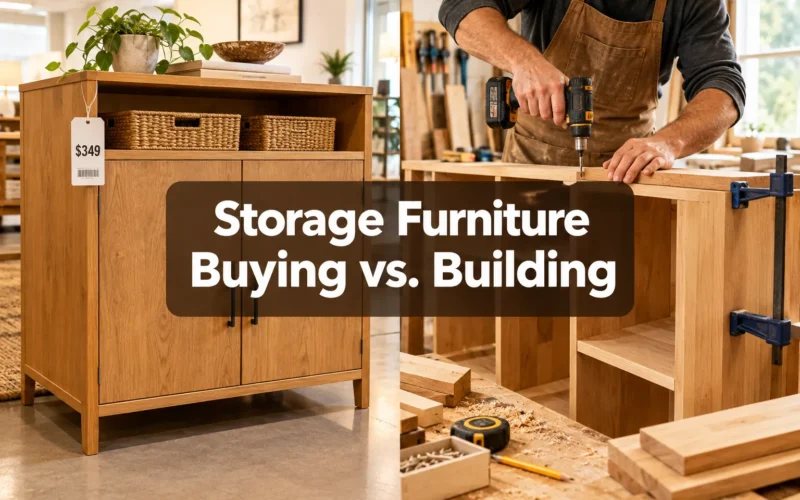
A fully assembled bookcase from a major furniture retailer can cost anywhere from $80 to over $600 for the same general size and function. Build that same piece yourself from solid pine or plywood, and your material cost might land between $40 and $150. That gap tells a story worth understanding before you spend a single dollar.
This Storage Furniture Buying vs. Building: Cost Comparison Guide breaks down the real numbers, the hidden costs most people overlook, and the honest trade-offs between walking into a store and picking up a saw. Whether you’re furnishing a small apartment or setting up a garage workshop, the right choice depends on more than just price.
Key Takeaways

- Building storage furniture yourself typically costs 30-60% less in materials than buying a comparable retail piece, but tool costs can close that gap for first-time builders.
- Ready-made furniture wins on convenience and speed. DIY wins on customization, quality, and long-term value.
- A beginner can successfully build basic storage pieces like shelving units, storage benches, and simple cabinets with just a few core tools.
- Plywood and pine are the best budget-friendly materials for DIY storage furniture. Hardwoods like oak and maple cost more but last significantly longer.
- Renters often benefit from buying modular, movable storage. Homeowners building for a fixed space usually get better value from custom-built pieces.
- Always calculate your true DIY cost by including materials, consumables, tool wear, and an honest estimate of your time.
- The biggest DIY mistakes are skipping accurate measurements, underestimating material waste, and choosing the wrong wood for the load requirements.
Find this useful? Add us as a preferred source on Google and more of what we publish will show up in your results.
What Is the Difference Between Buying Storage Furniture and Building It Yourself
Buying storage furniture means purchasing a finished or flat-pack piece from a retailer. Building it yourself means sourcing raw materials, cutting them to size, and assembling a custom piece from scratch using woodworking tools and plans.
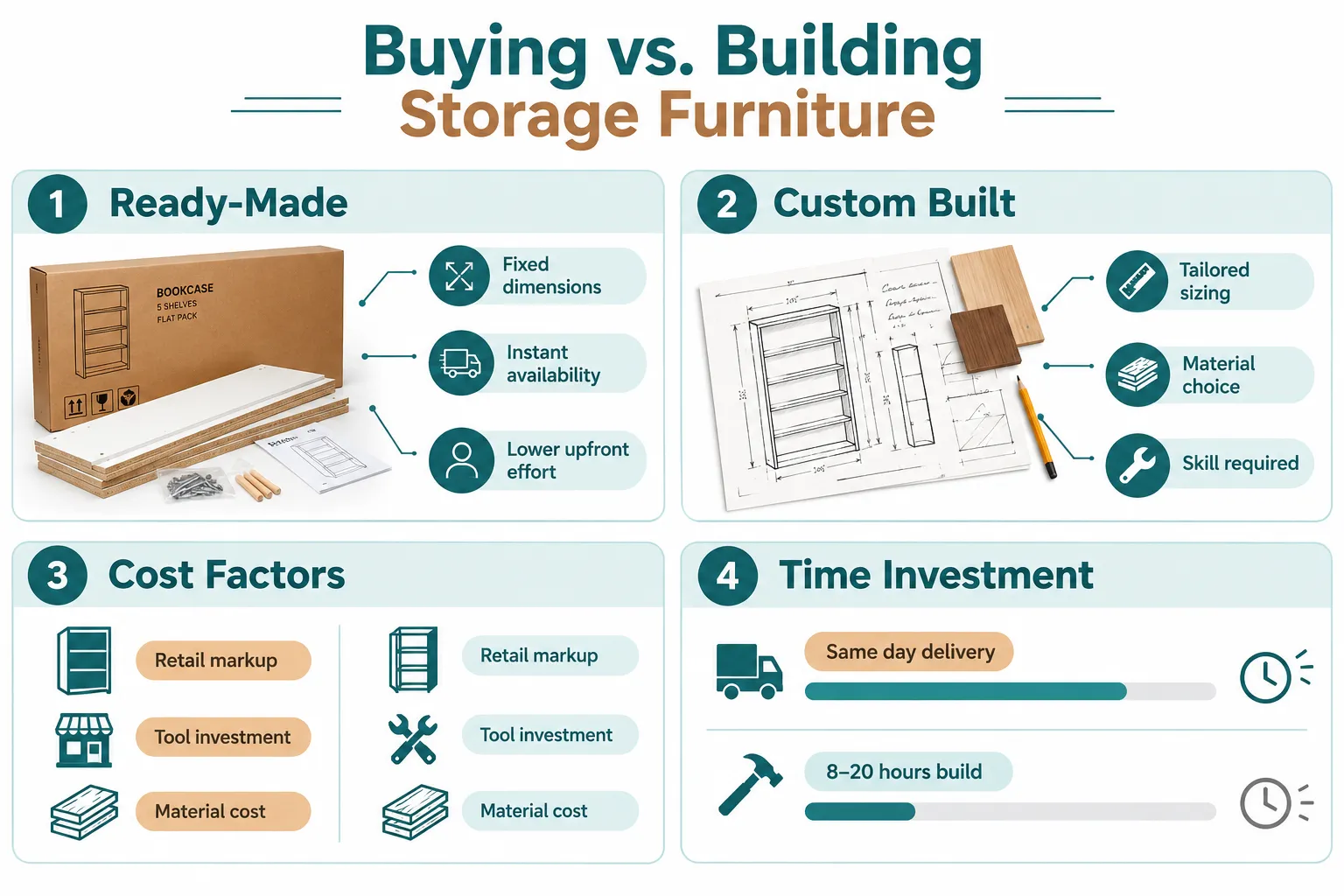
The core difference goes beyond price. When you buy, you’re paying for design, manufacturing, shipping, and retail markup. When you build, you’re paying for materials and your time. The trade-off is effort for money and quality for convenience.
Buying ready-made storage furniture:
- Available immediately, no skill required
- Dimensions are fixed to standard sizes
- Quality ranges from poor (particleboard flat-pack) to excellent (solid wood retail pieces)
- Easy to return or replace if it doesn’t work
Building your own storage furniture:
- Fully customizable to your exact space and needs
- Requires tools, time, and at least basic woodworking skills
- Material quality is your choice from the start
- Mistakes cost money in wasted wood, but the learning compounds over time
For a deeper look at what goes into furniture-grade wood selection, the Best Wood For Furniture Making: A Comparison Guide covers species, grades, and budget options in detail.
How Much Does It Cost to Build Your Own Storage Furniture vs. Buying
For most common storage pieces, DIY material costs run 30-60% lower than retail prices for a comparable item. However, tool costs and consumables can significantly affect the total for someone just starting out.
Here’s a realistic side-by-side cost estimate for a basic 5-shelf bookcase (approximately 72 inches tall, 30 inches wide):
| Cost Category | Buy Ready-Made | Build It Yourself |
|---|---|---|
| Materials / Purchase Price | $120, $400 | $50, $130 (plywood/pine) |
| Tools (one-time, if needed) | $0 | $0, $300 (basic starter set) |
| Consumables (sandpaper, screws, finish) | $0 | $20, $50 |
| Time Investment | 1-2 hours (assembly) | 8-16 hours (build) |
| Estimated Total (no tools) | $120, $400 | $70, $180 |
These are estimates based on typical 2026 retail and lumber prices in the United States. Actual costs vary by region, wood species, and finish choice.
Is DIY Storage Furniture Actually Cheaper Than Buying Ready-Made
For someone who already owns basic tools, yes, DIY is almost always cheaper in material costs alone. For a complete beginner buying tools for the first time, the first project may cost as much as, or more than, buying the tools. The savings compound on every project after that.
The honest answer also depends on what you’re comparing. A $90 flat-pack particleboard shelf from a big-box store is hard to beat on pure upfront cost. But a solid plywood shelf you build yourself for $80 in materials will outlast it by years and hold significantly more weight.
When DIY is clearly cheaper:
- You already own a circular saw, drill, and basic measuring tools
- You’re building multiple pieces at once and can batch-cut materials
- You need a non-standard size that would cost a premium at retail
When buying wins on cost:
- You have no tools and only need one piece
- Your time has high financial value, and the project would take 10+ hours
- A sale or discount brings the retail price close to the material cost
For a broader look at startup costs in woodworking, the guide on Is Woodworking Expensive To Start? Real Cost Breakdown gives a realistic picture of what you’ll actually spend.
What Tools Do You Need to Build Storage Furniture at Home
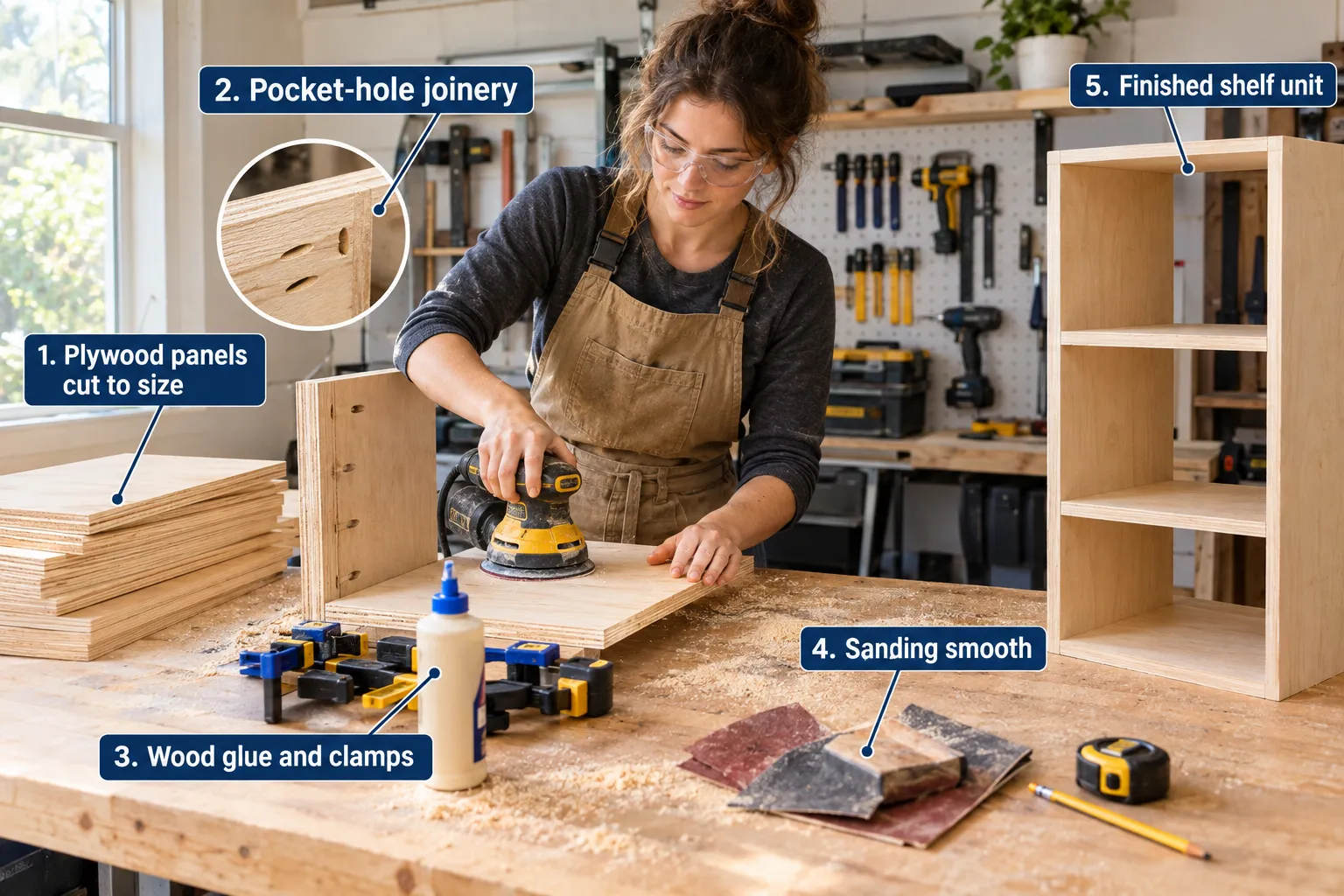
A beginner can build most basic storage furniture with five to seven core tools. You don’t need a full workshop to get started; a circular saw, a drill, and a few hand tools will handle the majority of shelving, cabinet, and storage bench projects.
Essential tools for beginner storage furniture builds:
- Circular saw or miter saw, for cutting sheet goods and dimensional lumber to length
- Cordless drill and driver, for drilling pilot holes and driving screws
- Tape measure and combination square, for accurate layout and marking
- Clamps (at least 4), to hold pieces while the glue dries or while fastening
- Sander (random orbital or sanding block), for smooth, splinter-free surfaces
- Pocket hole jig, optional, but makes strong, clean joints much easier for beginners
A pocket hole jig is one of the most beginner-friendly joinery tools available. It creates strong, hidden joints without complex cutting. For a deeper understanding of joint types and their strengths, the Dovetail vs Box Joints: Strength, Use & Comparison Guide is worth reading before you choose your build method.
The Various Tools Used For Woodworking: The Complete Beginner’s Guide also covers tool selection in detail for those setting up their first workspace.
Best Materials for Building Storage Furniture on a Budget
Plywood and construction-grade pine are the two best budget materials for DIY storage furniture. Both are widely available, easy to work with hand and power tools, and strong enough for shelving, cabinets, and storage benches when used correctly.
Budget material options ranked by cost and performance:
- 3/4-inch plywood (cabinet grade), Best all-around choice. Strong, stable, and takes paint or stain well. A 4×8 sheet typically costs $40,$70 depending on grade and region.
- Construction pine (1×10, 1×12 boards), is easy to find, cuts cleanly, and looks attractive with a simple finish. Good for open shelving and lighter storage.
- MDF (medium-density fiberboard), has a very smooth surface, takes paint beautifully, but is heavy and not moisture-resistant. Best for painted indoor pieces only.
- Poplar is a step up from pine in hardness, is still affordable, and paints exceptionally well. Good for painted cabinet doors and face frames.
Avoid particleboard for structural storage pieces. It’s the material used in most budget flat-pack furniture and it doesn’t hold screws well over time, especially under load.
For a full breakdown of wood species and their properties, the Best Wood For Furniture Making: A Comparison Guide and the Best Hardwoods For Beginners To Work With are both excellent resources.
How Long Does It Take to Build Storage Furniture Yourself
A beginner building a simple storage shelf or bench for the first time should expect 8 to 16 hours from cutting to the finished piece. An intermediate builder who has completed several projects can often cut that time in half. Complex pieces like a built-in cabinet or a storage unit with doors and drawers will take longer.
Estimated build times by project type (beginner):
- Simple floating shelf: 2-4 hours
- Basic 5-shelf bookcase: 8-12 hours
- Storage bench with lid: 6-10 hours
- Small storage cabinet with doors: 12-20 hours
- Built-in closet organizer system: 20-40+ hours
Time estimates include measuring, cutting, sanding, assembly, and one coat of finish. They don’t include drying time between coats, which adds hours but not active work.
For a practical introduction to building shelving, the guide on How To Build Floating Shelves That Hold Weight is a great first project that teaches core skills.
Can You Build Storage Furniture With No Woodworking Experience
Yes. Simple storage furniture like open shelving, storage benches, and basic bookcases are among the best beginner woodworking projects precisely because they don’t require complex joinery or advanced technique. Most can be built with butt joints, pocket screws, and wood glue.
The key is starting with a clear, well-written plan. Attempting to design your first piece from scratch while also learning to use tools is a recipe for frustration. Use a proven plan, follow the cut list, and focus on accuracy in your measurements.
Good starting points for beginners include:
- Open wall shelves (no doors, no drawers, minimal joinery)
- Storage benches with a hinged lid (simple box construction)
- Cube-style storage units (repetitive cuts, easy assembly)
The Step-by-Step Guide To Woodworking Projects For Beginners and the Beginner Woodworking Guide: Tools, Projects & Tips To Start Today both offer structured paths for building your first pieces with confidence.
How to Calculate the True Total Cost of DIY Storage Including Labor
The true cost of a DIY storage project includes materials, consumables, a proportional share of tool cost, and the value of your time. Most people only count materials and end up underestimating what the project actually costs them.
DIY cost calculation formula:
- Materials: Add up every board, sheet of plywood, and hardware item with no rounding down
- Consumables, including sandpaper, wood glue, screws, finish, and painter’s tape
- Tool allocation: If you bought a tool specifically for this project, include its full cost. If you already owned it, include a small wear estimate (roughly $2,$5 per use for power tools)
- Time value: Decide what your time is worth per hour and multiply by total hours. Even at $15/hour, a 12-hour project adds $180 to the real cost
- Waste factor: Add 10-15% to your material estimate for cuts that don’t go perfectly
This calculation won’t always make DIY look cheaper on paper. But it will give you an honest comparison, and it will also show you that as your skills improve and your tool collection grows, the cost per project drops significantly.
Storage Furniture Buying Guide for Renters vs. Homeowners
Renters and homeowners have different priorities when choosing between buying and building storage furniture. Renters need pieces that move easily, don’t require wall anchoring, and won’t damage surfaces. Homeowners building for a fixed space get the most value from custom-built, built-in solutions.
For renters:
- Prioritize freestanding, modular pieces that can be reconfigured or moved
- Buying ready-made is often the smarter choice, no tool storage needed, easier to sell or donate when moving
- If building, choose designs that don’t require wall mounting and can be disassembled
For homeowners:
- Built-in storage adds real value to a home and can be designed around awkward spaces
- Custom-built pieces in closets, garages, and laundry rooms are almost always worth the effort
- The investment in tools pays off across multiple projects over years
When Is It Better to Just Buy Storage Furniture Instead of Building
Buying ready-made storage furniture makes more sense when speed, simplicity, or budget constraints outweigh the benefits of customization. There are specific situations where buying is simply the practical choice, and recognizing them saves time and money.
Buy instead of build when:
- You need the piece within a day or two
- You have no tools and no interest in acquiring them
- The retail price is close to the material cost (sales, clearance, or secondhand finds)
- You’re renting and plan to move within a year or two
- The piece requires complex hardware (drawer slides, hinges, locks) that’s difficult to source and install without experience
- You need a piece that matches existing furniture exactly
Build instead of buy when:
- Standard sizes don’t fit your space
- You want solid wood quality at a fraction of the retail cost
- You’re building multiple similar pieces and can batch the work
- You want the satisfaction and skill-building that comes with making something yourself
Best Storage Furniture to Build vs. Buy for Small Spaces
In small spaces, custom-built storage wins almost every time because standard furniture rarely fits awkward dimensions. A built-in corner shelf, an under-stair storage unit, or a custom mudroom bench can use every inch of available space in a way no off-the-shelf product can match.
Best pieces to build for small spaces:
- Under-bed storage drawers (built to exact mattress height)
- Corner shelving units (odd angles that no standard shelf fits)
- Built-in window seat with storage below
- Custom closet organizer systems
- Narrow entryway storage benches
Best pieces to buy for small spaces:
- Stackable cube organizers (flexible, modular, affordable)
- Over-door organizers and hanging storage
- Rolling storage carts (easy to move and reposition)
- Folding or wall-mounted drop-leaf shelves
For project ideas and plans across different rooms, Furniture Building Plans: DIY Woodworking Projects For Every Room offers a solid starting library.
Storage Furniture Building Mistakes to Avoid
The most common and costly mistakes in DIY storage furniture involve measurement errors, poor material choices, and skipping structural steps that seem optional but aren’t. Avoiding these will save both money and frustration.
Top mistakes beginners make:
- Not accounting for wood movement, Solid wood expands and contracts with humidity. Panels that are glued or fastened without room to move can crack or warp over time.
- Skipping pilot holes, Driving screws without pilot holes splits wood near edges, especially in plywood and pine.
- Underestimating material waste, A 10-15% waste factor on cuts is standard. Buying exactly what the cut list says often leaves you short.
- Using the wrong fasteners for the load, Pocket screws are great for face frames but not ideal for shelves carrying heavy loads. Match your fastener to the joint and the weight.
- Ignoring square, A cabinet that isn’t square will have doors and drawers that don’t close properly. Check for square at every stage of assembly.
- Rushing the finish, sanding between coats, and applying thin layers of finish takes patience but makes a dramatic difference in the final result.
Is Custom-Built Storage Furniture Worth the Time and Effort
For most hobbyist woodworkers and homeowners who enjoy hands-on projects, yes, custom-built storage furniture is worth the time and effort. The combination of lower material cost, higher quality, exact sizing, and the genuine satisfaction of building something useful with your own hands creates value that a retail purchase simply can’t replicate.
The calculus shifts if you genuinely dislike the process, have no interest in learning the skills, or need the piece urgently. Woodworking is a skill that rewards patience and repetition. The first project takes the longest and costs the most relative to what you get. By the third or fourth project, the time drops, the quality rises, and the cost advantage becomes very real.
Building your own storage furniture isn’t just about saving money. It’s about making something that fits your life exactly, built from materials you chose, with joints that will last decades.
FAQ: Storage Furniture Buying vs. Building
Is it cheaper to build or buy a bookcase?
In most cases, building a bookcase from plywood or pine is 30-50% cheaper in materials than buying a comparable retail piece. If you already own basic tools, the savings are immediate. First-time builders who need to purchase tools may break even on the first project.
What is the easiest storage furniture to build for a beginner?
Open shelving units, storage benches, and simple cube storage are the easiest starting points. They use basic box construction, require minimal joinery, and can be completed with a drill, circular saw, and clamps.
How do I know if my DIY storage furniture will be strong enough?
Use 3/4-inch plywood or solid lumber for shelves carrying significant weight. Add a back panel to prevent racking. For shelves longer than 36 inches, add a center support. Avoid particleboard for anything that will hold books, tools, or heavy items.
Can I build storage furniture in an apartment with no garage?
Yes, with some adjustments. Buy pre-cut lumber from a hardware store to avoid needing a saw. Use a drill and pocket hole jig for assembly. Work on a drop cloth in a living room or on a balcony. Dust and noise are manageable for smaller projects.
Where can I find cheap ready-made storage furniture?
Discount retailers, warehouse stores, and secondhand marketplaces (Facebook Marketplace, Craigslist, thrift stores) are the best sources for affordable ready-made storage. Flat-pack options from large furniture chains are also cost-effective if you’re comfortable with assembly.
How do I avoid buying cheap storage furniture that falls apart quickly?
Look for solid wood or plywood construction rather than particleboard or MDF. Check that drawer slides are metal, not plastic. Avoid pieces where the back panel is a thin cardboard-like sheet. Joints should be glued and fastened, not just stapled.
What wood should a beginner use for their first storage project?
Pine and plywood are the two best choices. Pine is forgiving, inexpensive, and widely available. Cabinet-grade plywood is stable, strong, and works well for painted or stained pieces. Both are easy to cut and sand.
Does building your own furniture add value to your home?
Built-in storage, closet systems, mudroom benches, laundry room cabinets, can add perceived and real value to a home. Freestanding pieces generally don’t affect home value directly, but they can make a home more functional and appealing.
How do I calculate how much wood I need for a storage project?
Start with a cut list from your plan. Add up the total linear feet or square footage of each material. Then add 10-15% for waste from cuts and any mistakes. Always round up to the nearest full board or sheet when purchasing.
Is secondhand furniture a better deal than building?
Sometimes. A solid wood secondhand piece in good condition can be an exceptional value. The risk is hidden damage, missing hardware, and sizes that don’t fit your space. Building gives you control over all three.
Conclusion
The Storage Furniture Buying vs. Building: Cost Comparison Guide comes down to one honest question: what do you value more right now, your time or your money, and are you interested in building a skill along the way?
For someone who needs storage today and has no tools, buying is the practical answer. For someone willing to invest a weekend and a modest tool budget, building almost always delivers better quality, better fit, and a lower long-term cost per piece. And unlike a flat-pack shelf that wobbles after two years, something you build from solid plywood with proper joinery can last a lifetime.
Start simple. A basic storage bench or a set of open shelves is a realistic first project that teaches every fundamental skill you’ll use in every future build. Use a clear plan, choose the right materials, and don’t rush the finish. The skills you build on that first project will make every project after it faster, cheaper, and more satisfying.
Recommended Resources and Tools
- How To Read & Use Woodworking Plans: Beginner’s Complete Guide, Essential before starting any build from a plan
- Furniture Building Plans: DIY Woodworking Projects For Every Room, A practical library of beginner-friendly project plans
- Step-by-Step Guide To Woodworking Projects For Beginners, Structured skill-building with real projects
- Pocket hole jig, one of the most useful tools for beginner storage furniture builds; Kreg makes the most widely recommended entry-level option
- 3/4-inch cabinet-grade plywood, the single best material investment for your first storage project
- A random orbital sander makes finishing dramatically faster and produces better results than hand sanding alone