Best Router for Woodworking Beginners (2026 Reviews)
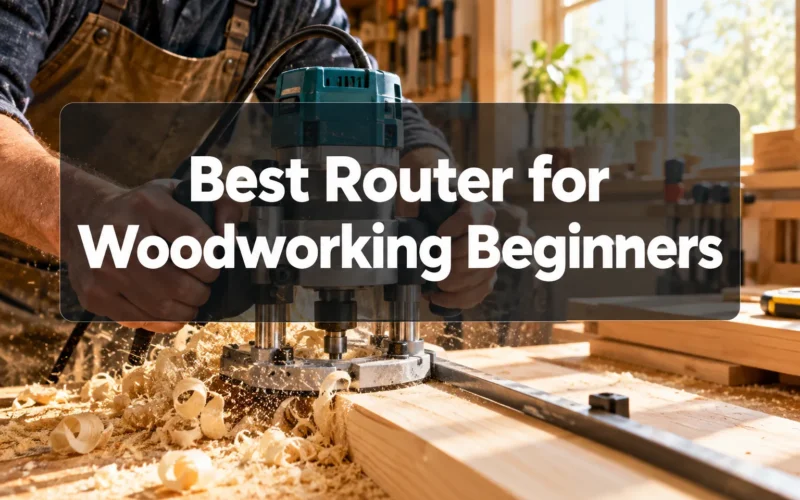
A wood router is one of the few tools that can genuinely transform what a beginner woodworker is capable of making. Within a single afternoon, it can turn a plain board edge into a decorative profile, cut perfectly repeatable dadoes, or flush-trim a template with surgical precision. The problem is that walking into a hardware store or scrolling through product listings without any guidance is genuinely overwhelming. This guide to the Best Router for Woodworking Beginners (2026 Reviews) cuts through the noise so you can buy with confidence and start building better projects from day one.
Key Takeaways
- A fixed base router is the best starting point for most beginners because it is stable, predictable, and easier to control than a plunge router.
- For light-duty edge work and trimming, a compact trim router (also called a laminate trimmer) is an excellent, low-cost first tool.

- Most beginners need between 1.5 and 2.25 horsepower. More power is not always better when you are learning.
- A starter bit set of five to seven bits covers the vast majority of beginner projects without overspending.
- DeWalt, Makita, and Bosch all make reliable beginner routers in the under-$200 range, each with distinct strengths.
- Burning wood is almost always caused by moving the router too slowly, using a dull bit, or taking too deep a cut in a single pass.
- A handheld router is the right first purchase. A router table is a useful upgrade once you are comfortable with freehand routing.
- Cordless routers have improved significantly but still carry trade-offs in runtime and torque that make them a secondary choice for most beginners.
Find this useful? Add us as a preferred source on Google and more of what we publish will show up in your results.
What Is a Wood Router and What Does It Do
A wood router is a power tool that spins a cutting bit at high speed to shape, hollow out, or cut profiles into wood. It is one of the most versatile tools in any woodworking shop, capable of cutting decorative edges, grooves, dadoes, rabbets, mortises, and dovetails.
The motor drives a collet (a tightening sleeve) that holds the router bit. As the bit spins, typically between 8,000 and 30,000 RPM, you guide the router along the wood surface to remove material in a controlled path. The depth of cut is set before you begin, and the bit profile determines the shape of the cut.
For beginners, the most practical uses are:
- Rounding or decorating board edges with a roundover or chamfer bit
- Cutting dadoes and grooves for shelving and cabinet joinery
- Flush-trimming one board to match another using a template
- Creating decorative profiles on furniture and frames
If you are just getting started with woodworking projects, understanding your router is one of the most rewarding early skills you can develop. See the Beginner Woodworking Guide: Tools, Projects & Tips To Start Today for a broader overview of where routers fit into your tool collection.
Fixed Base vs Plunge Router: Which Is Better for Beginners
For most beginners, a fixed base router is the better choice. The bit depth is locked before you start, the tool sits flat and stable on the workpiece, and there is less that can go wrong mid-cut. Plunge routers are more versatile but require more skill to use safely.
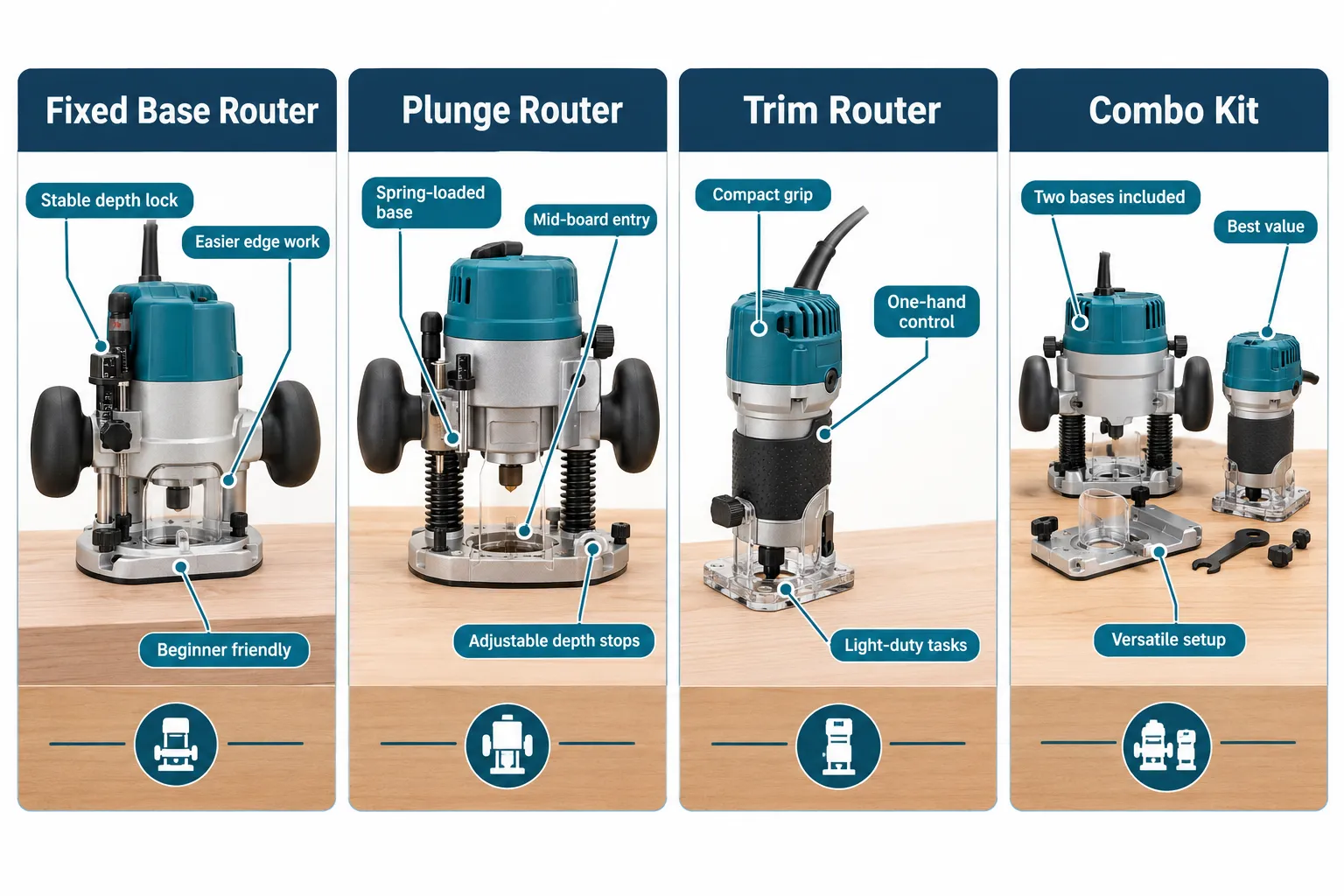
Here is how they compare side by side:
| Feature | Fixed Base | Plunge Router |
|---|---|---|
| Depth adjustment | Set before cutting | Adjustable mid-cut |
| Stability | High | Moderate |
| Best for | Edge work, dadoes, templates | Mortises, stopped grooves |
| Beginner-friendly | Yes | Less so |
| Combo kit available | Often yes | Often yes |
Decision rule: Buy a fixed base router if you plan to do edge work, dado cuts, and template routing. Buy a combo kit (fixed and plunge bases sharing one motor) if your budget allows and you want to grow into plunge cuts without buying two tools.
How to Choose the Right Router for Edge Work vs Plunge Cuts
Edge work calls for a fixed base router with a stable, flat sole that rides flush against the workpiece. Plunge cuts, which start in the middle of a board rather than at an edge, require a spring-loaded plunge base that lets the bit enter the wood vertically and stop at a pre-set depth.
For most beginner projects, edge work comes up far more often. Decorative edges on tabletops, shelves, and frames are achievable with a basic fixed base router and a handful of bits. Plunge cuts become relevant when you are cutting mortises for joinery or routing stopped dadoes, which are intermediate-level techniques.
If you are working on projects like those in our Step-by-Step Guide to Woodworking Projects for Beginners, a fixed base router will handle the vast majority of what you need.
What Size Router Is Easiest to Control for a Beginner
Compact routers in the 1.0 to 1.25 HP range are the easiest to handle physically, but they lack the power for hardwoods and deeper cuts. A mid-size router in the 1.75 to 2.25 HP range offers the best balance of control and capability for a beginner.
How much horsepower do you actually need?
- 1.0 to 1.25 HP (trim routers): Fine for softwoods, thin stock, and light edge work. Not suitable for large bits or hardwoods.
- 1.75 to 2.0 HP: The sweet spot for most beginners. Handles the majority of bits and wood species without bogging down.
- 2.25 HP and above: Better for router table use and production work. Heavier and harder to maneuver freehand.
A heavier router is not automatically harder to control if it has good ergonomics. Look for soft-grip handles, a low center of gravity, and smooth depth adjustment. Tools in the 5- to 7-pound range tend to feel manageable for most adults during extended use.
Can I Use a Trim Router Instead of a Full-Size Router
Yes, a trim router (also called a laminate trimmer) can be an excellent first router for beginners who primarily do edge work and light trimming tasks. It is lightweight, easy to control with one hand, and much less intimidating than a full-size router.
The trade-off is clear: trim routers accept only 1/4-inch shank bits, limit you to shallow cuts, and will struggle with hardwoods or large-profile bits. If your projects involve mostly softwood, plywood edge banding, or decorative edges on thinner stock, a trim router may be all you need for the first year.
Choose a trim router if: You are doing light edge work, flush trimming, or small decorative profiles on softwood or plywood.
Choose a full-size router if you plan to work with hardwoods, cut dadoes for shelving, or eventually use a router table. For guidance on choosing the right wood species for your projects, see Best Hardwoods for Beginners to Work With.
Best Budget Routers Under $200 for Woodworking Beginners: DeWalt vs Makita vs Bosch
The three most recommended brands for beginner routers in 2026 are DeWalt, Makita, and Bosch. All three offer reliable tools in the under-$200 range with strong parts availability and good user support.
DeWalt DWP611 (Compact Router)
One of the most popular beginner routers on the market. It runs at 1.25 HP, accepts both 1/4-inch and 1/2-inch shank bits, and comes as a combo kit with both fixed and plunge bases. The LED lights illuminate the cutting area, and depth adjustment is smooth and precise. Widely praised for build quality and motor consistency.
Makita RT0701C (Compact Router)
Comparable to the DeWalt in size and power, the Makita is known for its variable speed dial (10,000 to 30,000 RPM) and exceptionally smooth operation. It is slightly lighter than the DeWalt and a favorite among woodworkers who prioritize feel and ergonomics. Also accepts both shank sizes.
Bosch PR20EVS (Colt Palm Router)
The Bosch Colt is a trim-router-class tool known for its durability and comfortable palm grip. It is slightly less powerful than the DeWalt or Makita combo kits but is often available at a lower price point. A solid choice for beginners focused on edge work.
Quick comparison:
- Best overall for beginners: DeWalt DWP611 Combo Kit
- Best for ergonomics and smooth operation: Makita RT0701C
- Best for budget-conscious edge work: Bosch PR20EVS Colt
All three brands have strong aftermarket bit compatibility and are well-supported with replacement parts. For a broader look at beginner tool selection, the Beginner Woodworking Tools & Equipment: What You Need and Why guide is worth reading before you buy.
What Router Bits Do I Need to Get Started
A beginner needs five to seven bits to cover most early projects. Buying a large set of 30 or 50 bits is wasteful at this stage because many specialty profiles rarely come up in beginner work.
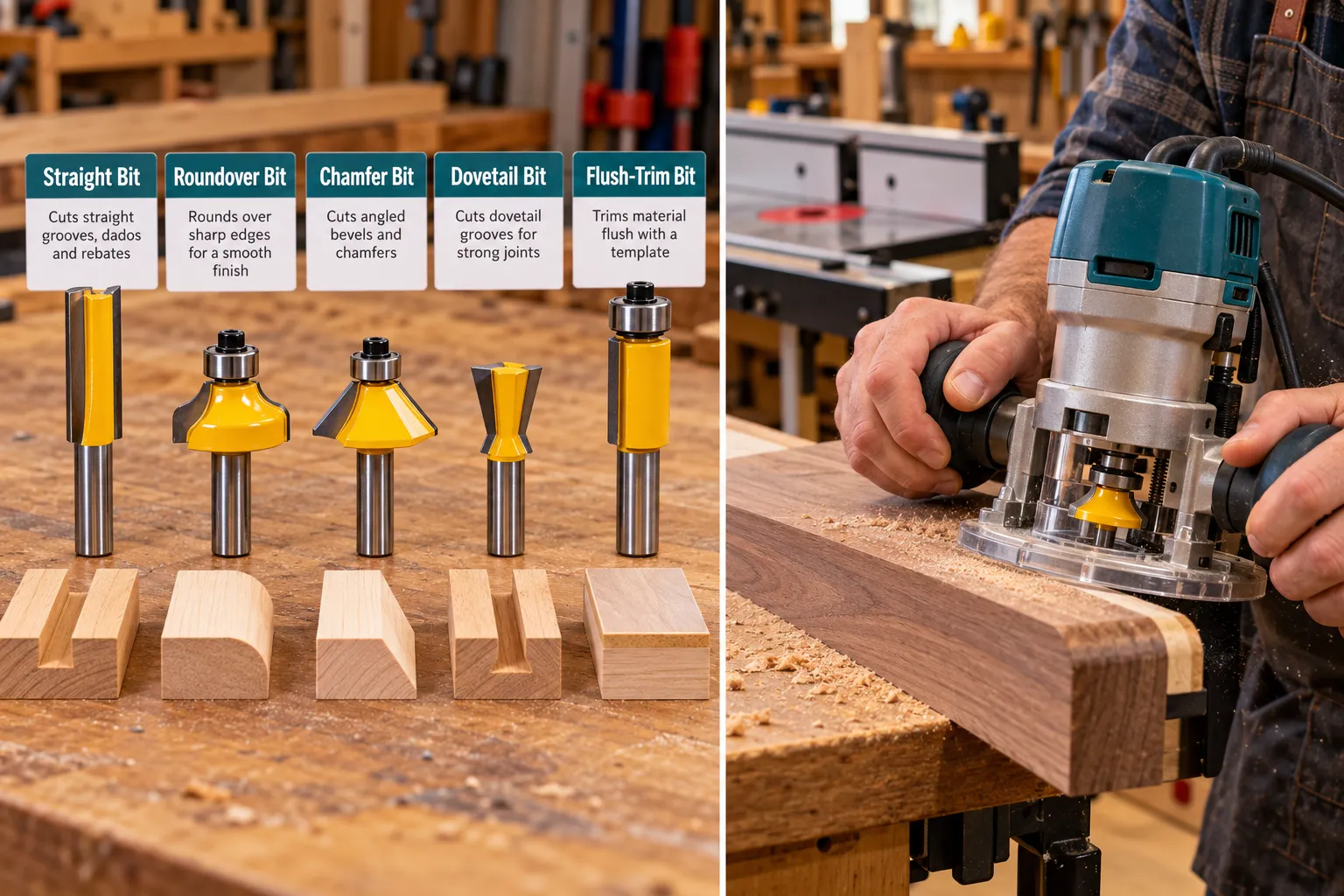
The essential starter bit set:
- Straight bit (1/2-inch), for dadoes, grooves, and mortises
- Roundover bit (3/8-inch or 1/2-inch radius), the most-used edge profile for furniture
- Chamfer bit (45-degree), for clean angled edges on shelves and frames
- Flush-trim bit, for template routing and trimming laminate
- Rabbeting bit, for cutting rabbets on cabinet backs and drawer bottoms
- Cove bit, for decorative concave profiles
Always buy carbide-tipped bits rather than high-speed steel (HSS). Carbide stays sharp longer, especially in hardwoods, and produces cleaner cuts. Bits with 1/2-inch shanks are more stable than 1/4-inch shanks in a full-size router, so use 1/2-inch whenever your router’s collet supports it.
For more on the joinery techniques these bits enable, see Woodworking Joinery and Techniques: Build Skills That Last.
Router Keeps Burning Wood: What Am I Doing Wrong
Burning wood is almost always caused by one of three things: moving the router too slowly, using a dull bit, or taking too deep a cut in a single pass. Each leaves a distinctive scorch mark and is easy to fix once you know the cause.
Common causes and fixes:
- Feed rate too slow: The bit stays in contact with the wood too long and generates friction heat. Move the router at a steady, consistent pace. If you stop mid-cut, the bit will burn the wood almost immediately.
- Dull bit: A bit that cannot cut cleanly rubs instead of slicing, generating heat. Replace or sharpen bits that have been used heavily.
- Cut too deep: Taking a 1/2-inch deep pass in one go overloads the bit and motor. Make multiple shallow passes instead, removing no more than 1/4 inch of material per pass in hardwood.
- Wrong RPM: Running a large-diameter bit at maximum speed generates excessive heat. Larger bits need lower RPM settings. Most variable-speed routers include a guide chart on the tool or in the manual.
- Grain direction: Routing against the grain tears fibers and increases resistance. Always route with or across the grain where possible.
This is one of the most common beginner router mistakes, and it is entirely preventable with the right technique.
Do I Need a Router Table or Handheld Router First
Start with a handheld router. A router table is a useful addition once you are comfortable controlling the tool freehand, but it is not necessary for most beginner projects and adds cost and workshop space requirements.
A router table holds the router upside-down beneath a flat surface, allowing you to feed the workpiece across the bit rather than moving the router across the wood. This is safer and more precise for small pieces, narrow stock, and repetitive profiling. But it requires learning a different set of techniques and safety habits.
Get a router table when:
- You are making repetitive edge profiles on many pieces
- You are working with small or narrow stock that is unsafe to rout freehand
- You want to use larger panel-raising or rail-and-stile bits
For now, a handheld router with a straight edge guide and a few clamps will take you a long way. The Top Types of Woodworking Jigs Every Woodworker Needs article covers shop-made guides and jigs that extend what a handheld router can do.
Is a Cordless Router Worth It for Beginners
Cordless routers are convenient but carry real trade-offs that matter more to beginners than to experienced woodworkers. For most beginners in 2026, a corded router is the better starting point.
Cordless pros:
- No cord to manage or trip over
- Portable for job sites or outdoor projects
- Increasingly powerful with 18V and 20V platforms
Cordless cons:
- Battery runtime limits extended sessions
- Slightly less consistent torque under heavy load
- Higher upfront cost when a battery is included
- Heavier due to battery weight
Choose cordless if you work in spaces without easy outlet access, or you are already invested in a cordless tool platform (DeWalt 20V MAX, Makita 18V LXT, etc.) and want to add a router without buying new batteries.
Choose corded if you are buying your first router and want maximum value, consistent power, and no battery management concerns.
Common Beginner Router Mistakes to Avoid
Most beginner router errors come down to setup, technique, or bit selection. Knowing them in advance saves a lot of frustration and wasted wood.
Mistakes that beginners make most often:
- Routing in the wrong direction: Always route so the bit rotation works against the feed direction (climb cutting is dangerous for beginners). On an outside edge, move left to right. On an inside edge, move right to left.
- Not securing the workpiece: A board that shifts mid-cut ruins the piece and can be dangerous. Use clamps or a non-slip mat every time.
- Starting with too deep a cut: Take multiple shallow passes. This is especially important in hardwoods like oak or maple.
- Skipping the test cut: Always make a test pass on scrap wood before routing your actual project piece.
- Using the wrong bit speed: Large bits need lower RPM. Check the manufacturer’s speed chart.
- Ignoring dust collection: Router dust is fine and pervasive. Connect a shop vac or dust collector whenever possible.
For a deeper look at the tools and techniques that support good router work, the Various Tools Used for Woodworking: The Complete Beginner’s Guide is a useful companion resource.
Best Routers 2026: Reviews and Ratings for Beginners
The best router for woodworking beginners in 2026 is one that balances control, power, and value. Based on current availability, user feedback, and hands-on performance, these are the top picks across three categories:
Best Overall: DeWalt DWP611PK Combo Kit
Includes both fixed and plunge bases, runs at 1.25 HP, and accepts 1/4-inch and 1/2-inch shanks. The variable speed (16,000 to 27,000 RPM) and LED work lights make it one of the most practical beginner tools available. Widely available and well-supported.
Best Budget Pick: Bosch PR20EVS Colt
A reliable, compact palm router for beginners focused on edge work and light trimming. Lower cost than the DeWalt combo kit, easy to handle, and durable. Best suited for softwoods and plywood projects.
Best for Ergonomics: Makita RT0701CX7
The Makita compact router kit includes both bases, a dust collection attachment, and an edge guide. The variable speed and smooth depth adjustment make it a favorite for woodworkers who prioritize feel and precision.
Best Mid-Size Router: RIDGID R22001
For beginners who want a full-size router from the start, the RIDGID R22001 offers 2.0 HP, variable speed, and a soft-start motor at a competitive price. Heavier than the compact options but more capable for deeper cuts and hardwood work.
These four tools represent the Best Router for Woodworking Beginners (2026 Reviews) across different budgets and use cases. Any of them will serve a beginner well for years of hobby woodworking.
Frequently Asked Questions
What is the best router brand for a complete beginner?
DeWalt, Makita, and Bosch are the three most recommended brands for beginners. All offer reliable tools under $200, good parts availability, and strong user communities. DeWalt’s DWP611 combo kit is the most commonly recommended starting point.
Do I need a 1/4-inch or 1/2-inch collet?
A router that accepts both is ideal. Use 1/2-inch shank bits whenever possible because they are more stable and less prone to vibration. Reserve 1/4-inch shank bits for smaller profiles and trim routers that only accept that size.
How fast should I move the router?
Move at a steady, moderate pace so the bit is always cutting, not rubbing. If you hear the motor straining, slow down and take a shallower pass. If the wood is burning, speed up your feed rate.
Can a beginner use a router safely?
Yes, with proper setup and technique. Always secure the workpiece, use sharp bits, set the correct depth, and move in the correct feed direction. Eye protection and hearing protection are essential.
What is the difference between a router and a rotary tool?
A rotary tool (like a Dremel) spins at very high RPM but has a much smaller motor and is designed for detail work, carving, and engraving. A wood router is a dedicated woodworking tool with significantly more power and is designed for shaping, profiling, and cutting joinery.
How long does a router bit last?
A quality carbide-tipped bit used on softwoods can last for hundreds of cuts before needing sharpening. In hardwoods, expect more frequent dulling. Signs of a dull bit include burning, tearout, and a rough finish on the cut surface.
Should I buy a router kit or individual bases?
A kit (motor plus two bases) offers better value for beginners who want flexibility. If you are certain you only need edge work and dado cuts, a fixed base alone is sufficient and costs less.
Is variable speed important on a beginner router?
Yes. Variable speed lets you match the RPM to the bit diameter, which improves cut quality and reduces burning. Larger bits need lower speeds. A router without variable speed limits your bit options.
Can I use a router on plywood?
Yes. Routers work well on plywood for edge trimming, flush cutting, and dado cuts. Use a sharp bit and take shallow passes to minimize tearout on the veneer face.
What safety gear do I need when routing?
At minimum: safety glasses or a face shield, hearing protection, and dust protection (a respirator or dust mask rated for fine particles). Secure loose clothing and keep hair tied back.
Conclusion
Choosing the right router as a beginner does not have to be complicated. Start with a compact or mid-size fixed base router in the 1.25 to 2.0 HP range, pick up a small set of quality carbide-tipped bits, and practice on scrap wood before moving to finished pieces. The DeWalt DWP611 combo kit remains the most well-rounded starting point in 2026, but the Makita and Bosch options are equally capable depending on your budget and priorities.
The skills you build with a router, from clean edge profiles to precise dado joints, will show up in almost every furniture and woodworking project you take on. Take the time to learn correct feed direction, depth management, and bit speed, and the router will quickly become one of the most-used tools in your shop.
Actionable next steps:
- Decide between a trim router (light edge work) or a full-size compact router (more versatility) based on your planned projects.
- Buy a starter set of five to seven carbide-tipped bits rather than a large economy set.
- Practice on pine or poplar before moving to hardwoods.
- Use a straight edge guide or shop-made jig for your first few cuts to build consistency.
- Review the Essential Equipment Used in Woodworking for Perfect Furniture to understand how a router fits alongside your other tools.
Recommended resources:
- Beginner Woodworking Tools & Equipment: What You Need and Why
- Step-by-Step Guide to Woodworking Projects for Beginners
- Woodworking Online Training: The Complete Beginner’s Guide
- Top Types of Woodworking Jigs Every Woodworker Needs