Best Wood for Furniture Making: A Comparison Guide
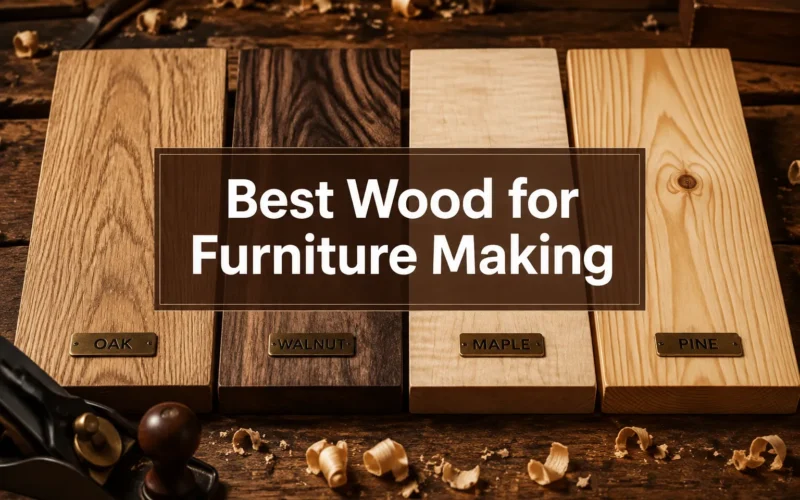
The right wood choice can mean the difference between furniture that lasts a generation and a piece that warps, cracks, or falls apart within a few years. This Best Wood for Furniture Making: A Comparison Guide covers every major wood type beginners and hobbyists need to know, from the most forgiving species to start with to the premium hardwoods worth the extra investment when the project calls for it.
Key Takeaways
- Hardwoods like oak, walnut, and maple are the gold standard for indoor furniture because of their density, durability, and appearance.
- Softwoods such as pine and cedar are budget-friendly and easier to work with, making them good starting points for beginners.

- For outdoor furniture, rot-resistant species like teak, white oak, and western red cedar are the best choices.
- Wood cost varies widely: pine runs roughly $3,$6 per board foot, while premium walnut can reach $15,$30 or more.
- Poplar and alder are the most beginner-friendly hardwoods because they are affordable, stable, and easy to cut and sand.
- Avoid green (unseasoned) wood, wood with large knots in structural areas, and species known for high allergen risk if you have sensitivities.
- Plywood is a legitimate choice for furniture carcasses, shelving, and cabinet boxes, but solid wood is preferred for visible surfaces.
- Always check moisture content before buying; wood with more than 8-10% moisture content is likely to shrink or crack after it dries indoors.
Find this useful? Add us as a preferred source on Google and more of what we publish will show up in your results.
What Makes a Wood Good for Furniture Making
Good furniture wood is stable, workable, and strong enough to handle the stress the piece will face. The four core qualities to evaluate are hardness, grain stability, workability, and appearance.
Here is what each quality means in practice:
- Janka hardness rating: Measures resistance to denting and wear. Higher numbers mean harder wood. Oak sits around 1,290 lbf; pine is around 870 lbf (U.S. Forest Products Laboratory data).
- Grain stability: Tight, consistent grain resists warping and movement as humidity changes. Quartersawn lumber is more stable than flatsawn.
- Workability: How easily the wood cuts, planes, sands, and accepts joinery. Some species, like hard maple, can blunt tools quickly; others, like poplar, cut like butter.
- Finishing quality: How well the wood absorbs stain and topcoat. Open-grain woods like oak and ash need grain filler for a smooth finish; closed-grain woods like maple do not.
Decision rule: If you are building a dining table or chair that will take daily abuse, prioritize hardness and stability. If you are building a bookcase or cabinet that mostly holds weight, workability and cost matter more.
For a deeper look at how species differ structurally, the Wood Types and Material Selection guide is a solid reference before you buy lumber.
Hardwood vs. Softwood for Furniture: Which Is Better
For most indoor furniture, hardwoods outperform softwoods in durability and longevity. That said, softwoods are not a bad choice; they are just better suited to specific applications.
| Feature | Hardwood | Softwood |
|---|---|---|
| Durability | High | Moderate |
| Cost | Higher | Lower |
| Workability | Moderate to difficult | Easy to moderate |
| Best for | Tables, chairs, cabinets | Shelving, frames, painted pieces |
| Common species | Oak, walnut, maple, cherry | Pine, cedar, fir, spruce |
Hardwoods come from deciduous trees (trees that lose their leaves). Softwoods come from conifers. The terms refer to tree type, not actual softness, balsa is technically a hardwood, and yew is technically a softwood, yet yew is harder than many hardwoods.
Common mistake: Beginners often assume softwood is always inferior. Pine furniture, when properly finished and not used in high-impact areas, can last decades and has a warm, rustic character many people love.
Oak vs. Walnut vs. Maple for Furniture
These three species dominate quality furniture making for good reason, but each serves a different purpose and budget.
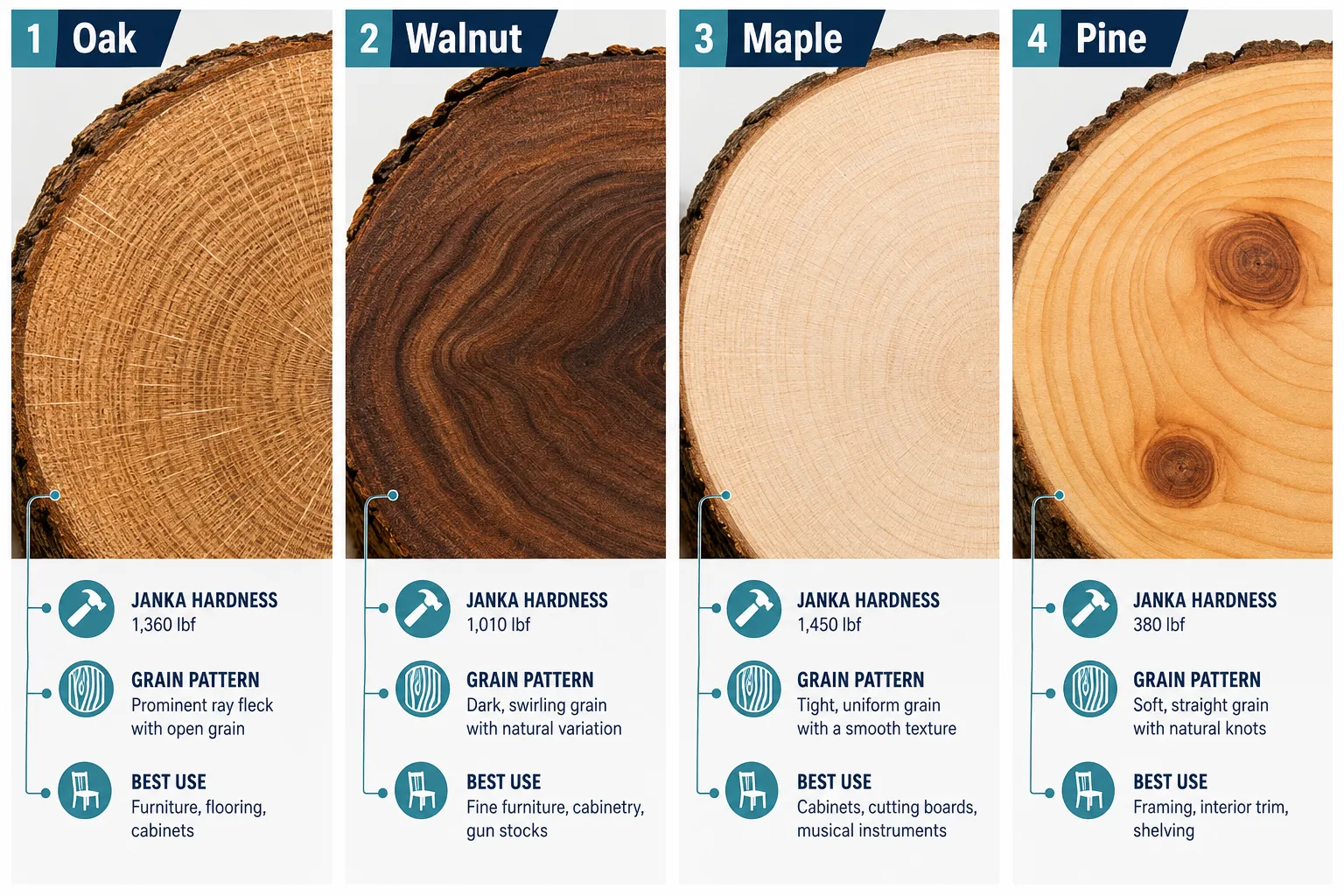
Oak (red and white) is the most widely available and affordable of the three. It has a pronounced open grain, excellent hardness (around 1,290 lbf for red oak), and takes stain well. White oak is slightly harder and more water-resistant, making it suitable for outdoor applications too. It is the workhorse of American furniture making.
Walnut is a premium choice. Its rich, dark chocolate-brown color and fine grain make it visually striking with minimal finishing. It machines beautifully, holds joinery well, and is a joy to work with. The trade-off is cost: walnut typically runs $10,$30 per board foot depending on grade and region.
Maple (hard and soft) is one of the hardest domestic species, making it ideal for tabletops, workbenches, and butcher blocks. Hard maple (around 1,450 lbf) resists scratching and denting better than oak. Its pale, tight grain can be tricky to stain evenly, so many woodworkers prefer to finish it with oil or a clear topcoat to let the natural color show.
Choose oak if: you want a durable, affordable, widely available hardwood with classic character.
Choose walnut if: appearance is a top priority and the budget allows for it.
Choose maple if: you need maximum hardness for a surface that takes heavy daily use.
Best Wood Types for Dining Tables
Dining tables need hardness, stability, and a surface that can be refinished when scratched or stained. The best choices are hard maple, white oak, walnut, and cherry.
- Hard maple: Exceptional scratch resistance. Ideal for families with children.
- White oak: Beautiful ray-flecked grain, water-resistant, and holds up well with an oil finish.
- Walnut: Stunning appearance, moderate hardness (around 1,010 lbf), and easy to refinish.
- Cherry: Starts light and deepens to a rich reddish-brown over time. Softer than maple but still a solid dining table choice.
Avoid pine and poplar for dining tabletops. They dent too easily under daily use.
Best Beginner-Friendly Wood for Furniture Projects
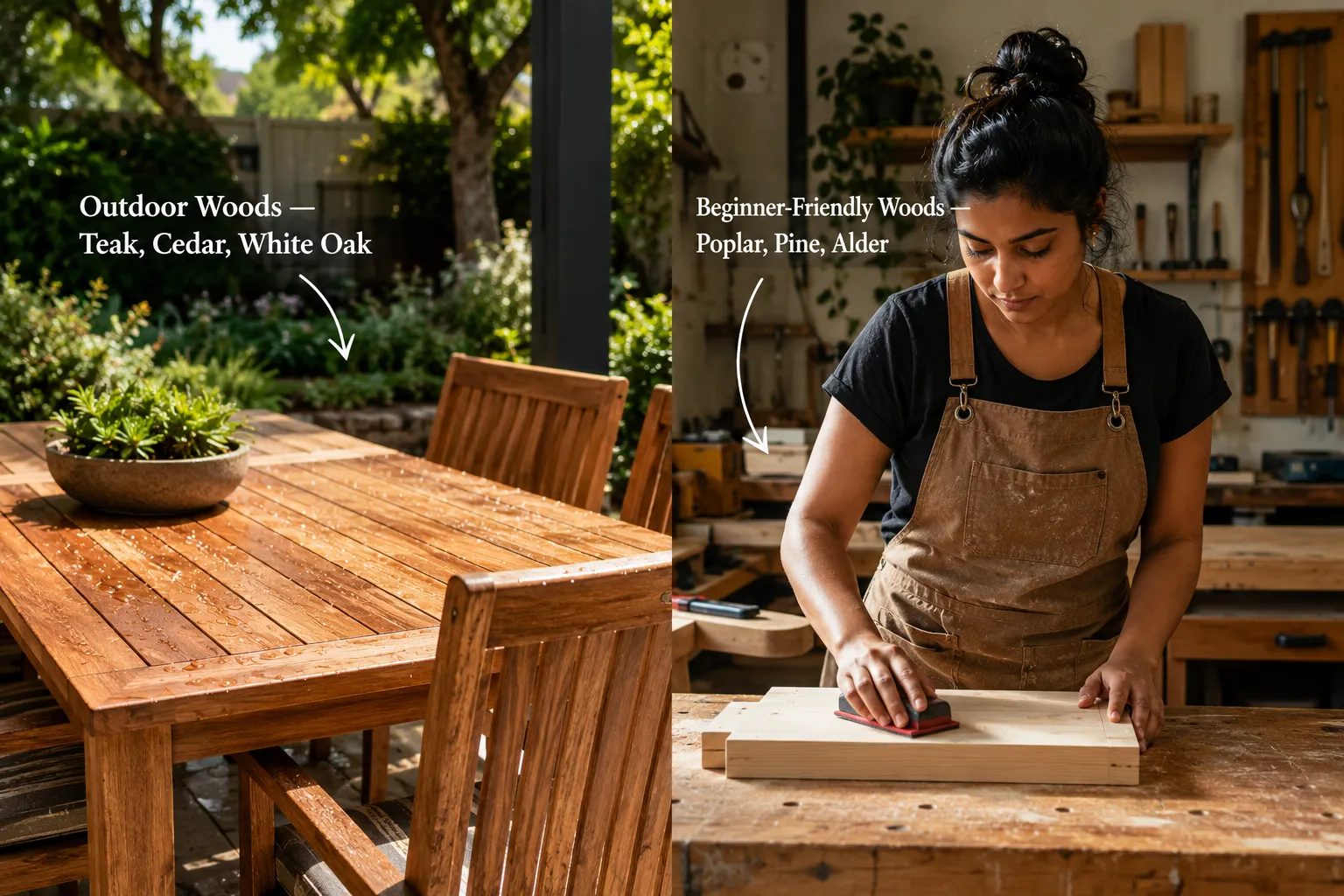
Poplar is the best beginner hardwood for furniture making. It is affordable (roughly $3,$5 per board foot), widely available at home centers, dimensionally stable, and cuts cleanly with basic tools. It does not have a dramatic grain character, which makes it better for painted pieces than stained ones.
Other beginner-friendly options:
- Pine: Inexpensive, easy to find, and forgiving to cut and sand. Knots can be charming or problematic depending on placement.
- Alder: A Pacific Northwest species that machines like a dream, takes stain evenly, and is often used as a budget alternative to cherry.
- Soft maple: Easier to work than hard maple but still durable enough for most furniture.
If you are just getting started, the Beginner Woodworking Guide: Tools, Projects and Tips has a practical breakdown of first projects and skill-building steps that pair well with these species choices.
Best Wood for Outdoor Furniture That Won’t Rot
For outdoor furniture, the wood must resist moisture, insects, and UV exposure. Teak, white oak, and western red cedar are the top choices.
- Teak: The gold standard for outdoor furniture. Its natural oils repel water and insects without any treatment needed. It is expensive (often $25,$60 per board foot), but it can last 50 years or more outdoors.
- White oak: Unlike red oak, white oak has tyloses in its pores that block water penetration. It is far more affordable than teak and performs well with a good exterior oil finish.
- Western red cedar: Lightweight, naturally rot-resistant, and easy to work. It does not hold up as well as teak under heavy use, but for outdoor chairs, benches, and planters it is excellent.
- Black locust: Extremely hard and rot-resistant, often cited as a domestic alternative to teak. Less common but worth seeking out.
Common mistake: Using red oak outdoors. Its open pores absorb moisture readily, leading to rot and splitting within a few seasons.
How Much Does Quality Furniture Wood Cost
Wood prices vary by species, grade, region, and whether you buy from a big-box store or a specialty lumber yard. The figures below are approximate retail estimates for 2026 in the U.S. market and will vary by location.
- Pine (common board): $3,$6 per board foot
- Poplar: $3,$5 per board foot
- Alder: $4,$7 per board foot
- Red oak: $5,$9 per board foot
- Hard maple: $6,$12 per board foot
- Cherry: $8,$15 per board foot
- White oak: $7,$13 per board foot
- Walnut: $10,$30 per board foot
- Teak: $25,$60 per board foot
A board foot is a unit of volume: 1 foot long x 1 foot wide x 1 inch thick. A simple dining table might require 20-30 board feet of lumber, so material costs can range from $60 for a pine table to $600 or more for walnut.
Buying from a local hardwood dealer almost always gives better quality and pricing than big-box stores, where lumber is often lower grade.
How to Tell If Wood Is Good Quality for Furniture
Good-quality furniture lumber is straight, dry, and free of structural defects. Here is what to check before buying:
- Check for straightness: Sight down the length of the board. Any bow, cup, twist, or crook will cause problems during assembly.
- Check moisture content: Use a pin-type moisture meter. Wood for indoor furniture should read 6-8% moisture content. Above 10% and it will likely shrink and crack after you bring it inside.
- Inspect for defects: Small knots in non-structural areas are fine. Large knots, checks (cracks along the grain), and splits weaken the board.
- Check the end grain: Wide growth rings generally indicate faster-grown, softer wood. Tight rings mean denser, more stable lumber.
- Look at the grade: FAS (Firsts and Seconds) is the highest grade for hardwoods, offering long, clear cuttings. No. 1 Common is a step down but still usable for most furniture.
What Wood Should I Avoid for Furniture
Some woods are poor choices for furniture due to instability, toxicity, or workability issues.
- Green (unseasoned) wood: Wood that has not dried properly will shrink, warp, and crack after it is built into a piece. Always use kiln-dried or air-dried lumber.
- Osage orange: Extremely hard and difficult to work with hand tools or basic power tools.
- Balsa: Too soft and weak for any structural furniture application.
- Pressure-treated lumber: Treated with chemicals designed for ground contact. Not safe for indoor furniture and difficult to finish.
- Pallet wood: Quality is unpredictable, often contains nails and staples, and may be treated with methyl bromide (a fumigant) for international shipping. Use with caution.
Best Wood for Furniture If You Have Allergies
Some wood species produce dust or oils that cause allergic reactions, respiratory irritation, or skin sensitization. This is a real concern for woodworkers who spend hours sanding and cutting.
Woods with documented sensitization potential include:
- Cocobolo and other rosewoods: Known skin and respiratory sensitizers. Avoid for extended projects without proper respiratory protection.
- Western red cedar can cause asthma-like symptoms in sensitive individuals.
- Teak: Its fine dust is a known sensitizer for some woodworkers.
- Exotic tropical species generally carry a higher sensitization risk than domestic species.
For allergy-prone woodworkers, the safest choices are domestic hardwoods like maple, cherry, poplar, and alder. Always wear an N95 or better respirator when sanding any species, and use dust collection. The Essential Equipment Used in Woodworking for Perfect Furniture guide covers dust collection and PPE options worth reviewing.
Most Durable Wood for High-Traffic Furniture Pieces
For furniture that takes serious daily punishment, kitchen islands, entryway benches, workbenches, and children’s furniture, hardness and surface durability are everything. Hard maple tops this list.
Ranked by Janka hardness (higher = more dent-resistant):
- Hard maple (~1,450 lbf)
- White oak (~1,360 lbf)
- Red oak (~1,290 lbf)
- Ash (~1,320 lbf)
- Walnut (~1,010 lbf)
- Cherry (~950 lbf)
For workbenches specifically, hard maple is the traditional choice and for good reason. It resists denting from tool impacts and cleans up well. For entryway furniture that gets scraped by shoes and bags, white oak or ash is an excellent choices that also look great with an oil finish.
Can I Use Plywood Instead of Solid Wood for Furniture
Plywood is a completely legitimate material for furniture, especially for cabinet boxes, drawer bottoms, shelving, and bed frames. Baltic birch plywood and hardwood veneer plywood offer excellent strength-to-weight ratios and are more dimensionally stable than solid wood because they resist seasonal movement.
Where plywood falls short is on visible edges and surfaces where the laminated layers are exposed. The standard solution is to apply solid wood edge banding or a solid wood face frame to cover the plywood edges.
Use plywood when building cabinet carcasses, bookshelves, drawer boxes, or any large flat panel where solid wood would be prohibitively expensive or prone to movement.
Use solid wood when the surface will be highly visible, the piece needs to be refinished over time, or the joinery requires solid material (mortise and tenon, dovetails).
For project plans that incorporate both materials effectively, the Furniture Building Plans: DIY Woodworking Projects for Every Room resource has detailed layouts worth exploring.
How to Stain Different Types of Wood Furniture
Staining results depend heavily on the wood species. Open-grain woods like oak and ash absorb stain deeply and show dramatic color. Closed-grain woods like maple and cherry absorb stain unevenly and often look blotchy without proper preparation.
Steps for staining any wood furniture:
- Sand progressively: Work through 80, 120, 150, and 180 grit. Always finish sanding in the direction of the grain.
- Apply pre-stain wood conditioner on blotch-prone species (maple, pine, cherry, alder). This equalizes absorption.
- Test on scrap first: Always test your chosen stain on an offcut from the same board. Color can look very different on the actual species versus the can lid.
- Apply stain with a rag or brush, and wipe off excess within the time specified by the manufacturer.
- Seal with a topcoat: Polyurethane, lacquer, or hardwax oil, depending on the intended use and desired sheen.
Note on walnut and cherry: These species are so beautiful in their natural color that many experienced woodworkers skip stain entirely and apply a clear oil or wax finish to let the wood speak for itself.
Why Is My Wood Furniture Cracking and How to Fix It
Wood cracks most often because of moisture changes. Wood expands when it absorbs humidity and contracts when it dries out. When that movement is restricted, or when the wood dries too fast, cracks (called checks) develop.
Common causes:
- Wood was not fully dried before building
- Furniture placed near a heat vent or fireplace
- Very low indoor humidity in winter (below 35%)
- Finish that seals only the surface, trapping moisture inside
How to fix small cracks:
- Fill with a color-matched wood filler or epoxy filler for structural cracks.
- Sand flush once dry.
- Refinish the affected area.
Prevention is more effective than repair. Maintain indoor humidity between 35-50% year-round using a humidifier in winter. Avoid placing solid wood furniture directly next to heat sources. For a deeper understanding of wood movement and joinery techniques that accommodate it, the Woodworking Joinery and Techniques guide is highly recommended.
FAQ-Best Wood for Furniture Making
What is the single best wood for a beginner’s first furniture project?
Poplar is the top choice. It is affordable, stable, widely available, and cuts cleanly with basic tools. It paints beautifully, which hides beginner imperfections well.
Is pine good enough for furniture?
Yes, for the right applications. Pine works well for shelving, frames, and painted pieces. It dents more easily than hardwoods, so it is not ideal for dining tables or chairs that take heavy daily use.
What wood is closest to walnut but cheaper?
Alder is often cited as a budget alternative to walnut for painted or lightly stained pieces. For a stained piece where the grain matters, American cherry is a closer visual match at a lower price point.
How do I know if lumber is dry enough to use?
Use a pin-type moisture meter. For indoor furniture, the reading should be 6-8%. Anything above 10% carries a real risk of shrinkage and cracking after the piece is built.
Can I mix different wood species in one furniture piece?
Yes, but choose species with similar movement rates. Mixing a very stable species with a highly reactive one in a way that restricts movement can cause cracking or joint failure over time.
Is oak or maple better for a kitchen table?
Hard maple is harder and more scratch-resistant, making it slightly better for a kitchen table that sees daily use. White oak is a close second and has a more visually interesting grain pattern.
What wood lasts longest outdoors without treatment?
Teak is the most durable untreated outdoor wood, followed by black locust and white oak. All three resist rot and insects naturally, though any outdoor wood will last longer with periodic oiling.
Does wood species affect how long furniture takes to build?
Harder species like maple and white oak require sharper tools and more sanding time. Softer species like pine and poplar are faster to work. For a first project, easier-working species save significant time and frustration.
Why does my stain look blotchy on pine?
Pine has inconsistent density across its grain, causing uneven stain absorption. Always apply a pre-stain wood conditioner before staining pine, or consider using a gel stain, which sits on the surface rather than soaking in.
Is reclaimed wood good for furniture?
Reclaimed wood can be excellent; it is often old-growth lumber that is denser and more stable than new-growth equivalents. The key is ensuring it is properly dried, free of nails and hardware, and not treated with chemicals.
Conclusion
Choosing the right wood is one of the most important decisions in any furniture project. For beginners, poplar and pine offer the best combination of affordability and workability. For pieces that need to last decades, oak, maple, walnut, and cherry are the proven choices. Outdoor projects call for teak, white oak, or cedar.
The practical next steps: visit a local hardwood dealer (not just a big-box store) and handle a few species in person. Check moisture content with a meter before buying. Start with a beginner-friendly species for your first project, then work up to premium hardwoods as your skills develop.
For structured project plans to put these wood choices into action, explore the Furniture Building Plans: DIY Woodworking Projects for Every Room and the Step-by-Step Guide to Woodworking Projects for Beginners. If you want to sharpen your skills before committing to expensive lumber, the Woodworking Online Training: The Complete Beginner’s Guide is worth bookmarking.
Good wood, sharp tools, and a clear plan. That is how lasting furniture gets made.
Products, Tools, and Resources
Getting the most from any wood species means having the right tools and references on hand. A few genuinely useful items for anyone working through this comparison guide:
- Pin-type moisture meter: Essential before buying any lumber. Models from General Tools or Calculated Industries are reliable and affordable for hobbyists.
- Pre-stain wood conditioner: Minwax Pre-Stain Wood Conditioner is widely available and dramatically improves stain results on pine, maple, and alder.
- Janka hardness reference chart: The U.S. Forest Products Laboratory publishes free technical data on wood species properties, a credible reference to bookmark.
- Hardwood lumber dealer locator: The National Hardwood Lumber Association (NHLA) website lists certified dealers by region, a far better source for furniture-grade lumber than most big-box stores.
- Beginner tool setup: Before investing in expensive lumber, make sure the tool kit is solid. The Beginner Woodworking Tools and Equipment guide covers exactly what is needed and why.
None of these need to be expensive. The biggest investment is time spent learning the material, and that pays off on every project that follows.
References
- U.S. Forest Products Laboratory. (2010). Wood Handbook: Wood as an Engineering Material. USDA Forest Service. https://www.fpl.fs.usda.gov/documnts/fplgtr/fpl_gtr190.pdf
- National Hardwood Lumber Association. (2023). Rules for the Measurement and Inspection of Hardwood and Cypress. NHLA. https://www.nhla.com
- Hoadley, R. B. (2000). Understanding Wood: A Craftsman’s Guide to Wood Technology. Taunton Press.
- Wood Database. (2023). Janka Hardness Ratings for North American Species. https://www.wood-database.com
- Occupational Safety and Health Administration (OSHA). (2022). Wood Dust Hazards. U.S. Department of Labor. https://www.osha.gov/wood-dust