Outdoor Furniture Wood Comparison Guide: Cedar vs. Teak vs. Pressure-Treated Pine
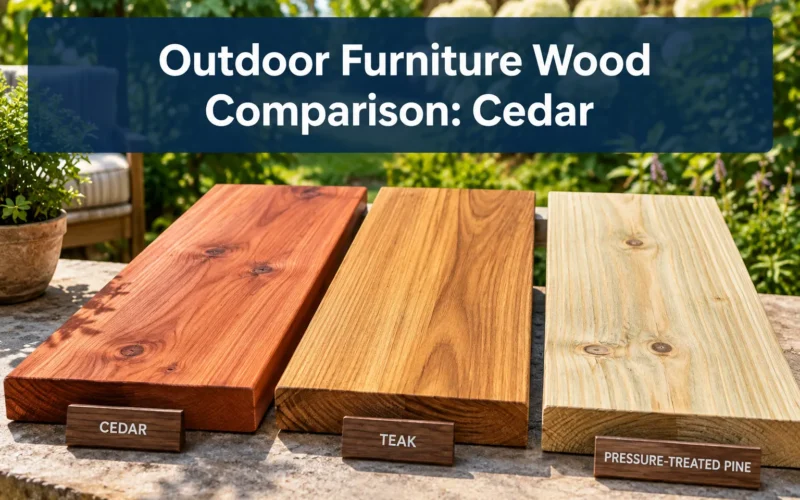
The wood you choose for outdoor furniture determines far more than just how it looks on your patio. It shapes how many weekends you’ll spend on maintenance, how long the piece survives a hard winter, and whether you’re rebuilding it in five years or passing it down in twenty. This outdoor furniture wood comparison guide, cedar vs. teak vs. pressure-treated pine, breaks down exactly what each species delivers, what it costs you over time, and which one fits your project best.
Key Takeaways
- Teak is the most durable and weather-resistant outdoor wood available, but it carries a premium price that isn’t always necessary for every project.
- Cedar is a strong middle-ground choice: naturally rot-resistant, lightweight, and far more affordable than teak, though it needs occasional maintenance.

- Pressure-treated pine is the most budget-friendly option and lasts well when maintained, but it requires sealing or staining and should be handled carefully due to its chemical treatment.
- Teak turning silver-gray outdoors is completely normal and can be reversed with teak oil or left as-is without structural harm.
- Cedar does not strictly require sealing, but applying a UV-protective finish significantly extends its lifespan and color.
- For beginners building their first outdoor project, cedar offers the best balance of workability, cost, and natural durability.
- All three woods can last 15 to 25-plus years with proper care, the difference is how much effort that care requires.
Find this useful? Add us as a preferred source on Google and more of what we publish will show up in your results.
What Is the Core Difference Between Cedar and Teak for Outdoor Furniture
Cedar and teak both resist rot naturally, but they do it differently and at very different price points. Cedar relies on natural oils and resins that repel insects and moisture. Teak contains a higher concentration of natural oils plus silica, making it exceptionally dense, heavy, and resistant to nearly every outdoor threat, from tropical humidity to hard freezes.
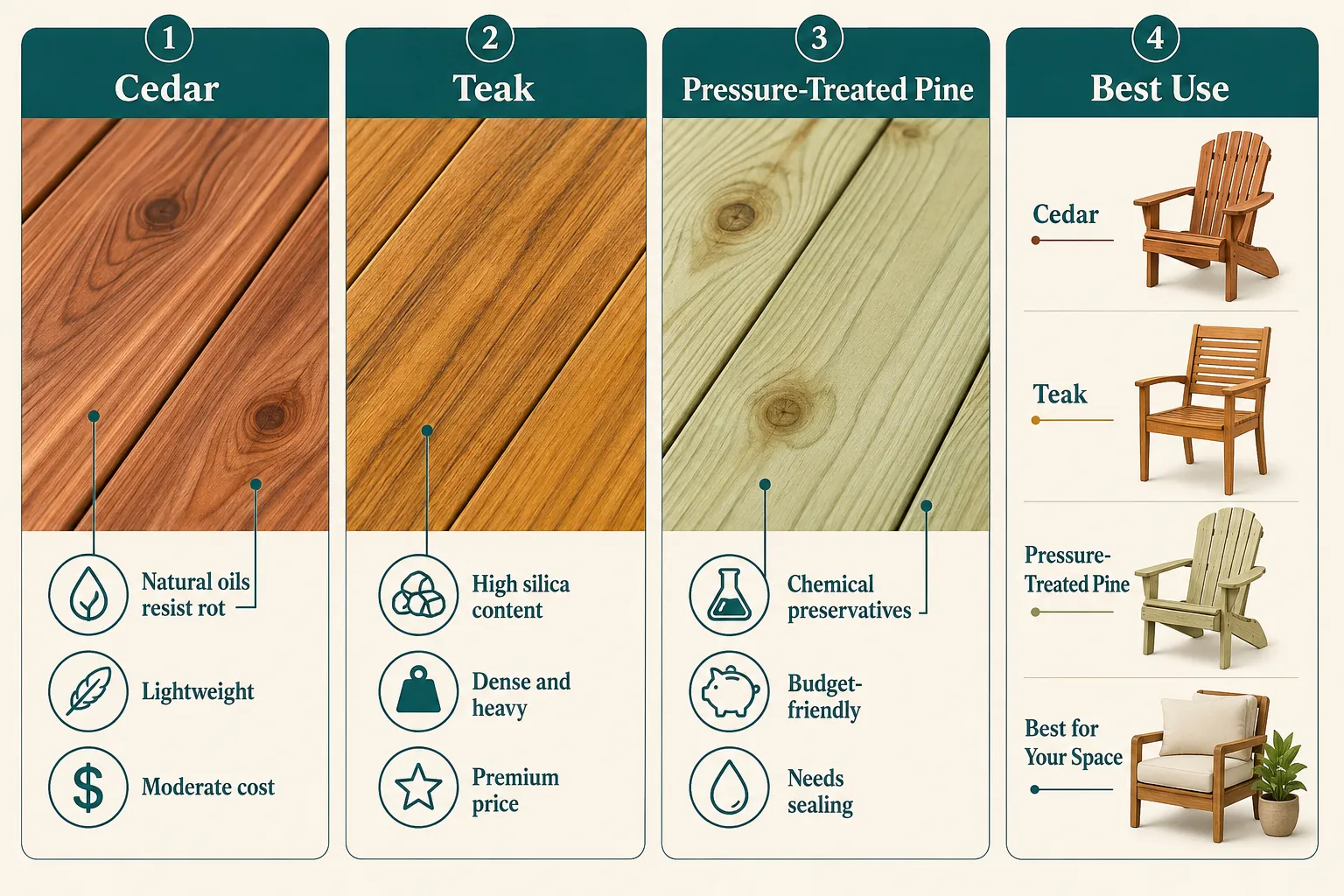
Here is a side-by-side breakdown of the two most popular natural wood choices:
| Feature | Cedar | Teak |
|---|---|---|
| Natural rot resistance | Good | Excellent |
| Weight | Light | Heavy |
| Workability for beginners | Very easy | Moderate (dulls tools faster) |
| Maintenance needed | Occasional oiling or sealing | Minimal (optional oiling) |
| Relative cost | Moderate | High |
| Lifespan (maintained) | 15-20 years | 25-50+ years |
Cedar is lighter and much easier to cut, shape, and sand, a real advantage if you’re just getting started with beginner woodworking tools and equipment. Teak’s silica content can dull saw blades and router bits faster, so factor that into your tool budget.
Choose cedar if you want a natural, attractive wood that’s easy to work with and reasonably priced. Choose teak if longevity matters more than upfront cost and you want a low-maintenance piece that survives decades outdoors.
How Long Does Cedar Outdoor Furniture Last
Cedar outdoor furniture typically lasts 15 to 20 years with basic maintenance, and some well-built pieces have reached 25 years in mild climates. The key variable is whether the wood is sealed or oiled periodically to slow moisture absorption and UV degradation.
Western red cedar is the most commonly used variety for outdoor furniture. Its natural oils slow decay, but those oils do deplete over time, especially in climates with intense sun or frequent rain. Without any treatment, cedar will gray and eventually crack or split, though it won’t rot as quickly as untreated pine.
Factors that affect cedar’s lifespan outdoors:
- Climate: Humid, wet climates accelerate decay; dry climates extend life significantly.
- Ground contact: Cedar touching soil or standing water degrades much faster.
- Finish: An annual coat of exterior oil or UV-protective sealer adds years to the wood.
- Construction quality: Tight joinery and elevated legs reduce moisture trapping.
Does Cedar Need to Be Sealed for Outdoor Use
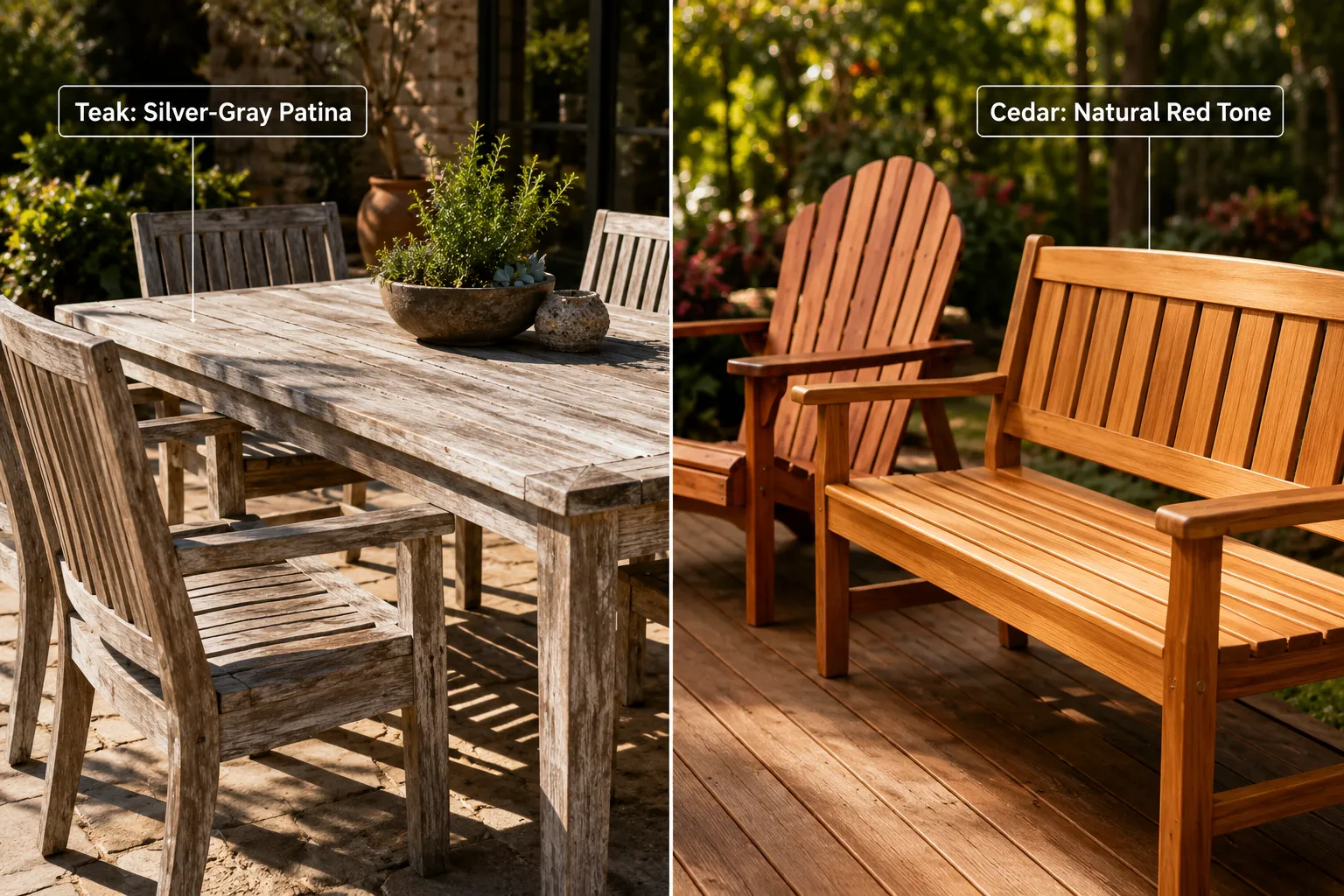
Cedar does not strictly require sealing to survive outdoors, but sealing it makes a meaningful difference. Untreated cedar will weather to a silver-gray color within a season or two, and without protection, it becomes more vulnerable to cracking and surface checking over time.
Applying an exterior oil, a penetrating wood sealer, or a UV-blocking finish once a year (or every two years in mild climates) keeps cedar looking warm and reddish-brown, prevents surface cracking, and extends the furniture’s useful life by several years. Tung oil, linseed oil, and purpose-made cedar sealers all work well.
Can you paint cedar outdoor furniture? Yes, cedar accepts paint and stain very well. Its tight grain holds paint without excessive bleeding or blotching. Use an exterior-grade primer first, then a quality exterior paint. Painted cedar will need repainting every 3 to 5 years depending on sun exposure, but it’s a perfectly valid finish choice, especially if you want a specific color to match your outdoor decor.
Why Is Teak So Expensive for Outdoor Furniture
Teak is expensive primarily because it grows slowly, takes 40 to 80 years to reach harvestable maturity, and the highest-quality plantation teak comes from a limited number of managed forests in Southeast Asia. Demand from the marine industry (teak has been used on boat decks for centuries) also keeps prices elevated.
The wood’s natural oil content, density, and silica make it uniquely resistant to warping, cracking, insects, and moisture, qualities that no other commonly available wood fully replicates. You’re paying for a material that genuinely requires almost no maintenance and can outlast the furniture’s joinery.
Is teak worth the extra cost compared to cedar? It depends on your priorities. If you’re building a piece you want to keep for 30 or more years with minimal upkeep, a teak bench, dining table, or lounge chair that lives outside year-round, the long-term value is real. If you’re building a first project to learn on, or you’re furnishing a rental property, cedar delivers 80% of the durability at a fraction of the price.
Can You Leave Teak Furniture Outside Year Round
Yes, teak furniture can stay outside year-round in virtually any climate, including freezing winters and humid summers. This is one of teak’s most practical advantages over other woods.
Teak’s high oil content prevents the wood from absorbing and releasing moisture rapidly, which is the main cause of warping and cracking in most other species. It handles temperature swings, rain, snow, and UV exposure better than any other commonly available furniture wood.
Teak furniture turning gray, is that normal? Completely normal. When left untreated outdoors, teak oxidizes and weathers to a silver-gray color within 6 to 9 months. This is a surface change only and does not indicate rot or structural damage. Many owners prefer the silvered look and simply leave it. To restore the original golden-honey color, clean the surface with a teak cleaner and apply teak oil. Either choice is valid, gray teak is still structurally sound teak.
Pressure-Treated Pine vs. Cedar: Which Is Better for Outdoor Furniture
Pressure-treated pine and cedar both work for outdoor furniture, but they suit different priorities. Cedar is the better choice for furniture you’ll sit on, eat at, or touch regularly, because it contains no chemical preservatives. Pressure-treated pine is the better choice when budget is the primary concern or when the wood will be in ground contact.
Pressure-treated pine is regular pine lumber that has been infused with chemical preservatives (most commonly copper-based compounds since 2004) under high pressure. This process makes pine, a species with almost no natural rot resistance, capable of surviving decades outdoors.
Key differences:
- Cedar is naturally rot-resistant without chemicals; pressure-treated pine relies on chemical treatment.
- Cedar is lighter and easier to work with hand tools and basic power tools.
- Pressure-treated pine is significantly cheaper and widely available at any home center.
- Cedar has a warmer, more attractive natural appearance out of the box.
- Pressure-treated pine can have a greenish tint when new and may warp more during drying.
For a first outdoor furniture build, cedar is generally the more beginner-friendly material. If you’re building a raised planter, a deck frame, or anything with ground contact, pressure-treated pine is the practical choice. For a complete guide to choosing the right lumber for your project, see Wood Types and Material Selection: Choose the Right Lumber for Any Project.
How Long Does Pressure-Treated Pine Outdoor Furniture Last
Pressure-treated pine can last 20 to 30 years in outdoor furniture applications when it’s properly finished and maintained. The chemical treatment protects the wood from rot and insects, but it doesn’t protect against surface weathering, UV damage, or moisture-driven cracking, that’s where finishing comes in.
New pressure-treated lumber often contains significant moisture from the treatment process. Building with wet lumber leads to warping and checking as it dries. Let pressure-treated pine dry (or “weather”) for at least 2 to 4 weeks before applying any finish.
Does Pressure-Treated Wood Need Staining or Sealing
Yes, pressure-treated wood benefits significantly from staining or sealing, even though the chemical treatment protects against rot. The preservatives do not prevent surface graying, UV degradation, or the surface checking (small cracks) that occur as the wood dries and expands with seasonal moisture changes.
Steps for finishing pressure-treated pine furniture:
- Let new lumber dry for 2 to 4 weeks after purchase.
- Sand the surface lightly with 80 to 120-grit sandpaper to open the grain.
- Apply an exterior wood sealer, semi-transparent stain, or solid-color deck stain.
- Reapply every 1 to 2 years depending on sun and rain exposure.
A quality exterior stain both protects and improves the appearance of pressure-treated pine, covering the greenish tint and giving the furniture a more finished look.
What Wood Is Best for Outdoor Furniture on a Budget
For budget-conscious builders, pressure-treated pine is the most affordable option, followed by cedar. Teak is not a budget material by any measure.
If cost is the primary driver, pressure-treated pine gives you a durable, widely available material at the lowest price point. Add a coat of exterior stain and it will serve well for years. Cedar costs more than pressure-treated pine but less than teak, and it’s significantly easier to work with, no chemical handling concerns, no waiting for it to dry, and a much more attractive natural appearance.
Budget decision guide:
- Lowest upfront cost: Pressure-treated pine
- Best value for natural appearance and workability: Cedar
- Best long-term investment if budget allows: Teak
For beginner-friendly project ideas that work well with all three wood types, browse furniture building plans and DIY woodworking projects.
Cedar vs. Teak Maintenance Requirements
Cedar requires more active maintenance than teak, but neither wood is particularly demanding compared to most other outdoor materials. Teak can be left completely alone and will still outlast most furniture; cedar needs a bit more attention to stay looking its best.
Cedar maintenance schedule:
- Every 1 to 2 years: Clean with mild soap and water, let dry fully, apply exterior oil or UV sealer.
- As needed: Light sanding to remove surface checking or gray weathering before refinishing.
Teak maintenance schedule:
- Optional, once a year: Apply teak oil to maintain the golden color (not required for structural health).
- Every few years: Use a teak cleaner and brightener if the gray patina has built up and you want to restore the original tone.
Teak wins on maintenance ease, but cedar’s annual oiling is a straightforward task that most hobbyists can handle in an afternoon. If you’re new to wood finishing, the step-by-step woodworking projects guide for beginners covers finishing basics that apply directly to outdoor furniture.
Pressure-Treated Pine vs. Composite: Which Should You Choose
Composite decking and furniture materials have become a real alternative to pressure-treated pine, but they serve slightly different purposes. Pressure-treated pine is a natural wood that you cut, shape, join, and finish like any other lumber, it’s a true woodworking material. Composite is an engineered product (typically wood fiber and plastic) that requires almost no maintenance but offers far less flexibility for custom joinery and design.
Choose pressure-treated pine if:
- You want to build custom furniture with traditional woodworking joinery.
- You’re comfortable with periodic maintenance (sealing every 1 to 2 years).
- Budget is tight and you want a real wood look and feel.
Choose composite if:
- You want zero maintenance over many years.
- You’re building flat surfaces (benches, tabletops) rather than complex joinery.
- You don’t mind a less natural appearance and higher upfront material cost.
For most hobbyist woodworkers, pressure-treated pine is the more satisfying material to work with because it behaves like wood, because it is wood. Composite materials can be limiting when you want to practice joinery techniques or build something truly custom.
FAQ: Outdoor Furniture Wood Comparison
Which wood is easiest for a beginner to work with outdoors?
Cedar is the easiest of the three. It’s lightweight, cuts cleanly, sands smoothly, and doesn’t dull tools the way teak does. Pressure-treated pine is also workable but can be wet and heavy when new.
Can I mix cedar and teak in the same outdoor furniture project?
You can, but the two woods will weather differently over time. Cedar will gray faster and may need finishing more often. For a consistent look, stick with one species per piece.
How do I know if my cedar furniture needs refinishing?
Run your hand across the surface. If water no longer beads up and the wood looks dry or gray, it’s time to clean and re-oil or reseal.
Is pressure-treated pine safe for outdoor dining furniture?
Modern pressure-treated pine (post-2004) uses copper-based preservatives considered safe for outdoor use, including furniture. Avoid older lumber treated with CCA (chromated copper arsenate), which contained arsenic. When in doubt, check the label or ask your lumber supplier.
Does teak furniture need to be covered in winter?
Teak does not need to be covered or stored indoors during winter. It handles freezing temperatures and snow without structural damage. Covering it is optional and mainly prevents the surface from accumulating debris.
What finish should I use on cedar outdoor furniture?
A penetrating exterior oil (tung oil or linseed oil-based) or a UV-blocking wood sealer works best. Avoid film-forming finishes like polyurethane outdoors, they peel and trap moisture over time.
Why does pressure-treated pine have a greenish color?
The green tint comes from copper-based preservatives used in the treatment process. It fades naturally over a few months of outdoor exposure or can be covered with a solid exterior stain.
How often should I oil teak outdoor furniture?
Once a year is the common recommendation if you want to maintain the golden color. If you prefer the silver-gray weathered look, you can skip oiling entirely without harming the wood.
Can cedar outdoor furniture be left in the rain?
Yes. Cedar handles rain well due to its natural oils. Just make sure the furniture has good drainage and isn’t sitting in pooled water for extended periods, which accelerates decay at the base of legs and joints.
What is the best outdoor wood for a humid climate like the Southeast US?
Teak performs best in high-humidity environments. Cedar is a solid second choice. Pressure-treated pine can work but requires more diligent sealing in consistently wet climates.
Is it worth building outdoor furniture yourself versus buying it?
Building your own outdoor furniture lets you choose the exact wood species, customize dimensions, and use joinery that outlasts most store-bought pieces. For anyone interested in developing real woodworking skills, it’s one of the most rewarding project categories to start with.
Where can I find plans for outdoor furniture projects?
A good starting point is a dedicated set of furniture building plans and DIY woodworking projects that cover everything from simple benches to full dining sets.
Conclusion
The right wood for your outdoor furniture project comes down to three things: your budget, how much maintenance you’re willing to do, and how long you want the piece to last.
Cedar is the best all-around starting point for most hobbyist woodworkers. It’s affordable, pleasant to work with, naturally rot-resistant, and attractive. Teak is the premium choice when longevity and minimal upkeep are worth the investment. Pressure-treated pine is the practical budget option, durable when finished properly, widely available, and perfectly capable of lasting decades.
Actionable next steps:
- If you’re building your first outdoor piece, start with cedar. Pick up a few boards, practice your joinery, and apply an exterior oil when you’re done.
- If you’re ready to invest in a long-term piece, price out teak from a reputable supplier and compare it against your expected use and lifespan goals.
- If budget is tight, buy kiln-dried pressure-treated pine, let it dry for a few weeks, and seal it thoroughly before use.
Whichever wood you choose, the skills you build making outdoor furniture transfer directly to every other project you tackle. If you’re just getting started, the beginner woodworking guide covering tools, projects, and tips is a solid next read. And when you’re ready to move beyond outdoor furniture, explore woodworking joinery and techniques to build the skills that make every project stronger and more satisfying.
Products, Tools, and Resources
For working with cedar and pressure-treated pine:
A quality circular saw or miter saw handles both species cleanly. For shaping and finishing, a random orbital sander with 80, 120, and 220-grit pads covers most outdoor furniture work. See the essential equipment used in woodworking for perfect furniture for a practical rundown of what you actually need.
For finishing outdoor wood:
- Exterior tung oil or Danish oil for cedar and teak
- Semi-transparent exterior wood stain for pressure-treated pine
- A quality natural-bristle brush for oil application; a foam roller for stain on flat surfaces
For teak specifically:
A dedicated teak cleaner and brightener (widely available at marine supply stores) restores weathered gray teak before re-oiling. It’s a two-step product that makes a noticeable difference.
For project planning:
Before cutting a single board, work from a solid plan. The beginner’s complete guide to reading and using woodworking plans walks through how to interpret dimensions, cut lists, and assembly sequences, skills that save material and frustration on every build.