Best Storage Shed Designs for Bikes and Sports Gear
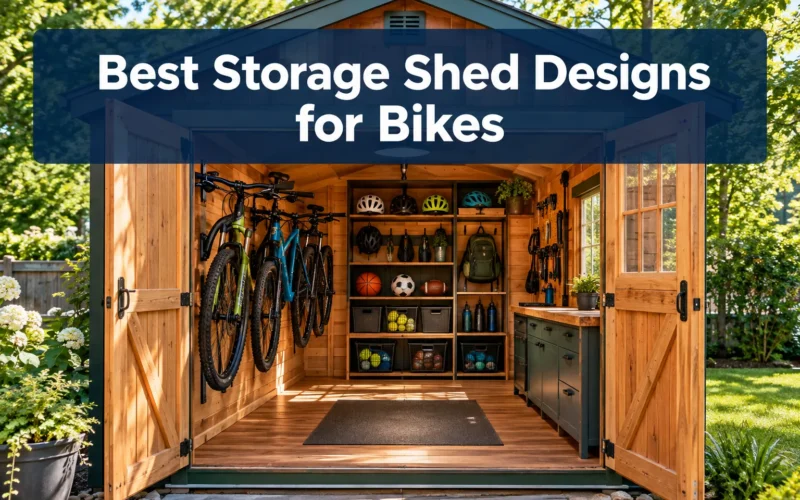
For secure and efficient bike and sports gear storage, choose a shed at least 8×10 ft with wide double doors and proper ventilation to prevent rust. Use pressure-treated lumber or cedar for durability, and plan interior wall hooks, ceiling hoists, and adjustable shelving to maximize space. Prioritize solid security features like a heavy-duty hasp, padlock, and floor anchor for peace of mind.
Key Takeaways
- A dedicated bike and sports gear shed needs at minimum a 6×8 ft footprint, but 8×10 ft or larger works better for two or more bikes plus equipment.
- Wide double doors (at least 5 feet combined) are one of the most overlooked features in bike shed design; they prevent daily frustration when rolling bikes in and out.

- Pressure-treated lumber or cedar is the best wood choice for outdoor bike sheds because they resist moisture and insect damage without heavy chemical treatment.
- Wall-mounted hooks, ceiling hoists, and adjustable shelving dramatically increase usable storage without requiring a bigger shed footprint.
- Ventilation is non-negotiable. Without it, trapped humidity causes rust on bike frames, chains, and metal gear within a single season.
- A simple hasp-and-padlock setup is the minimum security for an outdoor bike shed; a floor anchor adds a second layer of protection.
- For small yards, a lean-to shed built against a fence or house wall is the most space-efficient design available.
- DIY builds using basic shed plans can cost significantly less than prefab kits while giving you full control over interior layout.
Find this useful? Add us as a preferred source on Google and more of what we publish will show up in your results.
What Makes a Good Bike Storage Shed Design
A well-designed bike storage shed does three things well: it protects equipment from weather, makes access easy, and uses every square foot efficiently. The best storage shed designs for bikes and sports gear balance those three priorities rather than optimizing for just one.
The features that matter most come down to door width, interior height, ventilation, and the flexibility of your interior storage system. A shed that looks great from the outside but forces you to shuffle three bikes to reach the one you want will quickly become a dumping ground rather than a functional storage solution.
Core design features to prioritize:
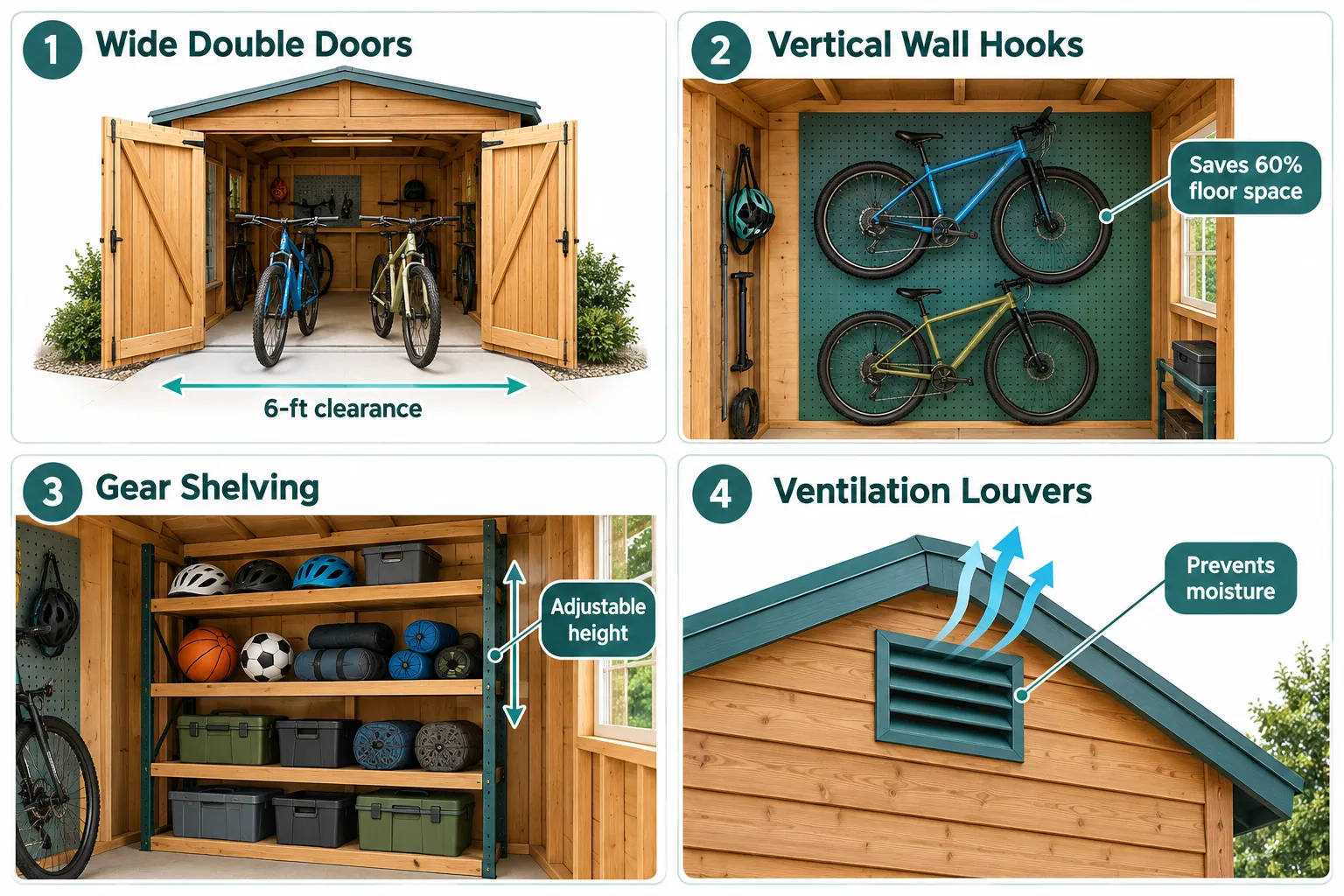
- Door width: Double doors with a combined opening of at least 5 feet let you roll bikes in and out without lifting or angling.
- Interior height: A minimum of 7 feet of headroom allows ceiling-mounted bike hoists, which free up floor space for bulkier gear.
- Wall layout: Uninterrupted wall sections (without windows cutting into them) give you room for pegboards, hooks, and shelving.
- Floor material: A smooth concrete pad or treated plywood floor is easier to roll bikes across than bare dirt or gravel.
- Roof pitch: A steeper pitch (like a gable or gambrel roof) creates usable overhead space and sheds rain and snow more effectively. See our comparison of gable vs. gambrel roof sheds for a deeper look at which pitch suits different storage needs.
How Much Space Do You Need for a Bike and Sports Gear Shed
For a single bike with minimal gear, a 6×6 ft shed is the bare minimum. For two bikes plus helmets, balls, and seasonal sports equipment, 8×10 ft is the practical starting point. Families with three or more bikes and a full spread of gear should consider 10×12 ft or larger.
A standard adult bicycle occupies roughly 6 feet in length and 2 feet in width when stored flat on the floor. Hanging bikes vertically on wall hooks reduces that floor footprint to about 1.5 square feet per bike, which is why interior organization matters as much as raw square footage.
Space estimates by household size:
| Household Setup | Recommended Shed Size |
|---|---|
| 1 bike, minimal gear | 6×6 ft |
| 2 bikes, moderate gear | 8×8 ft |
| 2-3 bikes, full sports gear | 8×10 ft |
| 4+ bikes, family gear storage | 10×12 ft or larger |
For more guidance on matching shed dimensions to your property, the best shed size for suburban lots guide walks through zoning considerations and footprint comparisons in detail.
How Big Should a Bike Storage Shed Be
The right shed size depends on how many bikes you own, what other sports gear you need to store, and whether you want room to move around inside comfortably. An 8×10 ft shed is the most commonly recommended size for a household with two bikes and a moderate amount of gear because it provides enough wall space for hooks and shelving while keeping the build cost manageable.
One mistake beginners make is sizing a shed for current inventory only. If there’s any chance you’ll add a bike, a kayak, or a set of golf clubs in the next few years, build one size larger than you think you need. Adding square footage to an existing shed later is far more expensive than building it right the first time.
A good rule of thumb: measure every item you plan to store, add 20% for growth, then choose the next standard shed size up from that total.
Bike Shed vs. Wall Mount vs. Garage Storage: Which Is Better
A dedicated outdoor bike shed is the best choice when you need weather protection, security, and organized storage for multiple bikes and gear in one place. Wall mounts inside a garage work well for one or two bikes in a dry, secure space. Garage floor storage is the least efficient option and the hardest to keep organized.
Each option has a clear use case:
- Dedicated bike shed: Best for households with 2+ bikes, limited garage space, or a desire to keep sports gear separate from vehicles and tools.
- Garage wall mounts: Best for single-bike households with an existing dry garage and no space constraints.
- Garage floor storage: Acceptable as a temporary solution but not recommended long-term because bikes block parking and are more vulnerable to accidental damage.
The shed option also allows you to customize the interior specifically for bikes and sports gear, something a shared garage rarely permits. If you’re weighing whether to build a custom layout or use a standard kit, the custom vs. standard shed designs comparison is worth reading before you commit.
Best Materials for Outdoor Bike Storage Sheds
Pressure-treated pine and cedar are the two best wood choices for an outdoor bike shed. Pressure-treated lumber is more affordable and highly resistant to rot and insects. Cedar costs more but is naturally aromatic, lighter in weight, and resists moisture without chemical treatment, making it a popular choice for visible exterior walls.
For beginners building their first shed, pressure-treated pine for the frame and cedar or T1-11 siding for the exterior walls is a practical and cost-effective combination.
Material comparison at a glance:
- Pressure-treated pine: Affordable, widely available, excellent rot resistance, best for framing and floor joists.
- Cedar: Naturally rot-resistant, attractive grain, lighter than pine, ideal for siding and trim.
- T1-11 plywood siding: Budget-friendly, acts as both sheathing and siding in one panel, easy for beginners to install.
- Metal (steel or aluminum) panels: Durable and low-maintenance but can trap condensation if not properly vented (more on that below).
- Composite/vinyl siding: Virtually maintenance-free but adds cost and offers less structural rigidity than wood.
For a broader look at wood selection for structural projects, the best wood for furniture making guide covers grain, density, and workability factors that apply to shed construction as well.
Can You Store Bikes in a Metal Shed
Yes, bikes can be stored in a metal shed, but condensation management is critical. Metal sheds heat up quickly during the day and cool rapidly at night, creating a cycle of condensation on interior surfaces that accelerates rust on bike frames, chains, derailleurs, and metal sports equipment.
To make a metal shed work for bike storage:
- Install ridge vents and low wall vents to create airflow that reduces moisture buildup.
- Add a vapor barrier or rigid foam insulation panels to the interior walls to reduce temperature swings.
- Apply a rust-inhibiting coating or wax to bike frames and chains at least twice per season.
- Use rubber-coated hooks rather than bare metal hooks to prevent contact rust on bike frames.
Metal sheds are a reasonable budget option, but wood sheds with proper ventilation generally provide a more stable interior environment for bikes and metal sports gear over the long term.
How to Prevent Rust and Moisture in a Bike Storage Shed
Rust and moisture damage are the most common reasons bikes deteriorate in outdoor storage. The solution is a combination of ventilation, vapor barriers, and regular maintenance, not just one of the three.
Ventilation and weatherproofing checklist:
- Install at least two vents: one near the roofline (ridge or gable vent) and one near the floor on the opposite wall to create cross-ventilation.
- Seal all gaps around doors, windows, and roof edges with weatherstripping and exterior caulk.
- Elevate bikes off the floor using wall hooks or a floor stand to prevent moisture wicking from the floor.
- Use a dehumidifier or moisture-absorbing packets (silica gel or calcium chloride) inside the shed during humid months.
- Treat wooden floors with a waterproof sealant annually.
- Hang a small thermometer/hygrometer inside the shed to monitor humidity. Aim to keep relative humidity below 60%.
For more on insulation and moisture control in shed builds, the workshop shed insulation guide covers R-values and vapor barrier placement in practical detail.
Bike Shed Designs for Small Yards
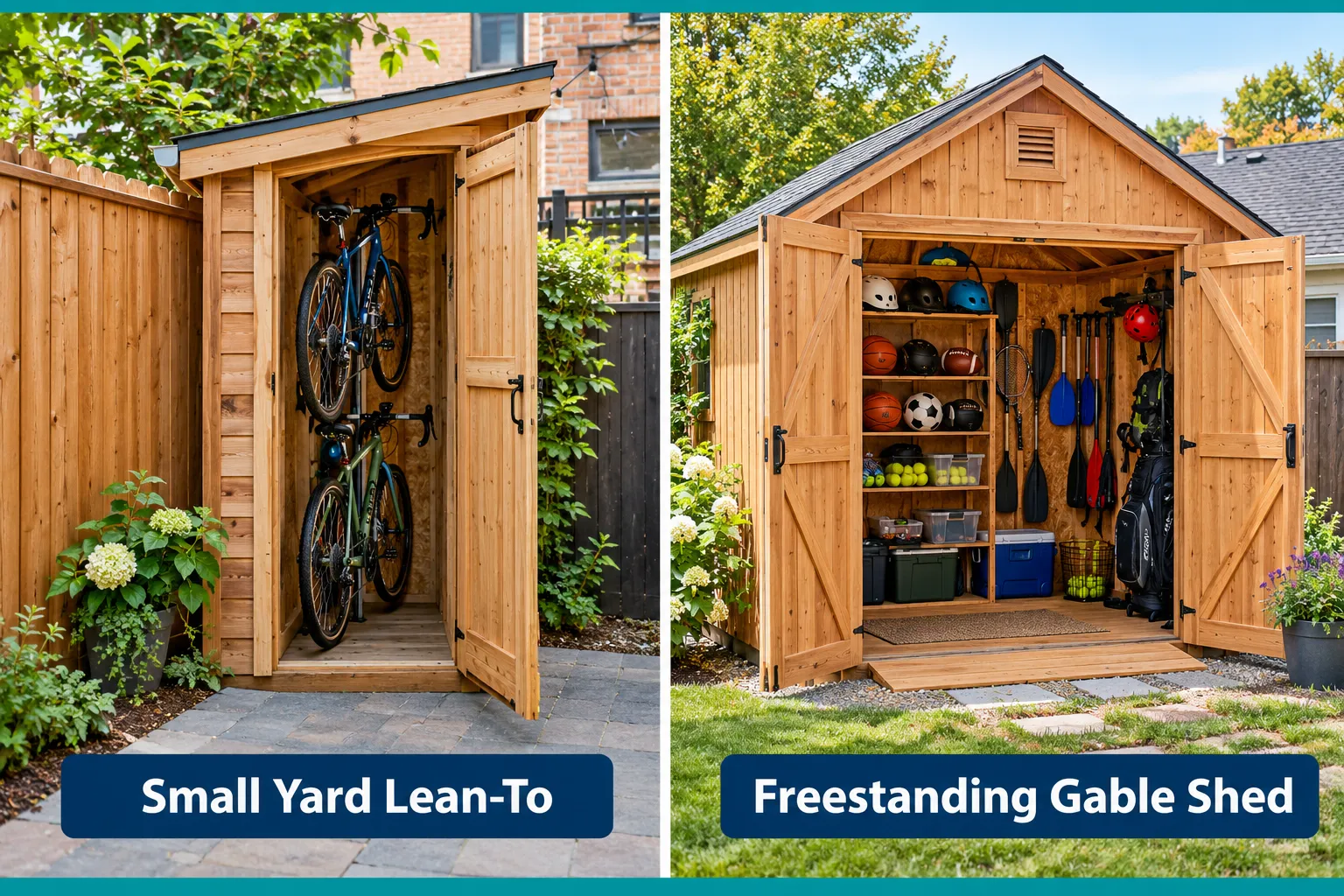
For small yards, a lean-to shed built against an existing fence, house wall, or garage exterior is the most space-efficient design available. Lean-to sheds use a single-slope roof that pitches away from the supporting structure, require no freestanding foundation on all four sides, and can be as narrow as 4 feet while still storing two bikes vertically.
Other compact options for tight spaces include:
- Vertical bike lockers: Narrow, tall enclosures (roughly 3×6 ft) designed to store one or two bikes upright. Ideal for side yards or narrow passages.
- Corner sheds: Triangular or angled designs that fit into a yard corner and use otherwise wasted space.
- Shed-bench combos: A low storage box with a hinged lid that doubles as outdoor seating while storing helmets, balls, and smaller gear underneath.
When building in a small yard, always check local zoning setback requirements before finalizing placement. Many municipalities require sheds to sit at least 3-5 feet from property lines, which affects where a lean-to can attach.
DIY Bike Shed Design Ideas on a Budget
A functional DIY bike shed can be built for a fraction of the cost of a prefab kit if you use basic materials and a straightforward design. A simple 8×6 ft gable-roof shed using pressure-treated framing, T1-11 siding, and asphalt shingles can be completed by a beginner woodworker over a weekend or two.
Budget-friendly design ideas:
- Pallet wood accent walls: Reclaimed pallets work well for interior wall cladding and can be used to mount hooks and shelving inexpensively.
- PVC pipe bike racks: A simple floor-standing rack made from 2-inch PVC pipe and fittings holds multiple bikes upright for under $30 in materials.
- Repurposed lumber: Offcuts from a lumber yard or construction site can be used for shelving and interior framing at low or no cost.
- Corrugated metal roofing: Cheaper than asphalt shingles and faster to install, corrugated metal panels are a good budget roofing choice for a simple shed.
For beginners who want a structured starting point, shed plans for beginners provide step-by-step blueprints with cut lists that remove the guesswork from the build process. If cost is a primary concern, comparing free vs. paid shed plans can help you decide whether a premium plan with detailed material lists is worth the investment for your specific build.
How to Organize a Shed for Bikes and Sports Equipment
Good organization in a bike and sports gear shed starts with zoning: assign specific areas for bikes, seasonal gear, everyday items, and rarely used equipment. The most common mistake is treating the shed as a catch-all and never establishing a system, which means everything ends up on the floor within a month.
Bike shed organization systems and shelving ideas:
- Wall-mounted bike hooks: The single most effective space-saver. Horizontal hooks hold one bike per hook; vertical hooks (mounted higher) can stack two bikes on the same wall section.
- Ceiling hoists: Pulley-based systems lift bikes overhead when not in use, freeing the entire floor for other gear. Best in sheds with 7+ ft of headroom.
- Pegboard panels: Mount a 4×8 ft pegboard section on one wall for helmets, gloves, goggles, and small tools. Hooks and bins are rearrangeable as your gear changes.
- Adjustable shelving: Wire or wooden shelving with adjustable bracket heights accommodates gear of varying sizes, from basketball to yoga mats to tennis rackets.
- Labeled bins: Clear plastic bins or open crates labeled by sport or season prevent the “where did I put that?” problem.
- Floor anchor point: A steel floor anchor bolted through the shed floor lets you lock bikes to a fixed point even inside the shed.
What Features Should a Sports Gear Storage Shed Have
The best storage shed designs for bikes and sports gear include features that go beyond basic four walls and a roof. A sports-specific shed should have dedicated zones for wet gear, easy-access areas for frequently used items, and durable surfaces that can handle muddy cleats and damp equipment.
Must-have features for a sports gear shed:
- A drip zone near the door (a tiled or sealed concrete area) where wet gear can dry without damaging the wood floor.
- Hooks at multiple heights, low hooks for kids’ gear, higher hooks for adult equipment.
- At least one power outlet for charging e-bike batteries, inflating tires with an electric pump, or powering a dehumidifier.
- A workbench or fold-down shelf for minor bike repairs and gear maintenance.
- Good lighting, either from a window or an LED fixture, so the shed is usable in the early morning or evening.
For ideas on how a similarly organized approach works for lawn and garden tools, the best lawn equipment shed designs article covers zoning and access strategies that translate directly to sports gear storage.
How to Keep Bikes Secure in an Outdoor Shed
Security in an outdoor bike shed requires both a strong shed structure and dedicated locking hardware inside it. A shed with a flimsy hasp or hollow-core door can be breached in seconds regardless of the padlock quality.
Layered security approach:
- Solid door construction: Use a solid wood or steel door with a minimum 2-inch thickness. Reinforce the door frame with 3-inch screws into the structural framing, not just the sheathing.
- Heavy-duty hasp and padlock: Use a steel hasp with hidden screws (so they can’t be unscrewed from outside) and a hardened steel shackle padlock rated ANSI Grade 4 or higher.
- Floor anchor: A steel ground anchor bolted through the shed floor with a heavy-gauge chain allows you to lock each bike individually even inside the shed.
- Motion-sensor light: A battery-powered motion light mounted above the shed door deters opportunistic theft.
- Alarm sensor: A simple door/window alarm sensor (magnetic contact type) that sounds when the door opens adds a low-cost detection layer.
FAQ
Do I need a permit to build a bike storage shed?
In most jurisdictions, sheds under 120 square feet (roughly 10×12 ft) do not require a building permit, but rules vary by municipality. Always check with your local planning or zoning office before breaking ground, especially if the shed will be attached to a structure or close to a property line.
What is the best roof style for a bike shed?
A gable roof is the most practical choice for most bike sheds. It sheds rain and snow efficiently, provides good headroom, and is straightforward to build. A lean-to roof is the better option for sheds built against an existing wall. For more detail, the best shed roof style guide compares lean-to, gable, and barn options side by side.
How do I stop the floor of my bike shed from rotting?
Use pressure-treated lumber for all floor joists and the floor frame. Elevate the floor frame at least 4-6 inches off the ground on concrete blocks or a gravel bed to allow airflow underneath. Seal the plywood subfloor with a waterproof deck paint or epoxy coating before installing any interior flooring.
Can I store a kayak or paddleboard in a bike shed?
Yes, with the right interior layout. A kayak stored horizontally requires wall brackets spaced 4-5 feet apart. Vertical storage (nose-up) requires a padded floor cradle and a wall strap near the top. Plan for this before building, a 10-foot kayak needs at least one full wall section dedicated to it.
How much does it cost to build a DIY bike shed?
A basic 8×8 ft DIY bike shed using new lumber, T1-11 siding, and asphalt shingles typically costs between $800 and $1,500 in materials as of 2026, depending on regional lumber prices. Prefab kits for a similar size range from $600 to $2,500 but offer less interior customization. For a detailed breakdown, see the cost to build a small shed guide.
Should I insulate a bike storage shed?
Insulation is not strictly necessary for bike storage, but it does reduce temperature swings that cause condensation. If you plan to spend time in the shed doing maintenance or repairs, or if you’re storing e-bike batteries (which degrade in extreme cold), adding basic rigid foam insulation to the walls and ceiling is worthwhile.
What type of hooks should I use for hanging bikes?
Use rubber-coated or foam-padded steel hooks rated for at least 50 lbs per hook. Bare metal hooks can scratch bike frames and create contact points for rust. Mount hooks into wall studs or a plywood backing panel, never into drywall or thin sheathing alone.
How do I ventilate a small bike shed effectively?
Install a gable vent or ridge vent at the highest point of the shed and a louvered vent near the base of the opposite wall. This creates a natural convection current that pulls moist air up and out. For very small sheds, even a single gable vent with a 50-square-inch free area makes a meaningful difference in humidity control.
Conclusion
Building or choosing the right storage solution for bikes and sports gear is one of those projects that pays dividends every single day. A well-designed shed keeps equipment protected, extends the life of expensive bikes and gear, and eliminates the clutter that makes a garage or yard feel chaotic.
The best storage shed designs for bikes and sports gear share a few consistent traits: adequate square footage for your actual inventory, wide doors for easy access, smart interior organization, proper ventilation, and at least a basic security setup. None of those features require a large budget or advanced woodworking skills, they require planning before you build.
Actionable next steps:
- Measure every bike and piece of gear you plan to store, then use the size chart in this article to determine the right shed footprint.
- Sketch a simple floor plan showing door placement, wall hook locations, and shelving zones before ordering any materials.
- Choose between a DIY build and a prefab kit based on your budget, timeline, and desired level of customization. The prefab shed kits vs. building from scratch comparison is a practical starting point for that decision.
- Check local zoning rules for setback requirements and permit thresholds before finalizing your shed’s location and size.
- Build the interior organization system into your plan from the start, retrofitting hooks and shelving into a finished shed is always harder than planning for them upfront.
Products, Tools, and Resources
For the build itself:
- A quality circular saw and a drill/driver are the two most essential tools for shed framing and sheathing. If you’re new to power tools, the essential woodworking machinery guide covers what to prioritize.
- Pressure-treated 2×4 and 2×6 lumber for framing, T1-11 or cedar siding for the exterior, and asphalt shingles or corrugated metal for roofing are the standard material stack for a beginner’s first shed.
For interior organization:
- Heavy-duty rubber-coated bike hooks (look for a 50 lb per hook rating)
- A 4×8 ft pegboard panel with a full hook assortment for helmets, gloves, and small gear
- Adjustable wire shelving rated for at least 200 lbs per shelf
- A ceiling-mounted pulley hoist system for overhead bike storage in sheds with 7+ ft of headroom
- Silica gel dehumidifier packets or a small plug-in dehumidifier for moisture control
For security:
- A hardened steel hasp with hidden screws and a Grade 4 padlock
- A steel floor anchor with a heavy-gauge security chain rated for bike locking