Prefab Shed Kits vs. Building from Scratch: Cost Comparison
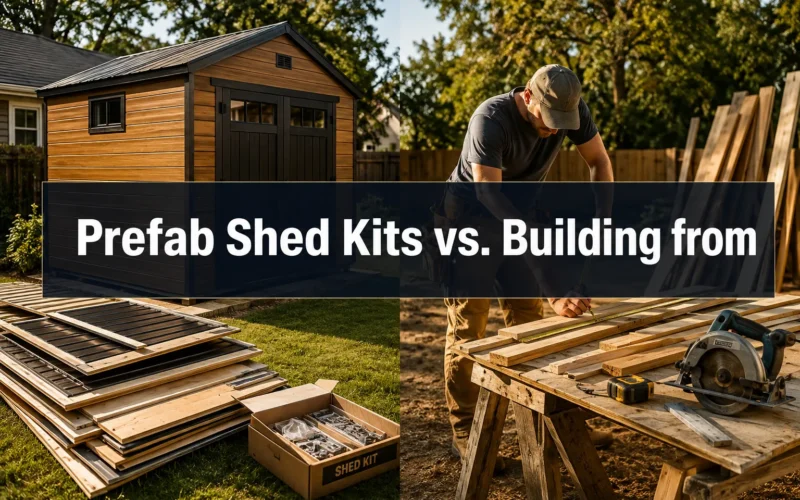
A properly built 10×12 shed can cost anywhere from $1,500 to over $10,000 depending on how you build it, and most homeowners don’t realize how wide that gap is until they’re already committed to one path. This guide breaks down the full Prefab Shed Kits vs. Building from Scratch: Cost Comparison so you can make a clear-headed decision before spending a single dollar.
Key Takeaways
- Prefab shed kits typically cost less upfront but include hidden fees for delivery, foundation prep, and upgrades.
- Building from scratch gives you full control over materials and layout, but requires more tools, time, and skill.
- For a standard 10×12 shed, prefab kits range from roughly $1,500 to $4,500 installed; scratch-built sheds run $2,000 to $7,000+ depending on materials and labor.
- Foundation costs apply to both options and are often overlooked in initial budgets.
- Beginners with no experience will almost always find a prefab kit faster and less risky on first attempt.
- Scratch-built sheds tend to last longer and hold up better over decades when built with quality materials.
- The tools needed to build from scratch represent a significant one-time investment if you don’t already own them.
- Permit requirements vary by location and apply to both options, always check local codes before you start.
- Prefab kits vary widely in quality; the cheapest options often use thinner lumber and lower-grade siding.
- If you plan to build more than one shed or take on other woodworking projects, building from scratch pays off over time.
What Is the Average Cost Difference Between Prefab Shed Kits and Building from Scratch?
For a standard 10×12 shed, prefab kits typically run $800 to $3,000 for the kit itself, with total installed costs landing between $1,500 and $4,500. Building the same shed from scratch costs $2,000 to $7,000 depending on your material choices, local lumber prices, and whether you hire any help.
That said, the gap narrows considerably when you factor in hidden costs on the prefab side and the value of your own labor on the scratch-built side. Neither option is automatically cheaper for every situation.
Rough cost ranges by shed size (estimates based on 2026 lumber and kit pricing):
| Shed Size | Prefab Kit (installed) | Scratch-Built (DIY labor) |
|---|---|---|
| 8×8 | $1,200, $2,800 | $1,500, $3,500 |
| 10×12 | $1,500, $4,500 | $2,000, $5,500 |
| 12×16 | $2,500, $6,500 | $3,500, $8,000 |
| 16×20 | $4,500, $9,000 | $5,500, $12,000+ |
Note: These are estimates. Actual costs vary by region, material grade, and site conditions.
For a deeper breakdown of small shed costs, see How Much Does It Cost To Build A Small Shed?.
How Much Does a Prefab Shed Kit Actually Cost Installed?
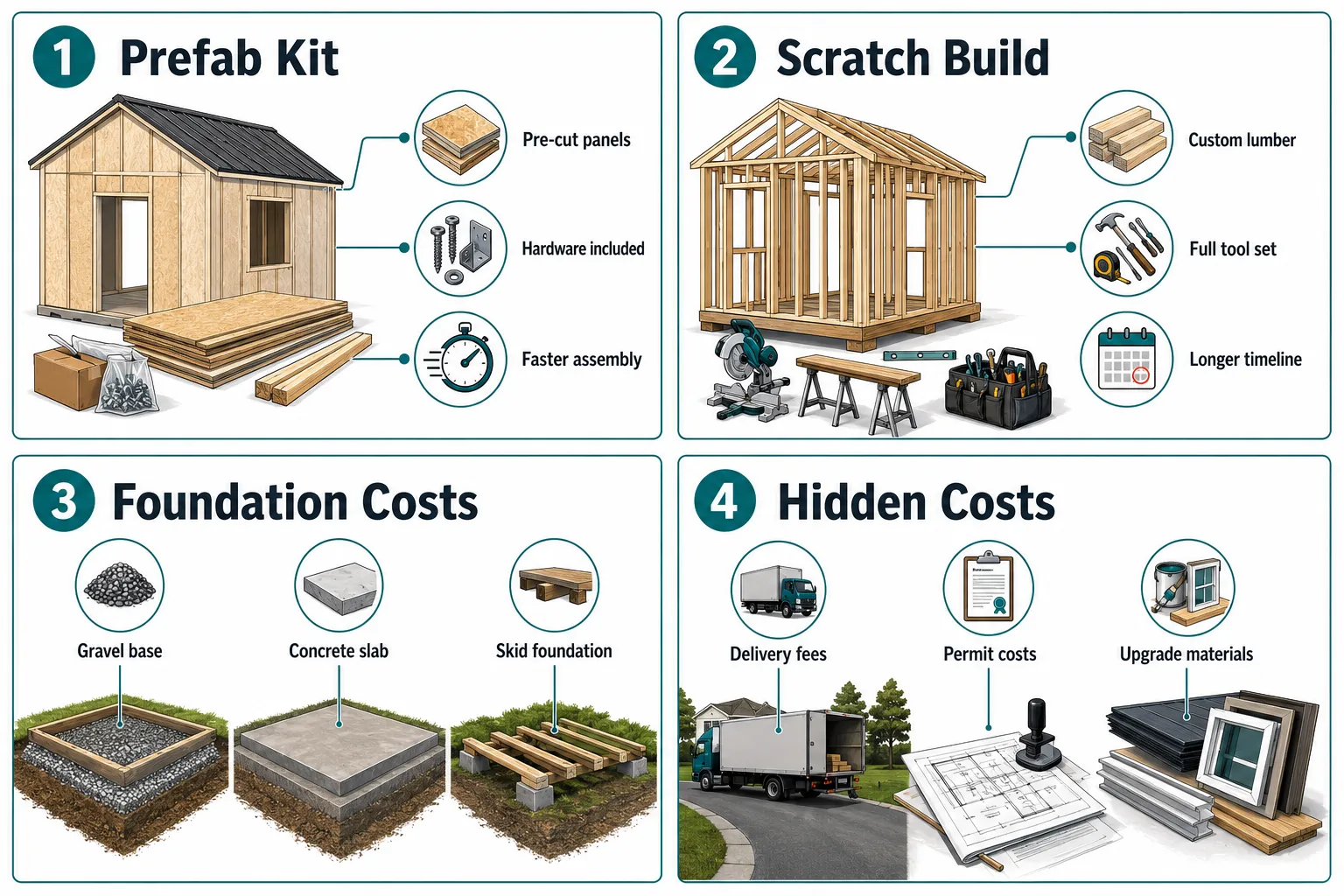
A prefab shed kit costs more than the sticker price once you account for delivery, foundation, and assembly. A $1,200 kit can realistically cost $2,500 to $3,500 by the time it’s standing on a proper base.
Here’s what typically adds to the base kit price:
- Delivery fees: $150 to $500 depending on distance and kit weight
- Foundation prep: $300 to $1,500 for a gravel pad, skid foundation, or concrete slab
- Assembly labor: $300 to $1,000 if you hire someone (many kits are marketed as DIY, but large kits need two people minimum)
- Permit fees: $50 to $300 in most municipalities
- Anchoring hardware: Often sold separately, $50 to $150
The advertised price on a prefab kit is almost always the kit-only price. Budget at least 40 to 60 percent on top of that number for a realistic total.
What’s Included in a Prefab Shed Kit and What Do You Need to Buy Separately?
Most prefab shed kits include pre-cut wall panels, a roof frame, roofing material (usually shingles or metal), a door, and basic hardware. What they typically do not include is the foundation, anchor bolts, paint or stain, interior shelving, electrical wiring, and in some cases, floor framing.
Before buying a kit, read the materials list carefully. Lower-cost kits sometimes omit floor panels entirely, or include thin OSB siding that won’t hold up well in wet climates without additional treatment.
What’s usually included:
- Pre-cut or pre-assembled wall panels
- Roof trusses or rafters
- Roofing material
- Door (pre-hung or flat-pack)
- Assembly hardware and instructions
What you’ll likely need to add:
- Foundation materials
- Concrete anchors or tie-downs
- Paint, stain, or sealant
- Interior flooring upgrade (if desired)
- Shelving and storage accessories
- Electrical if you want lighting or outlets
Is It Cheaper to Build a Shed Yourself or Buy a Kit?
If you already own basic tools and have some woodworking experience, building from scratch is often cheaper in raw material costs. If you’re starting with no tools and no experience, a prefab kit will almost certainly cost less overall once you factor in the learning curve, mistakes, and tool purchases.
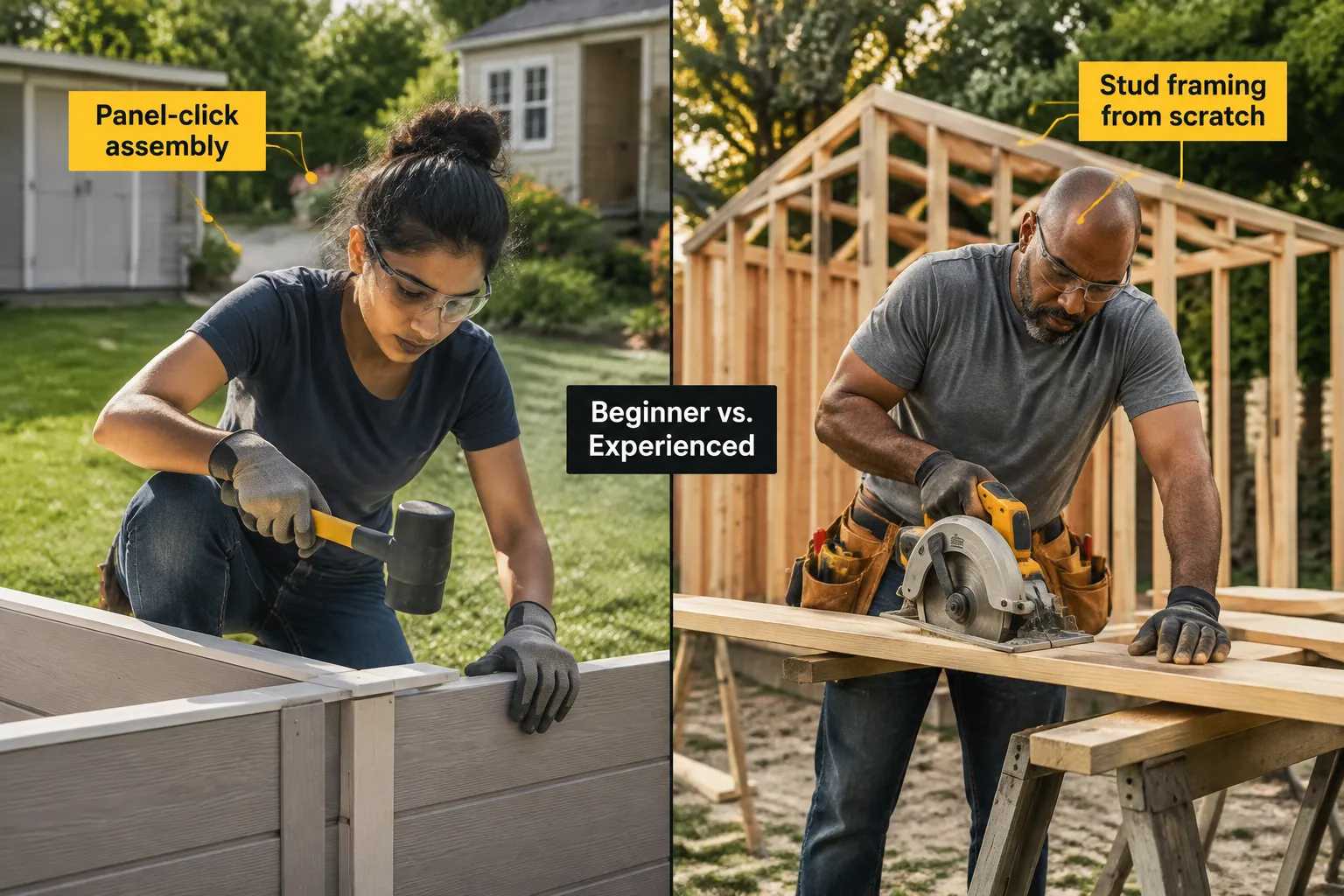
The honest answer depends on three things: your skill level, the tools you already own, and how you value your time. For a first-time builder, a prefab kit reduces risk and gets the shed done faster. For someone who’s done even a few woodworking projects for beginners, scratch-building becomes a much more viable option.
Choose a prefab kit if:
- This is your first build
- You don’t own a circular saw, framing square, or drill
- You want the shed done in a weekend
- You’re working with a tight, fixed budget
Choose scratch-built if:
- You already own most framing tools
- You want a custom size or layout
- You’re planning multiple builds and want to develop skills
- Long-term durability matters more than short-term convenience
What Hidden Costs Come With Prefab Shed Kits?
The three most common hidden costs with prefab kits are delivery charges, foundation work, and upgrade materials. Many buyers focus only on the kit price and then feel blindsided when the full project runs 50 to 80 percent more than expected.
A few other costs that catch people off guard:
- Site preparation: Leveling uneven ground can add $200 to $800 before anything is even delivered
- Permit applications: Some areas require permits for any structure over 100 square feet, regardless of whether it’s prefab or custom-built
- Replacement materials: Cheaper kits sometimes arrive with warped panels or missing hardware, replacements take time and money
- Upgrades: The standard siding on entry-level kits often needs painting or replacing within a few years
For a side-by-side look at when DIY labor makes sense versus hiring help, the DIY Shed Building Cost Comparison: Hire Help Vs. Go Solo guide covers this in detail.
What Tools Do You Need to Build a Shed from Scratch?
Building a shed from scratch requires a core set of framing and measuring tools. If you don’t already own them, the tool investment alone can add $400 to $1,200 to your total project cost.
Essential tools for a scratch-built shed:
- Circular saw (for cutting framing lumber and sheet goods)
- Power drill and impact driver
- Framing square and speed square
- Tape measure (25-foot minimum)
- Level (4-foot recommended)
- Hammer and nail gun (a framing nailer saves significant time)
- Chalk line
- Safety glasses and hearing protection
If you’re building for the first time, it’s worth reading through various tools used for woodworking before making any purchases. Renting a framing nailer for a weekend is often smarter than buying one for a single project.
How Long Does It Take to Assemble a Prefab Shed Kit vs. Building One from Scratch?
A prefab shed kit can be assembled in one to three days by two people following the included instructions. Building the same size shed from scratch typically takes one to three weekends for an experienced builder, and two to four weekends for a beginner.
Time adds up in unexpected ways when building from scratch: measuring and cutting lumber, making trips to the hardware store for forgotten materials, and troubleshooting framing mistakes all extend the timeline. A prefab kit eliminates most of that because the cutting is already done.
That said, scratch-built sheds allow you to work at your own pace and make design changes as you go. For anyone who wants to understand the full process before committing, The Complete Guide To Building Your Own Backyard Shed is a solid starting point.
Can You Save Money Building a Shed Yourself With No Experience?
Beginners can save money building from scratch, but only if they plan carefully and avoid the most common rookie mistakes. Without experience, the risk of costly errors, wrong cuts, improper framing, leaky rooflines, is real and adds up fast.
The smarter path for a true beginner is to start with a prefab kit, learn how sheds are assembled, and then build from scratch on the second project. The first build teaches you more than any guide can, and doing it with a kit reduces the chance of an expensive mistake on a structure that needs to last years.
What Size Prefab Shed Kit Should You Get for Your Yard?
The right shed size depends on what you’re storing, your available yard space, and local zoning setback rules. For most suburban lots, a 10×12 or 12×16 shed covers the majority of storage needs without triggering more complex permit requirements.
As a general rule, buy slightly larger than you think you need. Most shed owners report wishing they’d gone one size up within the first year. For a detailed breakdown of sizing options, the Best Shed Size For Suburban Lots: Complete Comparison Guide covers setback requirements, common use cases, and size recommendations by yard type.
Quick sizing guide:
- 8×8 or 8×10: Basic lawn equipment, bikes, seasonal items
- 10×12: Lawnmower, hand tools, garden supplies, small workbench
- 12×16: Full workshop setup, large equipment, dual-purpose storage
- 16×20+: Serious workshop, vehicle storage, or specialty use
What Foundation Costs Should You Budget for Either Option?
Foundation costs apply to both prefab and scratch-built sheds and typically run $300 to $2,000 depending on the type. This cost is almost always excluded from prefab kit pricing and is frequently underestimated in DIY budgets.
Common foundation types and estimated costs:
- Gravel pad: $150 to $500, simplest option, good drainage, works for most small sheds
- Skid foundation (pressure-treated lumber): $200 to $600, portable, no concrete needed, common with prefab kits
- Concrete piers: $400 to $900, more permanent, better for larger sheds
- Concrete slab: $800 to $2,000+, most durable, required for heavy equipment or workshop use
Skipping a proper foundation is one of the most expensive mistakes shed builders make. A shed that sits on bare ground or an uneven base will warp, rot, and fail far sooner than one with a solid, level foundation.
Do Prefab Sheds Last as Long as Ones Built from Scratch?
A well-built scratch-built shed using quality lumber and proper construction techniques will generally outlast a prefab kit shed. However, a quality mid-range prefab kit maintained properly can last 15 to 25 years, which is sufficient for most homeowners.
The durability gap comes down to material quality. Entry-level prefab kits often use thinner studs (sometimes 2×3 instead of 2×4), lower-grade OSB siding, and lighter roofing material. Scratch-built sheds let you choose every component, so you can build to a higher standard from the start. If longevity is a priority, look at Custom Vs. Standard Shed Designs: What’s Worth The Upgrade? for guidance on where to spend more and where to save.
What Mistakes Do People Make When Building Sheds That Cost Extra Money?
The most expensive shed-building mistakes are skipping the permit, underestimating the foundation, and buying the cheapest materials available. Each of these errors can cost more to fix than the original savings were worth.
Top mistakes to avoid:
- No permit: Some municipalities require teardown of unpermitted structures, a costly outcome
- Poor site prep: Building on unlevel or soft ground leads to structural problems within a few years
- Undersized lumber: Using 2×3 framing to save money creates a weaker structure that won’t hold shelving loads
- Wrong roof pitch: A flat or low-pitch roof in a snowy or rainy climate traps water and fails faster
- Skipping weather barrier: No house wrap or vapor barrier under siding leads to rot and mold
- Buying a kit that’s too small: Upgrading to a larger shed after the fact means starting over
Are Prefab Sheds Worth It, or Is DIY Better?
Prefab shed kits are worth it for homeowners who want a functional, good-looking shed without a steep learning curve. DIY scratch-building is worth it for anyone who wants to develop real woodworking skills, needs a custom size, or plans to build more than one structure over time.
Neither option is universally better. The right choice depends on your goals, your timeline, and how much you value the process versus the outcome. If building something with your own hands matters to you, and it does to a lot of people who get into woodworking, then the scratch-built path offers something a kit never can: the satisfaction of knowing you made every decision and cut every board yourself.
FAQ
Is a prefab shed kit actually cheaper than building from scratch?
Not always. The kit price looks lower, but once you add delivery, foundation, and any upgrades, the total cost often matches or exceeds a carefully budgeted scratch build. The real advantage of a kit is time and simplicity, not necessarily price.
Can a complete beginner assemble a prefab shed kit alone?
Most kits recommend two people for assembly. A beginner can manage it, but larger kits (12×16 and up) are genuinely difficult to assemble solo. Plan for a helper, especially for lifting roof panels.
Do I need a permit for a prefab shed?
In most areas, yes, if the shed exceeds a certain square footage (often 100 to 120 sq ft). Permit rules apply equally to prefab and scratch-built structures. Always check with your local building department before you start.
How long does a prefab shed kit last?
A quality mid-range kit, properly maintained and built on a solid foundation, can last 15 to 25 years. Budget kits with thin siding and minimal framing may need significant repairs or replacement within 8 to 12 years.
What’s the biggest hidden cost people miss with prefab kits?
Foundation prep is the most commonly overlooked cost. It’s almost never included in the kit price and can add $300 to $1,500 or more depending on your site and the foundation type you choose.
Is building from scratch worth it if I’ve never done it before?
It can be, but the learning curve adds time and the risk of costly mistakes is real. A better approach for most beginners is to start with a prefab kit, learn how sheds go together, and then build from scratch on the next project.
What size shed should I buy as a first-time owner?
Go one size larger than you think you need. Most shed owners wish they’d sized up within the first year. A 10×12 is a solid starting point for general storage; a 12×16 works better if you want any workspace inside.
Can I customize a prefab shed kit?
Yes, to a degree. Most kits allow you to add windows, upgrade siding, or modify the interior. Major structural changes, like altering the roof pitch or adding a loft, are difficult to do with a prefab kit and are better suited to scratch-built designs.
What foundation is best for a prefab shed kit?
A gravel pad or pressure-treated skid foundation works well for most prefab kits. Concrete slabs are more permanent and better for heavier use but add significant cost. The key requirement for any foundation is that it’s level and provides good drainage.
Does building from scratch improve my woodworking skills?
Significantly. Framing a shed teaches you layout, structural thinking, and tool handling in a way that smaller projects don’t. If you’re interested in growing as a woodworker, a scratch-built shed is one of the best skill-building projects you can take on.
Conclusion
The Prefab Shed Kits vs. Building from Scratch: Cost Comparison isn’t a simple numbers game. Prefab kits offer speed, convenience, and a lower barrier to entry, but they come with hidden costs and material trade-offs that close the price gap quickly. Scratch-built sheds cost more in time and tools upfront, but they give you full control over quality, size, and longevity.
Actionable next steps:
- Decide on your primary goal: fast and functional, or durable and custom.
- Check your local zoning rules and permit requirements before purchasing anything.
- Get quotes on foundation options for your specific site, this cost applies regardless of which path you choose.
- If you’re leaning toward scratch-building, audit your tool inventory and price out what you’d need to buy or rent.
- If you’re leaning toward a kit, read the full materials list before ordering, not just the headline specs.
Whichever path you choose, the shed you end up with will be more satisfying when you go in with clear expectations and a realistic budget.
Products, Tools, and Resources
For scratch-building:
- A quality 7-1/4″ circular saw (brands like DeWalt, Makita, and Milwaukee are well-regarded for durability)
- A framing nailer paired with a compressor significantly speeds up wall assembly
- Pressure-treated 4×4 skids for a simple, solid foundation
- House wrap (like Tyvek) as a moisture barrier under your siding
For prefab kits:
- Look for kits that specify 2×4 framing, not 2×3, for better structural integrity
- Treat any wood siding with an exterior stain or paint within the first season to extend its life
- Add a drip edge to the roofline if the kit doesn’t include one
Helpful reading:
- How to Read & Use Woodworking Plans: Beginner’s Complete Guide, essential if you’re building from scratch for the first time
- Best Shed Roof Style: Lean-To, Gable, or Barn, Which To Choose?, helps you choose the right roof design for your climate and budget