Best Lawn Equipment Shed Designs for Organization, Access & Protection
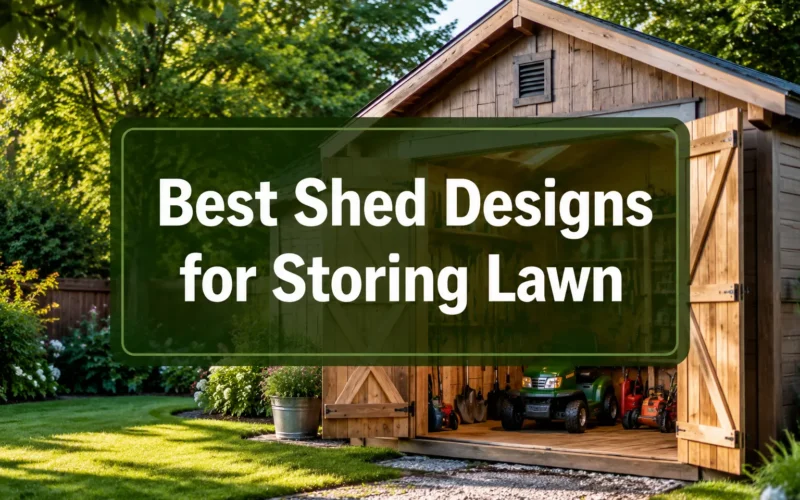
A well-designed storage shed can extend the life of a lawn mower by years. Gasoline engines corrode faster when exposed to moisture and temperature swings, and unprotected metal tools rust within a single wet season. Yet most homeowners store their equipment in whatever space is left over, rather than building a shed that actually works for the job. The best lawn equipment shed designs solve three problems at once: access, organization, and protection from the elements.
Key Takeaways
- A 10×12 ft shed is the minimum recommended size for a riding mower plus basic tools; a push mower setup fits in 8×10 ft
- Gable and lean-to roof styles are the most practical for lawn equipment sheds, each with distinct trade-offs

- Metal sheds resist rot but trap condensation; wood sheds breathe better but need more maintenance
- Ventilation is non-negotiable for preventing rust on metal tools and degradation of fuel
- Gasoline must be stored in an approved container, kept below 25 gallons, and separated from ignition sources
- A concrete or gravel foundation prevents moisture wicking and keeps the floor level for heavy equipment
- Pegboards, wall-mounted tracks, and overhead rafter shelves maximize usable space in small sheds
- Rodent entry points are almost always gaps at the door threshold or foundation perimeter
- A built-in workbench adds serious function without requiring a larger shed footprint
- Lean-to sheds cost less to build and are ideal for tight suburban lots
Find this useful? Add us as a preferred source on Google and more of what we publish will show up in your results.
What Size Shed Do You Need for a Lawn Mower and Tools
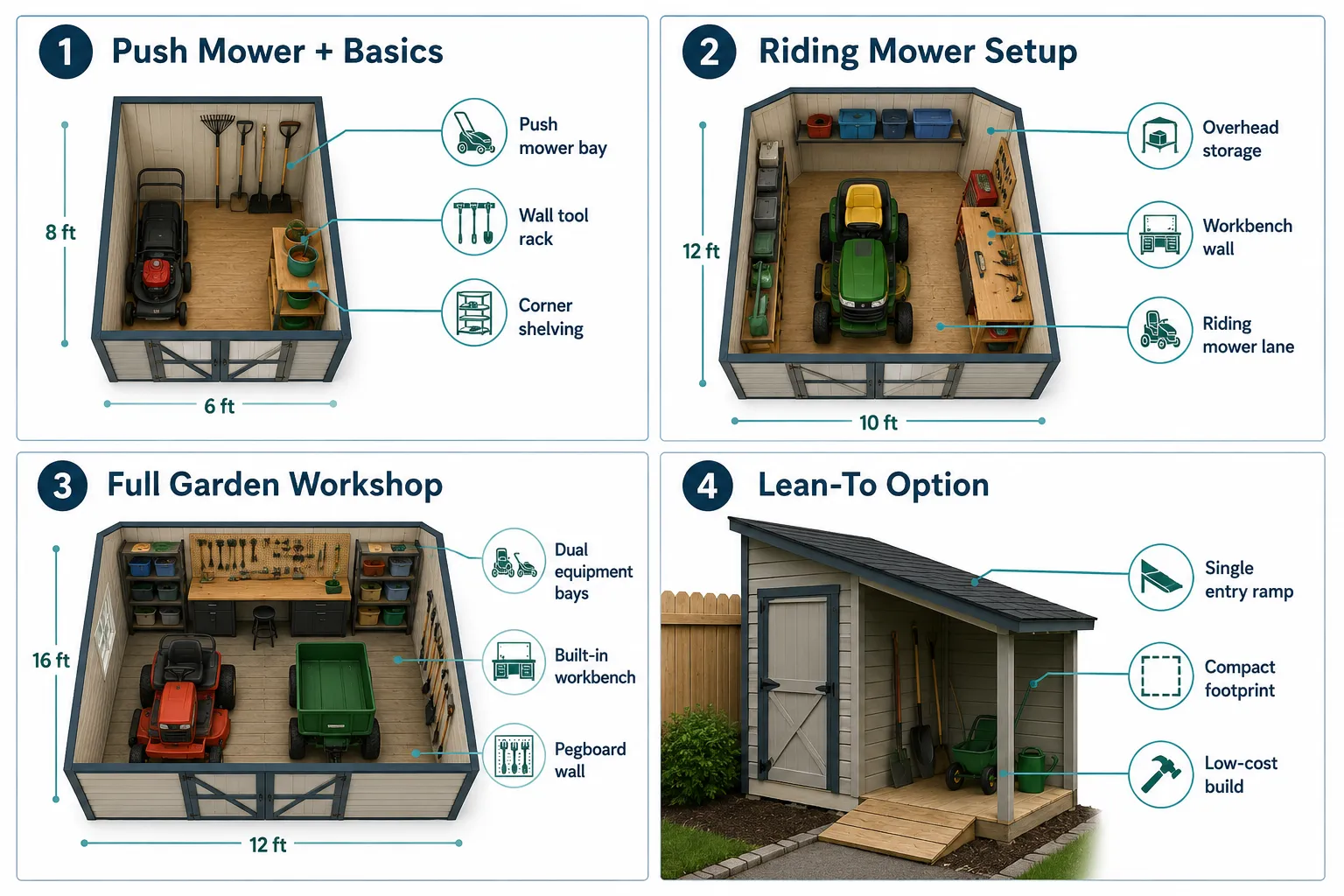
The right shed size depends on what you’re storing. A push mower with basic hand tools fits comfortably in an 8×10 ft shed. A riding mower needs at least a 10×12 ft footprint, and if you want a workbench or room for a wheelbarrow and spreader, a 12×16 ft shed is a smarter starting point.
Here’s a practical size guide:
| Equipment Load | Minimum Shed Size |
|---|---|
| Push mower + hand tools | 8×10 ft |
| Riding mower + basic tools | 10×12 ft |
| Riding mower + workbench + storage | 12×16 ft |
| Zero-turn mower + full garden setup | 14×20 ft |
One common mistake is sizing for current equipment only. Leave at least 18 inches of clearance on each side of a riding mower for comfortable maneuvering. If the shed feels tight on paper, it will feel impossible in practice when you’re backing out a mower with a full grass catcher.
For suburban properties with yard restrictions, check out this best shed size for suburban lots comparison guide before finalizing your dimensions.
Best Shed Layout for Organizing Garden Equipment
The best shed layout puts the most-used equipment closest to the door and keeps hazardous materials (fuel, fertilizers) in a dedicated corner away from foot traffic. A U-shaped or L-shaped interior layout works well for most mid-size sheds because it keeps the center floor clear for maneuvering large equipment.
Key layout principles:
- Zone by frequency: Daily-use tools (rakes, trowels, hose) near the door; seasonal items (snow blower, aerator) at the back
- Vertical is your friend: Wall space is almost always underused. Mount tools at eye level and reserve floor space for wheeled equipment
- Create a clear drive lane: For riding mowers, keep a straight, unobstructed path from the door to the mower’s parking spot
- Separate chemicals: Store fertilizers, herbicides, and fuel in a locked cabinet or on a dedicated shelf away from heat sources
A shed designed around a single wide door is convenient for occasional access, but double doors (or a barn-style door) make it far easier to roll a mower in and out without scraping the frame.
Shed Designs with a Workbench for Lawn Equipment
Adding a built-in workbench to a lawn equipment shed turns a simple storage box into a functional workspace. The best placement is along the back wall or a side wall opposite the mower bay, so the workbench doesn’t interrupt the drive lane.
A basic workbench for this purpose needs:
- A sturdy surface at 34-36 inches height (standard workshop height)
- A pegboard or wall-mounted tool rack directly above it
- At least one shelf below for storing small engine oil, spark plugs, and filters
- Adequate lighting, either a window above the bench or a mounted LED shop light
For beginner woodworkers building their own shed, a simple 2×4 frame workbench with a 3/4-inch plywood top is inexpensive and strong enough for basic mower maintenance. If you’re new to building with wood, the beginner woodworking tools and equipment guide covers everything you’ll need before you start.
What’s the Difference Between a Lean-To and a Full Shed
A lean-to shed is a single-slope structure that attaches to an existing wall (a house, garage, or fence). A full shed is a freestanding structure with its own four walls and roof. For lawn equipment storage, both can work, but they serve different situations.
Choose a lean-to if:
- You have limited yard space or a narrow side yard
- You want lower material costs (one shared wall reduces lumber and siding)
- You only need to store a push mower, hand tools, and a few bags of mulch
Choose a full shed if:
- You own a riding mower or zero-turn mower
- You want a workbench or dedicated workspace
- You need room for a snow blower, generator, or multiple large items
Lean-to sheds are also faster to build, which makes them a popular first project for beginner woodworkers. For a deeper breakdown of roof styles and how they affect usability, the shed roof style comparison guide covers gable, lean-to, and barn options side by side.
Metal vs. Wood Shed for Storing Equipment
For lawn equipment storage, wood sheds generally outperform metal sheds in breathability and customization, while metal sheds win on upfront cost and pest resistance. Neither is universally better, the right choice depends on your climate and how much maintenance you’re willing to do.
Wood shed advantages:
- Better natural ventilation (wood breathes, reducing condensation)
- Easier to customize with shelving, pegboards, and workbenches
- More attractive in most backyard settings
- Stronger structural options for heavier loads
Metal shed advantages:
- Lower purchase price for prefab kits
- Resistant to rot and termites
- Faster to assemble from a kit
The key drawback of metal sheds: They trap heat and condensation, which accelerates rust on metal tools and can degrade rubber components on mowers. If you go with metal, ventilation becomes even more critical. If you’re weighing a custom build against a kit, the custom vs. standard shed designs guide breaks down when each option is worth the investment.
Shed Ventilation for Preventing Rust on Tools
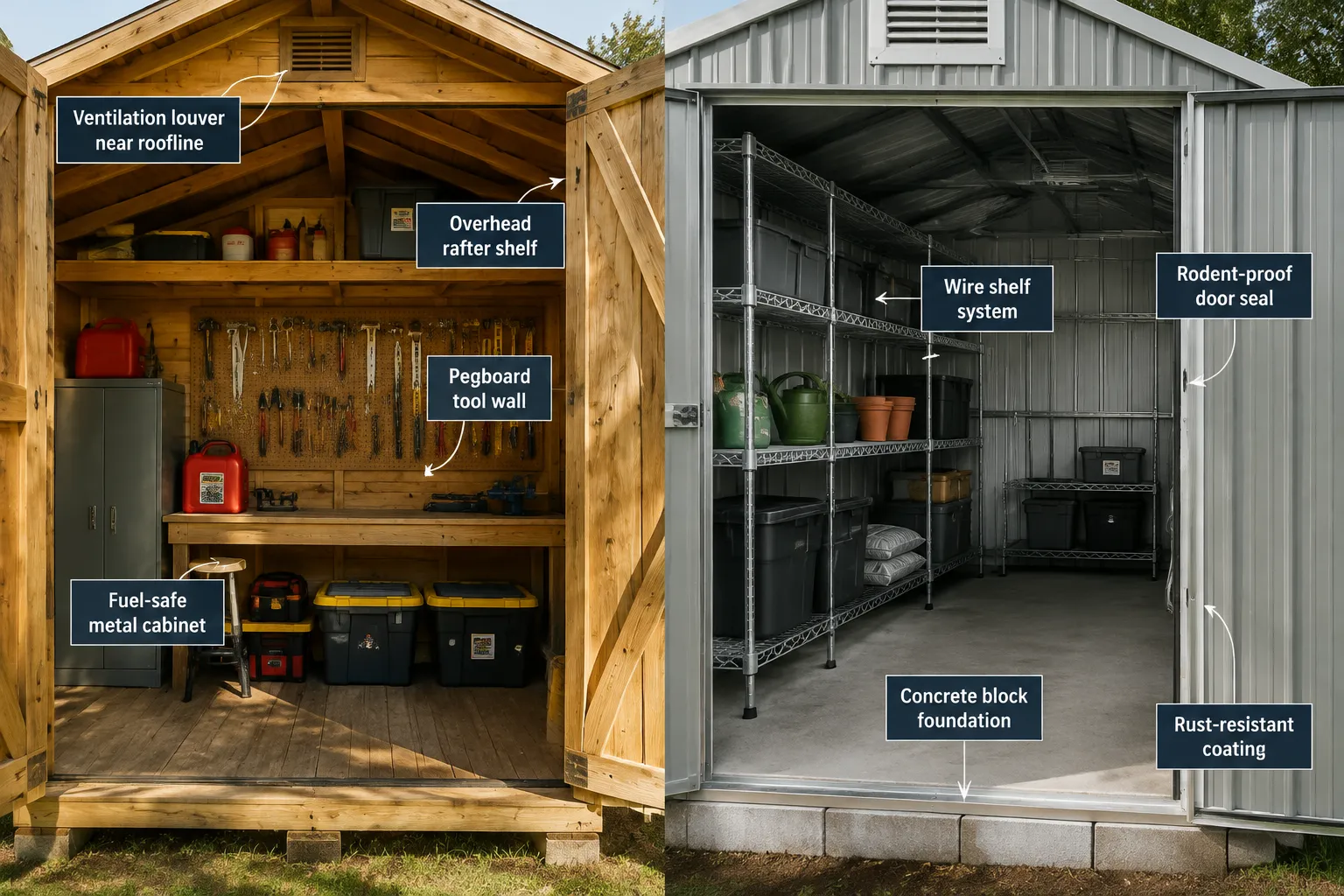
Proper ventilation is one of the most overlooked factors in the best shed designs for storing lawn equipment. Without airflow, moisture builds up inside the shed, and metal tools, mower blades, and engine parts rust faster than they would sitting outside.
Effective ventilation for a lawn equipment shed includes:
- Two vents minimum: Place one low on a wall (intake) and one high near the roofline (exhaust) to create a natural convection draft
- Ridge vents or gable vents: Both work well for gable-roof sheds; ridge vents are more effective but require more installation effort
- Louvered vents: Inexpensive, passive, and effective for most climates
- Avoid sealing the shed too tightly: A small gap at the bottom of the door or a screened vent in the floor prevents moisture pooling
In humid climates, consider adding a small desiccant dehumidifier or a solar-powered vent fan. These are low-cost additions that make a measurable difference in how long your tools last.
How to Keep Lawn Mowers Dry in a Shed
Keeping a lawn mower dry comes down to three things: a solid foundation, good drainage around the shed, and interior ventilation. A mower stored on bare soil or a wood floor that contacts the ground will absorb moisture from below.
Practical steps:
- Build or park the shed on a concrete slab, gravel pad, or pressure-treated skid foundation
- Slope the ground around the shed so rainwater drains away, not toward the structure
- Run the mower until the fuel tank is either full (to prevent condensation inside the tank) or completely empty before long-term storage
- Wipe down metal surfaces with a light coat of oil before winter storage
- Keep the shed door closed but not airtight, passive ventilation is important
Can You Store Gasoline in a Shed Safely
Yes, gasoline can be stored in a shed safely, but only with the right precautions. The primary risks are fire, explosion from vapor buildup, and fuel degradation that damages small engines.
Safe gasoline storage rules:
- Use only approved metal or HDPE plastic containers with a tight-sealing cap and a flame arrester
- Store no more than 25 gallons in a residential outbuilding (this limit varies by local code, always verify with your municipality)
- Keep containers away from heat sources, electrical panels, and ignition points
- Store fuel in a cool, dark corner, not near a window where heat builds up
- Add a fuel stabilizer if storing gasoline for more than 30 days
- Never store fuel near fertilizers or oxidizers
If your shed has a workbench with power tools or a mounted light switch, keep fuel containers at least 10 feet from any electrical component or in a separate locked cabinet.
Do You Need a Foundation for a Storage Shed
A foundation is strongly recommended for any shed storing heavy equipment like lawn mowers. Without one, the shed floor can rot, shift, or allow moisture and pests to enter from below.
Three common foundation options:
- Gravel pad: Inexpensive, drains well, and works for most small to mid-size sheds. Use a minimum 4-inch depth of compacted gravel
- Concrete slab: The most durable option, ideal for sheds with a workbench or riding mower. Adds cost but lasts decades
- Pressure-treated skid foundation: A good middle ground for DIY builders. Uses 4×6 or 6×6 treated lumber as runners, elevated slightly off the ground
For a full breakdown of what goes into building a shed from scratch, the complete guide to building your own backyard shed covers foundations, framing, and roofing in detail.
Best Shelving Systems for Small Sheds
In a small shed, the right shelving system can double usable storage without adding a single square foot of floor space. The best options for lawn equipment sheds combine wall-mounted flexibility with weight capacity.
Top shelving options for small sheds:
- Pegboard with hooks: Best for hand tools, extension cords, and small accessories. Mount directly to wall studs for maximum strength
- Wire shelving: Affordable, allows airflow (reducing moisture buildup), and adjustable. Good for bags of seed, fertilizer, and small containers
- Heavy-duty wall brackets with plywood shelves: The strongest DIY option. Use 3/4-inch plywood on 2×4 brackets for storing heavy items like bags of mulch or equipment parts
- Overhead rafter shelves: Ideal for seasonal items. Build a simple platform between roof rafters to store items used only a few times per year
Avoid particle board shelving in a shed environment. It swells and crumbles when exposed to humidity, even in a well-ventilated shed.
Shed Designs with Easy Access for Frequent Use
The best shed designs for storing lawn equipment used weekly prioritize fast, unobstructed entry and exit. A shed you have to reorganize every time you need the mower will quickly become frustrating.
Design features that improve access:
- Wide double doors or a single 6-foot door: Allows a riding mower to enter without turning
- Low or no threshold: A ramp or flush threshold makes rolling equipment in and out effortless
- Clear sight lines from the door: Store large equipment in direct view of the entrance so nothing is hidden behind other items
- Exterior hooks or a small lean-to overhang: Keeps frequently used items (hose, broom, pruning shears) accessible without opening the shed at all
If the shed is used multiple times per week during mowing season, a sliding barn door is worth considering over a standard hinged door. It doesn’t swing into the path of equipment and stays out of the way in wind.
Cheapest Shed Option for Lawn Equipment Storage
The cheapest functional option for lawn equipment storage is a DIY lean-to shed built from dimensional lumber and corrugated metal or OSB siding. Material costs for a basic 8×10 ft lean-to run roughly $500-$1,200 depending on region and material choices (this is an estimate based on 2026 lumber and hardware pricing; actual costs vary significantly by location).
Ways to reduce cost without sacrificing function:
- Use a lean-to design to eliminate one wall and reduce roofing materials
- Source reclaimed lumber for non-structural elements like shelving and trim
- Use OSB sheathing instead of plywood for siding (seal it well to prevent moisture damage)
- Skip the concrete slab in favor of a compacted gravel pad
For a detailed look at what drives shed building costs, the DIY shed building cost comparison guide breaks down the hire-vs-build-solo decision clearly.
How to Keep Rodents Out of a Storage Shed
Rodents enter sheds through gaps as small as 1/4 inch, and a lawn equipment shed is an attractive nesting site because of the warmth, shelter, and food sources (grass seed, bird seed, fertilizer). Exclusion is more effective than traps.
Rodent-proofing checklist:
- Seal the gap between the door and threshold with a rubber door sweep
- Install 1/4-inch hardware cloth along the bottom of the shed walls, buried 6 inches into the ground to prevent burrowing
- Store grass seed, bird seed, and pet food in sealed metal or hard plastic containers
- Keep the area around the shed clear of brush, wood piles, and debris that provide nesting cover
- Check and seal any gaps where pipes, electrical conduit, or vents enter the shed
Avoid foam sealant alone as a rodent barrier. Rodents chew through it easily. Use steel wool packed into gaps first, then seal over it with caulk or hardware cloth.
Conclusion
Building or buying the right shed for lawn equipment is one of the most practical improvements a homeowner can make. The best shed designs for storing lawn equipment share a few consistent traits: adequate size for the equipment you own, a solid foundation, good ventilation, and a layout that makes daily use effortless rather than frustrating.
Actionable next steps:
- Measure your largest piece of equipment and add 18 inches of clearance on each side to determine your minimum floor space
- Choose a foundation type based on your budget and soil conditions (gravel for most DIY builds, concrete for permanent structures)
- Plan your interior layout before you build, not after, placing the drive lane first and fitting shelving around it
- Add at least two vents (low intake, high exhaust) regardless of whether you choose metal or wood construction
- Review local building codes and HOA rules before breaking ground, since many municipalities require a permit for sheds over 100-120 square feet
A well-built shed doesn’t just protect equipment. It makes the entire experience of yard maintenance more organized and less time-consuming. Start with the right plan, and the build itself becomes a satisfying woodworking project in its own right.
FAQ
How big should a shed be for a riding lawn mower?
A riding mower needs a minimum 10×12 ft shed to fit the mower plus basic tools. If you want a workbench or room for additional equipment, size up to 12×16 ft.
Can I build a shed without a concrete foundation?
Yes. A compacted gravel pad or pressure-treated skid foundation works well for most residential sheds. Concrete is the most durable option but is not required unless local code specifies it.
What’s the best roof style for a lawn equipment shed?
A gable roof offers the best balance of headroom, ventilation, and water runoff. A lean-to roof is cheaper and faster to build but provides less interior height.
How do I stop my shed from getting damp inside?
Install at least two passive vents (one low, one high), use a gravel or concrete foundation to block ground moisture, and avoid sealing the shed completely airtight.
Is it legal to store gasoline in a backyard shed?
In most residential areas, yes, up to a limited quantity (commonly 25 gallons or less). Always check local fire codes and HOA rules, and use only approved fuel containers.
What’s the cheapest way to build a shed for lawn equipment?
A DIY lean-to shed using dimensional lumber and OSB or corrugated metal siding is the most cost-effective approach. Attaching it to an existing fence or garage wall reduces material costs further.
Do I need a building permit for a storage shed?
Most municipalities require a permit for sheds over 100-120 square feet. Check with your local building department before starting construction.
How do I keep tools from rusting in a shed?
Ventilate the shed with intake and exhaust vents, store tools off the floor, wipe metal surfaces with a light oil coating before storage, and use a desiccant or small dehumidifier in humid climates.
What’s the best flooring for a lawn equipment shed?
A concrete slab is the most durable and easiest to clean. For wood floors, use 3/4-inch pressure-treated plywood on a raised frame to keep it off the ground.
How do I organize a small shed efficiently?
Use vertical wall space with pegboards and wall-mounted shelving, keep the floor clear for wheeled equipment, and store seasonal items on overhead rafter shelves.
Can a lean-to shed hold a riding mower?
A lean-to can hold a riding mower if it’s sized correctly (at least 10 feet wide and 8 feet deep) and built with a reinforced floor. The lower roof pitch may limit headroom for taller equipment.
How often should I treat or maintain a wood shed?
Repaint or re-stain exterior wood every 3-5 years, inspect the roof for damaged shingles annually, and check the foundation for settling or rot each spring.
Products, Tools, and Resources
Building a functional lawn equipment shed requires a handful of reliable materials and tools. Here’s what experienced shed builders consistently reach for:
- Pressure-treated 4×4 or 6×6 skids for a ground-contact foundation that resists rot without a full concrete pour
- 3/4-inch exterior-grade plywood for flooring and workbench tops, it handles heavy mower weight without flexing
- Louvered gable vents (two per shed, minimum) for passive airflow without letting in rain or pests
- 1/4-inch hardware cloth for rodent exclusion along the base of walls and around vents
- Pegboard and heavy-duty hooks for wall tool organization, a 4×8 sheet covers most of a small shed’s wall tool storage needs
- Fuel stabilizer (such as STA-BIL) for any gasoline stored longer than 30 days in the shed
- A quality circular saw and drill/driver are the two most-used tools for framing and sheathing a shed, see the beginner woodworking tools and equipment guide for recommendations on what to buy first
For anyone planning to build rather than buy, the how much does it cost to build a small shed guide provides a realistic budget breakdown before you commit to a design.