Best Paint Colors for Storage Sheds: Ultimate Curb Appeal Guide
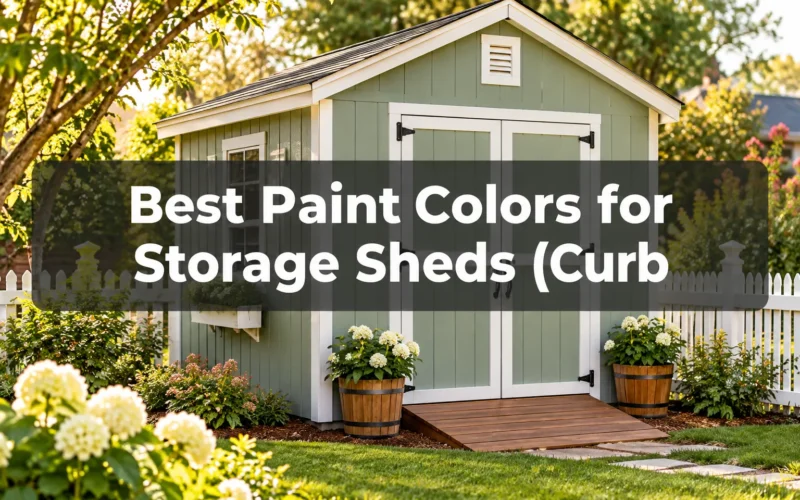
A freshly painted shed can raise a home’s perceived value by thousands of dollars, yet most homeowners treat it as an afterthought. The color you choose for your shed does more than protect the wood; it signals whether your backyard looks intentional or neglected. This best paint colors for storage sheds curb appeal guide covers everything from color psychology to climate-specific picks, so you can make a confident choice the first time.
Key Takeaways
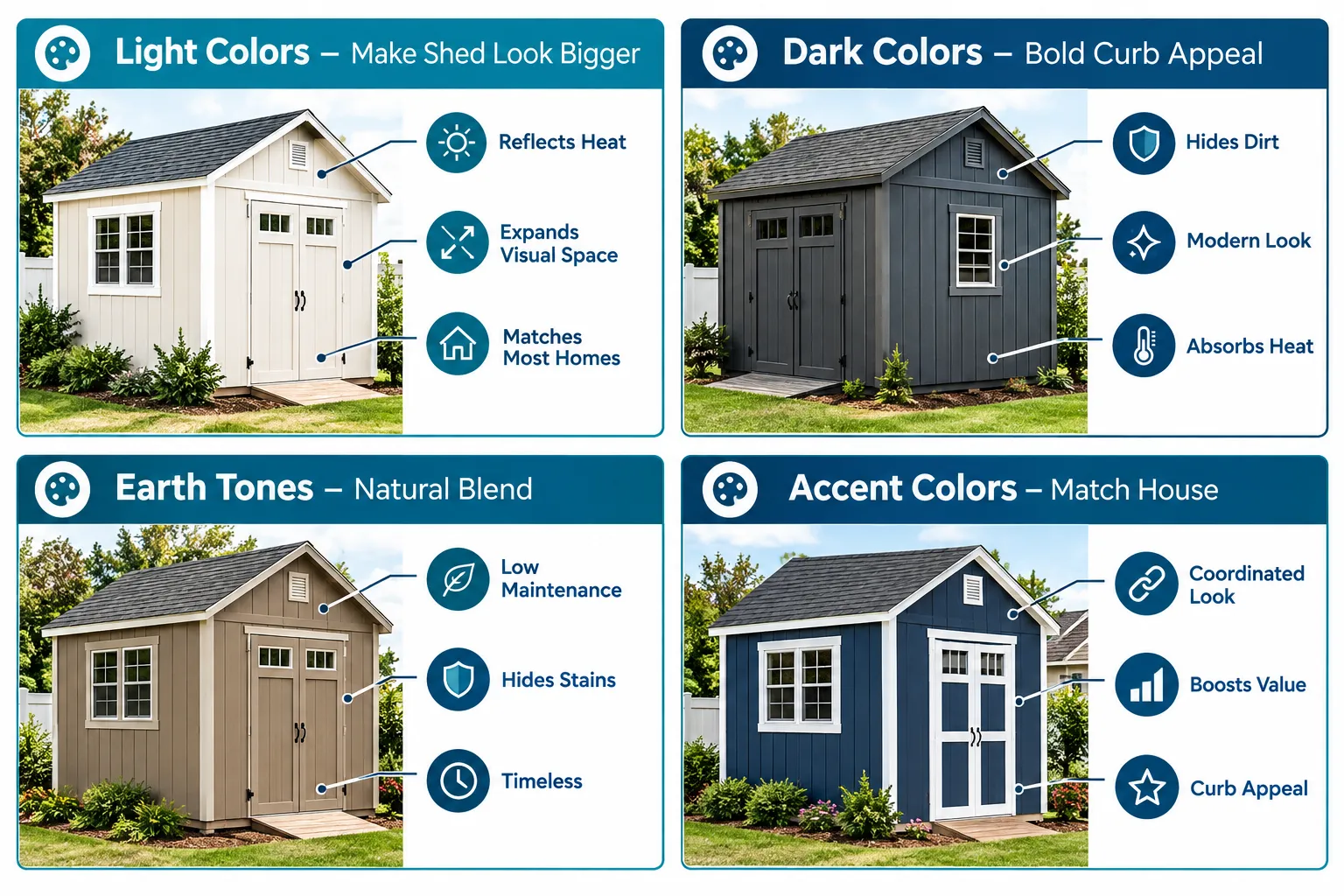
- Light colors like soft white, cream, and pale gray make a small shed appear larger and reflect heat in warm climates.

- Dark colors like charcoal, navy, and forest green hide dirt and stains better than light shades.
- Matching your shed’s base color to your home’s siding or trim creates the strongest curb appeal.
- Exterior latex paint works well on most sheds and is easier to clean up than oil-based alternatives.
- In hot climates, lighter colors reduce heat buildup inside the shed and extend paint life.
- Most sheds need repainting every 3 to 5 years, depending on sun exposure, climate, and paint quality.
- Mid-range exterior paints in the $30 to $60 per gallon range offer the best balance of durability and cost for shed projects.
- Fade-resistant paints with UV-blocking additives last significantly longer, especially on south- and west-facing walls.
Find this useful? Add us as a preferred source on Google and more of what we publish will show up in your results.
What Paint Colors Make a Storage Shed Look Bigger
Light, cool-toned colors make a storage shed appear larger than it actually is. Shades like soft white, pale gray, light sage, and warm cream reflect more light, which visually expands the structure. This effect is most noticeable on smaller sheds placed close to fences or other structures.
Here’s how to maximize the effect:
- Use a lighter color on the body and a slightly darker shade on the trim to create depth without shrinking the visual footprint.
- Avoid very dark colors on all four walls of a small shed; they absorb light and make the structure feel compact.
- Horizontal siding painted in a light tone reads as wider; vertical board-and-batten in a light tone reads as taller.
- Gloss or semi-gloss finishes reflect more light than flat finishes, which also helps open up the look.
If your shed sits in a shaded corner of the yard, a light warm white or soft butter yellow can brighten the space considerably. For more on how shed design affects visual proportion, see this guide on gable vs. gambrel roof sheds. Roof shape and color work together to define the overall look.
Best Shed Paint Colors for Curb Appeal
The best shed paint colors for curb appeal are ones that complement your home’s existing exterior palette. A shed that looks like it belongs to the house, rather than a random structure dropped in the yard, always reads as more polished.
Top color families for curb appeal:
- Soft white or off-white: Classic, clean, and compatible with almost every home style.
- Warm gray or greige: Works with modern farmhouse, contemporary, and traditional homes.
- Forest green or sage: Blends naturally with landscaping and feels grounded.
- Navy blue: Bold but sophisticated, especially with white or cream trim.
- Barn red: Traditional choice that reads as intentional and charming on rural or cottage-style properties.
- Charcoal: Strong modern appeal, especially on homes with black window frames or dark rooflines.
A reliable rule: pull one color from your home’s existing exterior (siding, shutters, trim, or front door) and use it as your shed’s primary or accent color. This creates visual continuity across the property.
How to Choose Paint Color for an Outdoor Shed
Choosing the right paint color for an outdoor shed comes down to four factors: your home’s existing colors, the shed’s surroundings, the climate, and how much maintenance you’re willing to do.
Step-by-step decision process:
- Photograph your home’s exterior and identify the dominant color, secondary color, and accent color.
- Note the shed’s surroundings: is it near a fence, trees, a garden, or an open lawn? Natural settings favor earth tones; open lawns can handle bolder choices.
- Check your HOA guidelines if applicable; some neighborhoods restrict shed colors.
- Consider the shed’s size: smaller sheds benefit from lighter colors; larger sheds can handle darker, more dramatic tones.
- Test paint samples on the actual shed surface and observe them at different times of day before committing.
If you’re still planning or building your shed, reviewing best shed plans for beginners can help you think about color and design together from the start.
Do Dark or Light Colors Work Better for Sheds
Neither is universally better; the right choice depends on your climate, the shed’s size, and how much dirt and debris the shed is exposed to.
Light colors are better when:
- You live in a hot or sunny climate (they reflect heat and keep the interior cooler).
- The shed is small, and you want it to appear larger.
- The shed is a focal point in the yard, and you want it to feel open and inviting.
Dark colors are better when:
- The shed sits in a shaded or wooded area.
- You want to hide dirt, mildew stains, and weathering between paint jobs.
- You’re going for a modern or dramatic aesthetic.
- The shed is large, and you want to reduce its visual dominance.
A common mistake is choosing a color purely based on paint chips under store lighting. Always test samples outdoors in natural light; colors shift dramatically between a fluorescent hardware store and your backyard.
Shed Paint Colors That Hide Dirt and Stains
Medium-toned earth colors are the best at hiding dirt and stains on a storage shed. Shades like warm taupe, medium gray, olive green, and weathered brown mask dust, mud splatter, mildew, and general grime far better than light or very dark colors.
Colors ranked by dirt-hiding ability (best to worst):
| Color Range | Dirt Visibility | Notes |
|---|---|---|
| Medium taupe/brown | Very low | Blends with soil and organic debris |
| Olive/sage green | Low | Hides mildew and leaf stains well |
| Medium gray | Low | Masks dust and general weathering |
| Charcoal/dark gray | Medium | Shows dust and light-colored debris |
| Bright white | High | Shows everything immediately |
| Pale yellow or cream | High | Stains and mildew are very visible |
If your shed is near a garden, gravel path, or wooded area, a medium earth tone will save you significant cleaning time between paint jobs.
Can You Use Regular House Paint on a Storage Shed
Yes, you can use regular exterior house paint on a storage shed, and in most cases it’s the right choice. High-quality exterior latex paint designed for residential siding performs well on shed walls, handles moisture and UV exposure, and comes in thousands of colors.
What matters more than the label is the paint’s quality tier and finish:
- 100% acrylic latex exterior paint is the most durable and flexible option for wood sheds.
- Flat finish is the least durable and hardest to clean; avoid it on sheds.
- Satin or eggshell is a good middle ground for shed walls, easy to clean and reasonably durable.
- Semi-gloss works well on trim, doors, and window frames.
Avoid interior paint entirely; it lacks the UV inhibitors and mildew-resistant additives that exterior formulas include.
What’s the Difference Between Shed Paint and Exterior Paint
There is no meaningful technical difference between “shed paint” and standard exterior house paint. Products marketed specifically as “shed and fence paint” are typically exterior paints reformulated with slightly more pigment and sometimes a built-in wood preservative, but they are not categorically superior.
The practical difference is price and convenience:
- Shed-specific paints are often sold in smaller quantities (1-5 liters) and marketed for quick coverage on rough-sawn or untreated wood.
- Standard exterior house paint offers more color options, better quality tiers, and is available in larger quantities for better value on bigger projects.
For a standard wood storage shed, a quality exterior latex paint from a reputable brand will outperform most shed-specific products. Pair it with a dedicated exterior wood primer for the best adhesion and longevity.
Best Paint Colors for Sheds in Hot Climates
In hot climates, light-reflective colors are the best choice for storage sheds. Colors with a high Light Reflectance Value (LRV), generally above 50, absorb less solar heat, keep the shed interior cooler, and reduce the thermal expansion and contraction that cause paint to crack and peel prematurely.
Best colors for hot, sunny climates:
- Bright white or warm white (LRV 80+): Maximum heat reflection, ideal for sheds storing temperature-sensitive items.
- Pale gray or silver-gray (LRV 60-75): Reflects well while looking more contemporary than stark white.
- Light tan or sandy beige (LRV 55-70): Blends with arid landscapes and reflects effectively.
- Soft sage or light green (LRV 50-65): Reflects heat while looking natural in landscaped settings.
Avoid dark colors like charcoal, deep navy, or black in climates with sustained high temperatures; they can cause the wood beneath to dry out faster, shortening the paint’s useful life considerably. If you’re also thinking about keeping the shed comfortable to work in, the workshop shed insulation guide pairs well with smart color choices.
Shed Paint Colors That Match Modern Homes
Modern homes typically feature neutral palettes, clean lines, and high-contrast accents, and the best shed colors for modern curb appeal follow the same logic. Charcoal gray, matte black, deep navy, warm white, and greige are all strong choices.
Matching by home style:
- Modern farmhouse: A white or cream shed with black trim mirrors the home’s black window frames and white siding.
- Contemporary/minimalist: Charcoal or dark gray shed with no contrasting trim creates a sleek, understated look.
- Mid-century modern: Warm wood tones combined with a muted olive or burnt orange accent complement the era’s palette.
- Craftsman: Forest green or deep navy with white trim echoes the home’s characteristic color blocking.
The key principle: repeat at least one color from the home’s exterior on the shed. It doesn’t have to be the dominant color, even matching the shed’s trim to the home’s front door creates a cohesive, designed feel. For ideas on how shed design choices affect the overall look, see custom vs. standard shed designs.
How Often Do You Need to Repaint a Storage Shed
Most storage sheds need repainting every 3 to 5 years, though this range shifts based on paint quality, climate, and sun exposure. A shed on the south or west side of a property in a hot, sunny region may need attention every 2 to 3 years. A shed in a mild, shaded climate with a premium paint job can go 6 to 7 years between coats.
Signs it’s time to repaint:
- Peeling, bubbling, or cracking paint
- Fading or chalking on sun-exposed walls
- Visible bare wood or discoloration
- Mildew or algae growth that won’t wash off
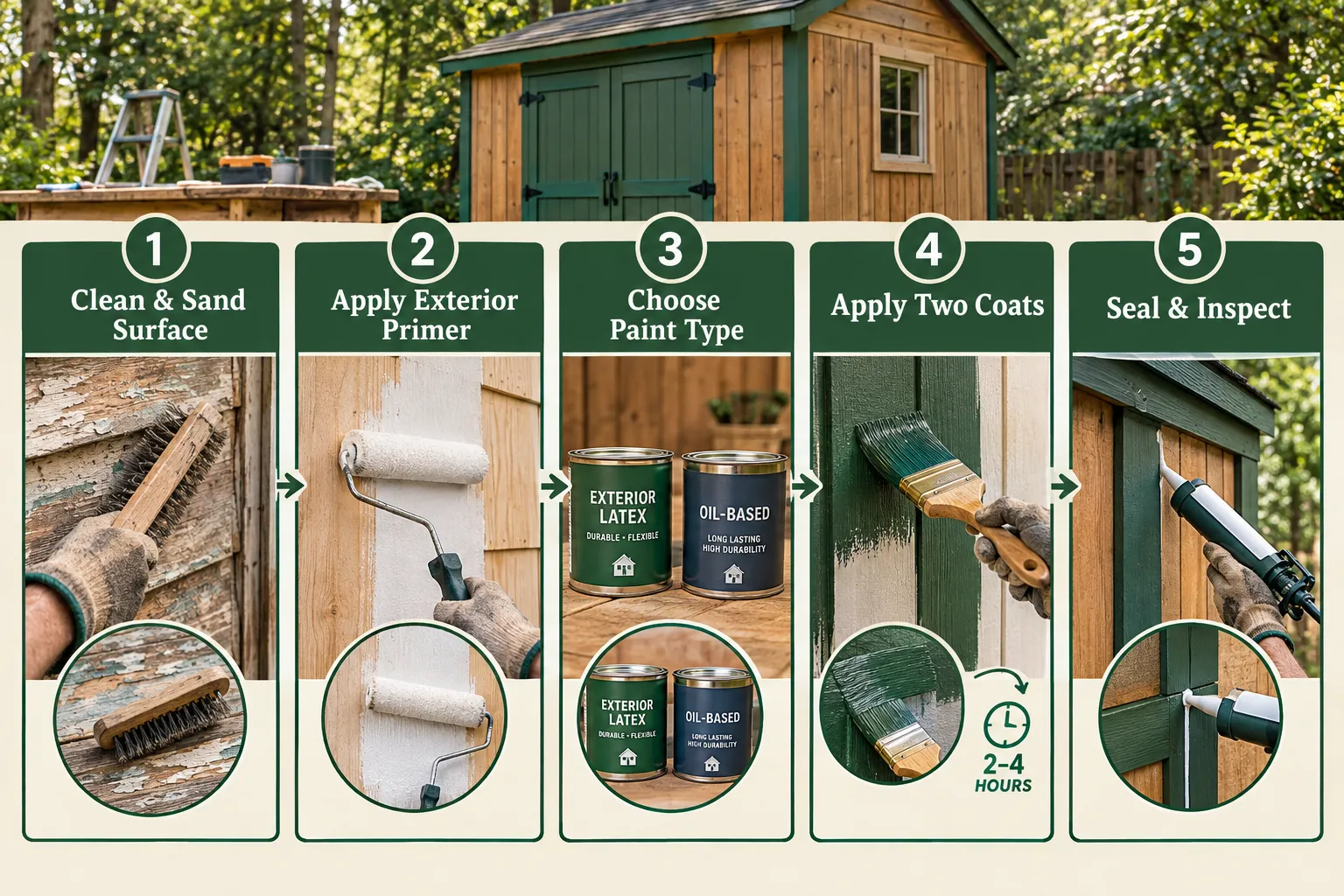
Repainting on schedule, rather than waiting for obvious deterioration, is far cheaper than repairing water-damaged wood. A light sanding, a coat of primer on bare spots, and two coats of fresh paint will reset the clock effectively.
Cheapest Way to Paint a Storage Shed
The cheapest way to paint a storage shed without sacrificing durability is to use a mid-grade exterior latex paint, apply it with a roller for large surfaces and a brush for trim, and do the prep work yourself. Skipping prep (cleaning, sanding, and priming) is where most people waste money, paint applied to dirty or unprepared surfaces fails faster and costs more in the long run.
Cost-saving strategies:
- Buy paint in larger quantities; a gallon covers roughly 350 to 400 square feet on smooth surfaces, less on rough-sawn wood.
- Use a paint sprayer for large sheds; it applies paint faster and more evenly than rolling, reducing labor time significantly.
- Choose a color close to the existing shade; this allows one coat of paint over a sound existing finish rather than two full coats.
- Prime only bare wood spots rather than the entire shed if the existing paint is in reasonable condition.
- Paint in mild weather (50-85°F, low humidity), paint applied in extreme heat or cold fails sooner.
For context on overall shed project costs, the guide on how much it costs to build a small shed breaks down where the money goes across the full build.
Does Shed Paint Color Affect Resale Value
Shed paint color has a measurable but indirect effect on resale value. A shed that looks well-maintained and visually coordinated with the home signals to buyers that the property has been cared for, which supports the home’s overall perceived value. A peeling, mismatched, or oddly colored shed can create the opposite impression.
Real estate professionals generally agree that neutral, coordinated colors (gray, white, taupe, navy) read as more universally appealing than highly personal choices like bright orange or lime green. The goal isn’t to make the shed a statement piece; it’s to make it look like it belongs.
Practical takeaway: If you’re planning to sell within a few years, match the shed to the home’s exterior palette and use a neutral, widely appealing color. It costs very little to repaint before listing and can meaningfully improve first impressions during a showing.
Best Paint Colors for Sheds in Shade vs. Sun
Sheds in full sun need heat-reflective light colors; sheds in deep shade benefit from warmer, slightly darker tones that don’t look washed out in low light.
For sun-exposed sheds:
- Soft white, pale gray, light sage, or warm cream
- High LRV paints with UV-blocking additives
- Satin or eggshell finish to reduce glare
For shaded sheds:
- Warm taupe, medium gray, forest green, or barn red
- Slightly deeper tones that hold their color in diffused light
- Avoid very light colors; they can look dingy or gray in shade
A shed that gets partial sun (morning light, afternoon shade) is the most flexible; most color families work well in this condition. The bigger concern in shaded spots is moisture and mildew, so choose a paint with built-in mildew-resistant additives regardless of color.
Shed Paint Colors That Don’t Fade Quickly
Colors with high pigment density and UV-resistant formulas fade the slowest. In practical terms, this means choosing 100% acrylic exterior paints with UV-blocking additives and avoiding highly saturated colors like bright red, vivid yellow, and deep purple; these tend to fade faster than neutrals and earth tones.
Longest-lasting color choices:
- Neutral grays and greiges fade very slowly because the color shift is barely perceptible.
- Whites and off-whites may yellow slightly over time but don’t “fade” in the traditional sense.
- Earth tones (taupe, tan, brown): Highly stable pigments with minimal visible fading.
- Forest green and olive: More stable than bright greens, which can shift toward yellow.
What to look for on the label: “Fade-resistant,” “UV-blocking,” or “color-lock technology” are meaningful indicators. Brands like Sherwin-Williams Duration, Benjamin Moore Aura Exterior, and Behr Marquee Exterior are well-regarded for fade resistance, though many regional brands offer comparable performance.
FAQ: Best Paint Colors for Storage Sheds
What is the most popular color for a storage shed?
Neutral earth tones, particularly warm gray, taupe, and barn red, are consistently the most popular shed colors. They complement most home styles, hide dirt well, and hold up to weathering without looking dated.
Should a shed be the same color as the house?
Not necessarily the same color, but it should coordinate with the house. Matching the shed’s trim to the home’s trim, or using the home’s secondary color as the shed’s primary color, creates a cohesive look without making the shed look like a copy of the house.
Is it better to stain or paint a wooden shed?
Both work, but they serve different purposes. Paint provides a thicker protective film and more color options. Stain penetrates the wood and enhances the natural grain. For maximum weather protection, paint is generally more durable. For a natural look with less prep work, a semi-transparent stain is a good choice.
Can I paint a vinyl or metal shed?
Yes, but surface preparation is critical. Vinyl sheds require a bonding primer and a flexible exterior paint to prevent cracking. Metal sheds need a rust-inhibiting primer before any topcoat. Standard exterior latex paint works for both once the right primer is applied.
What finish should I use on a storage shed?
Satin or eggshell finish is the best choice for shed walls; it’s durable, easy to clean, and doesn’t show surface imperfections as harshly as gloss. Use semi-gloss on trim, doors, and window frames for added durability and a clean contrast.
Does primer really matter on a shed?
Yes, especially on bare or weathered wood. Primer improves paint adhesion, seals the wood grain, and extends the life of the topcoat. Skipping primer on raw or stripped wood is one of the most common reasons shed paint peels prematurely.
How many gallons of paint do I need for a standard shed?
A standard 8×10 shed typically requires 1 to 2 gallons for two coats on smooth surfaces. Rough-sawn or textured wood absorbs significantly more paint; plan for 2 to 3 gallons. Always calculate the total surface area and divide by the paint’s coverage rate listed on the can.
Can I use a paint sprayer on a shed?
Absolutely. A paint sprayer is one of the most efficient ways to paint a shed, especially on textured or rough surfaces. Mask off windows, vents, and trim carefully before spraying, and always back-brush or back-roll the paint into the surface for better adhesion.
What color shed is easiest to maintain?
Medium earth tones in the taupe, gray-brown, and olive range require the least visible maintenance. They hide dirt, mask minor weathering, and don’t show fading as dramatically as brighter or lighter colors.
Should the shed roof be a different color than the walls?
In most cases, yes. A contrasting or complementary roof color adds visual definition and makes the shed look more intentional. Common pairings: gray walls with a dark charcoal or black roof, white walls with a green or gray roof, barn red walls with a black or dark brown roof.
Conclusion
Choosing the best paint colors for storage sheds is less about personal taste and more about making deliberate decisions that serve your property. The right color protects the wood, reduces maintenance, complements your home, and makes your backyard feel like a finished space rather than a work in progress.
Actionable next steps:
- Photograph your home’s exterior and identify the two or three colors already present.
- Decide whether curb appeal, heat resistance, or dirt-hiding is your top priority, then use the guidance above to narrow your color family.
- Test at least two paint samples on the actual shed surface before buying full quantities.
- Choose a 100% acrylic exterior latex paint in a satin or eggshell finish, and don’t skip the primer on bare wood.
- Plan to repaint every 3 to 5 years and note the paint color and brand for future touch-ups.
If you’re still in the planning or building phase, these resources will help you think about the full project from structure to finish: the complete guide to building your own backyard shed, best shed size for suburban lots, and best lawn equipment shed designs for ideas on how function and aesthetics work together.
A well-painted shed is a small project with a disproportionately large payoff. It’s one of the most cost-effective improvements you can make to a backyard, and one of the most satisfying to step back and admire when it’s done.